Uapaca corbisieri
De Wild.
PhyllanthaceaeFruit

gbif · cc-by-nc-sa
GBIF
GBIF

gbif · cc-by-nc-sa
GBIF
GBIF
What to Eat
Edible parts: Fruit
The fruit have a medlar-like flavor and are eaten raw. They are particularly popular in Liberia.
Where to Find It
A tropical plant. It grows in damp forests in West Africa.
Africa, Benin, Central Africa, Central African Republic, CAR, Congo DR, Côte d'Ivoire, Ghana, Guinea, Guinée, Ivory Coast, Liberia, Nigeria, Sierra Leone, Togo, West Africa,
Countries: Angola, Burkina Faso, Burundi, Benin, Botswana, Congo (DRC), Central African Republic, Congo (Republic), Cote d'Ivoire, Cameroon, Cape Verde, Djibouti, Algeria, Egypt, Eritrea, Ethiopia, Gabon, Ghana, Gambia, Guinea, Equatorial Guinea, Guinea-Bissau, Kenya, Comoros, Liberia, Lesotho, Libya, Morocco, Madagascar, Mali, Mauritania, Mauritius, Malawi, Mozambique, Namibia, Niger, Nigeria, Rwanda, Seychelles, Sudan, Sierra Leone, Senegal, Somalia, South Sudan, Sao Tome & Principe, Eswatini, Chad, Togo, Tunisia, Tanzania, Uganda, South Africa, Zambia, Zimbabwe
How to Identify
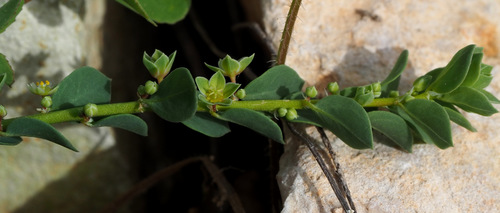
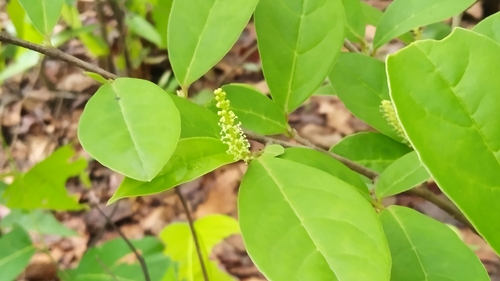
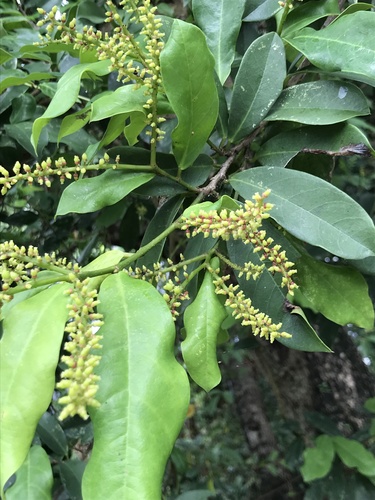
It is similar to Uapaca guineensis. It is a tree. It grows 20 m high and 2 m around the trunk. It has stilt roots up to 4 m high. The flowers are yellow. The flowers and fruit are larger. They can be 5 cm long by 2.3 cm wide. The fruit are edible.
Other Information
The fruit is popular in Liberia.
Names & Synonyms
Alohowa, Asisa, Elehouba, Gagara, Kontan-miri, Kuntammiri, Nanh, Ndabinye
Uapaca esculenta A. Chev. ex Aubrev. & Leandri
References (11)
- Abbiw, D.K., 1990, Useful Plants of Ghana. West African uses of wild and cultivated plants. Intermediate Technology Publications and the Royal Botanic Gardens, Kew. p 48
- Burkill, H. M., 1985, The useful plants of west tropical Africa, Vol. 2. Kew. (As Uapaca esculenta)
- Busson, 1965, (As Uapaca esculenta)
- Dalziel, J. M., 1937, The Useful plants of west tropical Africa. Crown Agents for the Colonies London. (As Uapaca esculenta)
- Diop, A. l., et al, 2021, Cultural importance of wild edible plants in three sympatric communities: Agni, Akyé and Gwa in the Department of Alépé (Southeast of Côte d’Ivoire). Ethnobotany Research and Applications 22:35. p 7 (As Uapaca esculenta)
- Grivetti, L. E., 1980, Agricultural development: present and potential role of edible wild plants. Part 2: Sub-Saharan Africa, Report to the Department of State Agency for International Development. p 27 (As Uapaca esculenta)
- Jardin, C., 1970, List of Foods Used In Africa, FAO Nutrition Information Document Series No 2.p 166 (As Uapaca esculenta)
- JSTOR Global Plants edible (As Uapaca esculenta)
- Keay, R.W.J., 1989, Trees of Nigeria. Clarendon Press, Oxford. p 163 (As Uapaca esculenta)
- Peters, C. R., O'Brien, E. M., and Drummond, R.B., 1992, Edible Wild plants of Sub-saharan Africa. Kew. p 113 (As Uapaca esculenta)
- Voorhoeve, A. G., 1965, Liberian high forest trees. Pudoc p 118