Staphylea bolanderi
A. Gray
Western Bladdernut, Sierra bladdernut, California bladdernut

Wikimedia Commons - Staphylea_bolanderi_2.jpg
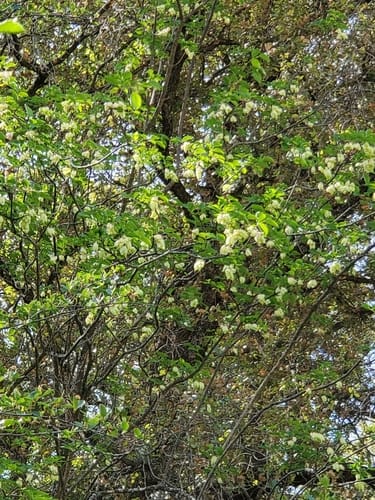
(c) Peggy Moore, some rights reserved (CC BY-NC)
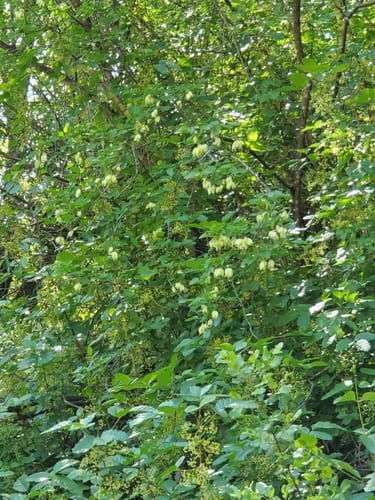
(c) Peggy Moore, some rights reserved (CC BY-NC)
What to Eat
Edible parts: Seeds, Seeds - oil, Nut
The seeds are edible and can be used for oil extraction. The nuts may also be eaten.
Where to Find It
It is a temperate plant.
North America, USA,
How to Identify
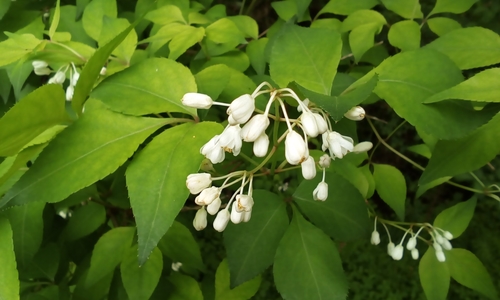
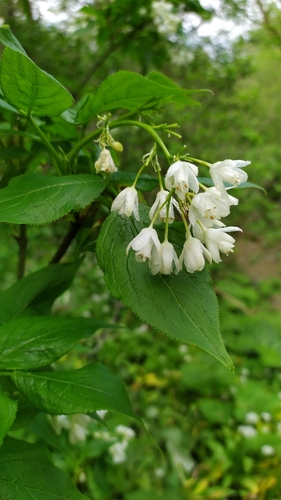
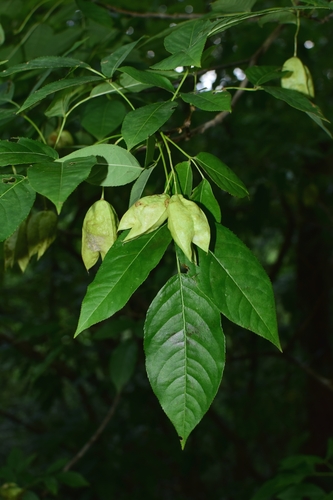
A shrub or small tree. It grows 2-6 m tall. It has long arching branches. The leaves have 3 round leaflets and these have teeth along the edges. The leaflets are 6 cm long. The leaves fall during the year. The flowers are drooping on long stalks. They have 5 white petals. The fruit is an inflated bladder-like capsule 5 cm long. These contain smooth brown seeds.
Wikipedia
Source ↗Staphylea bolanderi, common name Sierra bladdernut, is an uncommon species of bladdernut endemic to California. It ranges from the southern Sierra Nevada to the southernmost slopes of the Cascade Range and the Klamath Mountains. It is a shrub or small tree growing 2–6 m tall. The deciduous leaves are each made up of three round or oval leaflets with toothed edges, each leaflet measuring up to 6 cm long. The inflorescence is a panicle of flowers drooping on long pedicels. Each flower has five white petals within five snow white sepals, and a cluster of five stamens protruding from the mouth. The fruit is an inflated, bladderlike capsule up to 5 cm long containing smooth brown seeds.
Notes
There are 9 or 10 Staphylea species with 1 in tropical America.
References (3)
- Krochmal, A. & Krochmal, C., 1982, Uncultivated Nuts of The United States. United States Department of Agriculture Forest Service. p 73
- Wickens, G.E., 1995, Edible Nuts. FAO Non-wood forest products. FAO, Rome. p153
- Wikipedia