Staphylea holocarpa
Hemsl.
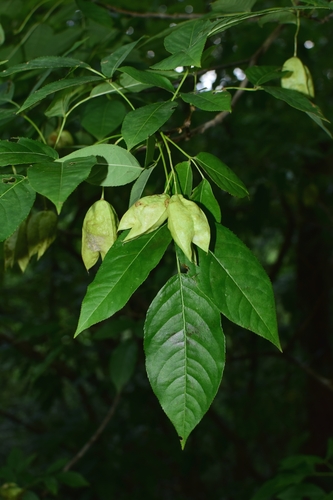
iNaturalist · cc-by-nc
(c) 江国彬, some rights reserved (CC BY-NC), uploaded by 江国彬
(c) 江国彬, some rights reserved (CC BY-NC), uploaded by 江国彬
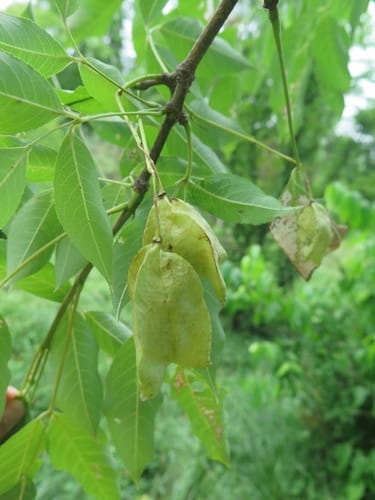
iNaturalist · cc-by-nc
(c) Yao Li, some rights reserved (CC BY-NC)
(c) Yao Li, some rights reserved (CC BY-NC)
Where to Find It
It is a temperate plant. It grows in open forest on hillsides between 1,200-2,200 m above sea level. In Sichuan and Yunnan.
Asia, China, Tibet,
Countries: United Arab Emirates, Afghanistan, Armenia, Azerbaijan, Bangladesh, Bahrain, Brunei, Bhutan, China, Georgia, Indonesia, Israel, India, Iraq, Iran, Jordan, Japan, Kyrgyzstan, Cambodia, North Korea, South Korea, Kuwait, Kazakhstan, Laos, Lebanon, Sri Lanka, Myanmar, Mongolia, Maldives, Malaysia, Nepal, Oman, Philippines, Pakistan, Qatar, Saudi Arabia, Singapore, Syria, Thailand, Tajikistan, Timor-Leste, Turkmenistan, Turkey, Taiwan, Uzbekistan, Vietnam, Yemen
How to Identify
A shrub or small tree. It grows 3-5 m tall. The leaves have 3 leaflets. The side leaflets are almost without stalks. The leaflets are oblong and 5-10 cm long. They are hairy underneath. The flowers are white or red. The fruit capsule is inflated or pear shaped. It is 4-5 cm long by 3 cm wide. The seeds are shiny brown.
Names & Synonyms
Liang zi jian, Shuhuacai
References (2)
- Kang, Y., et al, 2012, Wild food plants and wild edible fungi in two valleys on the Qinling Mountains (Shaanxi, central China) Journal of Ethnobiology and Ethnomedicine; 9:26
- Kang, Y., et al, 2014, Wild food plants used by the Tibetans of Gongba Valley (Zouqu country, Gansu, China) Journal of Ethnobiology and Ethnomedicine 10:20
More from Staphyleaceae

Euscaphis japonica - (Thunb.)Kanitz.

Staphylea bolanderi
Western Bladdernut, Sierra bladdernut, California bladdernut
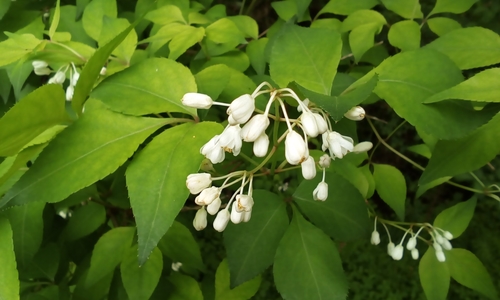
Staphylea bumalda
Bladder Nut, Japanese bladdernut
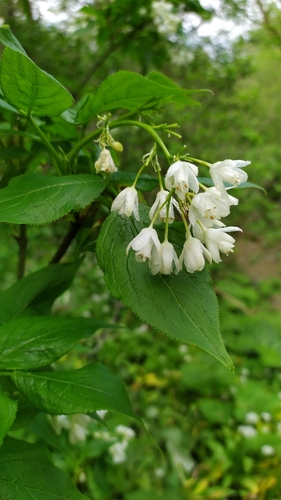
Staphylea colchica
Cochis bladder-nut

Staphylea pinnata
European Bladder-nut, False pistachio

Staphylea trifolia
American bladder nut, Eastern Bladdernut