Eremurus himalaicus
Baker
Himalayan desert candle, Foxtail lily
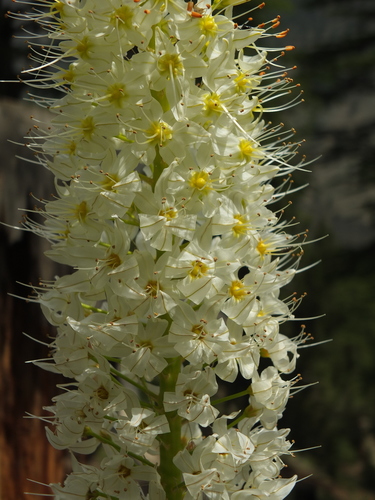
(с) Siddarth Machado, некоторые права защищены (CC BY), загрузил Siddarth Machado

(c) Mahi Puri, some rights reserved (CC BY-NC)

(c) Mahi Puri, some rights reserved (CC BY-NC)
What to Eat
Edible parts: Leaves, Flowers
The leaves are cooked and used as a vegetable, and young flower buds are eaten.
Where to Find It
It is a temperate plant. They grow in dry areas. In the Himalayas it grows up to 3,900 m above sea level. It suits hardiness zones 3-9.
Afghanistan, Asia, Australia, Central Asia, Himalayas, India, Pakistan, Tajikistan,
How to Identify
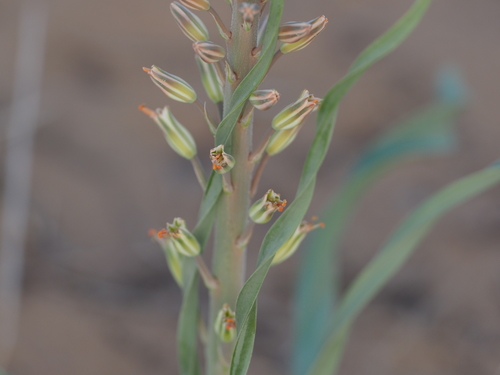
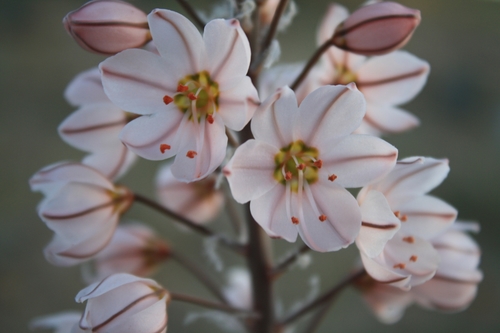
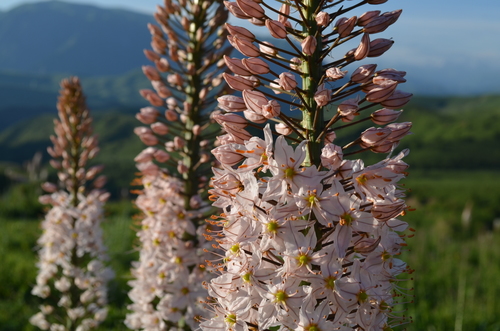
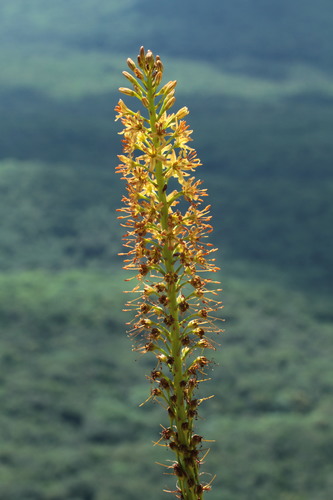
A clumping herb. It grows 90-120 cm high and spreads 75 cm wide. The leaves are strap shaped. The flower spikes are 3 m tall. The flowers are in dense heads. They are lily like and white and star shaped. The stamens protrude.
How to Grow
Plants can be grown by seed of division of the clump. Care needs to be taken not to damage the roots.
Wikipedia
Source ↗Eremurus himalaicus, the Himalayan foxtail lily or white-flowered foxtail lily, is a species of flowering plant in the family Asphodelaceae. It is native to Afghanistan, Pakistan, and the western Himalayas. It is useful in the garden as a tall accent plant, as its flower spike can reach from 6 ft (2 m) to 8 ft (2.5 m).
Notes
There are about 50 Eremurus species. It has also been put in the family Xanthorrhoeaceae.
Names & Synonyms
Chem, Macho, Pret, Shella, Yamkand
References (9)
- Ambasta, S.P. (Ed.), 2000, The Useful Plants of India. CSIR India. p 200
- Cundall, P., (ed.), 2004, Gardening Australia: flora: the gardener's bible. ABC Books. p 546
- Flora of Pakistan.
- Hibbert, M., 2002, The Aussie Plant Finder 2002, Florilegium. p 94
- Khan, A. H., et al, 2023, Traditional foraging for ecological transition? Wild food ethnobotany among three ethnic groups in the highlands of the eastern Hindukush, North Pakistan. Journal of Ethnobiology and Ethnomedicine 19:9
- Kishor, A., et al, 2018, Wild Food Plants of Himachal Pradesh: A Review. Plant Archives Vol. 18 No.2 pp. 2737-2751
- J. Linn. Soc., Bot. 15:283. 1876
- Sharma, L. et al, 2018, Diversity, distribution pattern, endemism and indigenous uses of wild edible plants in Cold Desert Biosphere Reserve of Indian Trans Himalaya. Indian Journal of Traditional Knowledge. Vol 17(1) January 2018 pp 122-131
- Singh, H.B., Arora R.K.,1978, Wild edible Plants of India. Indian Council of Agricultural Research, New Delhi. p 25