Eremurus robustus
(Regel) Regel
Foxtail Lily
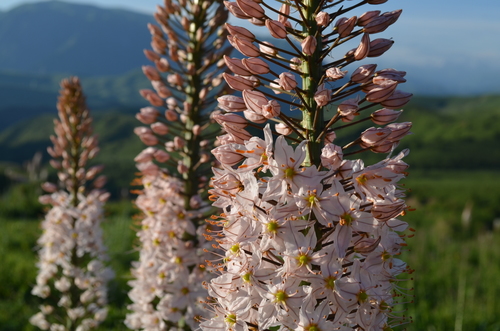
(c) Aleksandr Naumenko, some rights reserved (CC BY-NC), uploaded by Aleksandr Naumenko
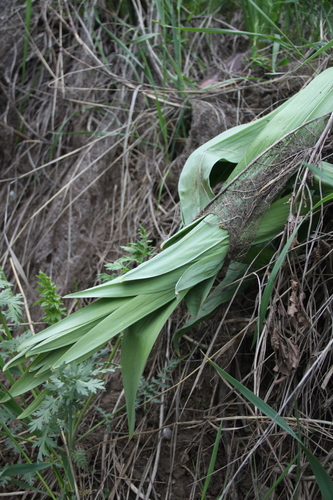
(c) Елана, some rights reserved (CC BY-NC)
What to Eat
Edible parts: Root, Leaves
The young roots can be eaten boiled.
Where to Find It
It is a temperate plant. It grows in the Tien Shan and Pamir mountains. They occur in near desert conditions. It can grow in arid places. It suits hardiness zones 6-9.
Afghanistan, Asia, Australia, Central Asia, Kyrgyzstan, Slovenia, Tajikistan, Turkestan, Uzbekistan,
How to Identify
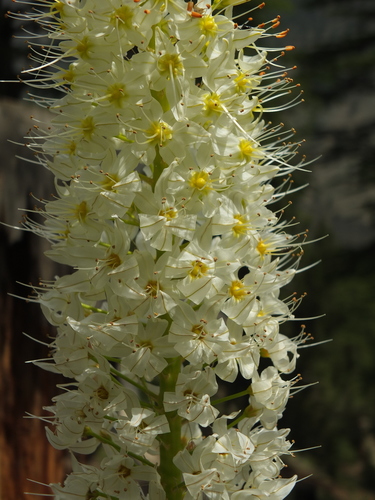
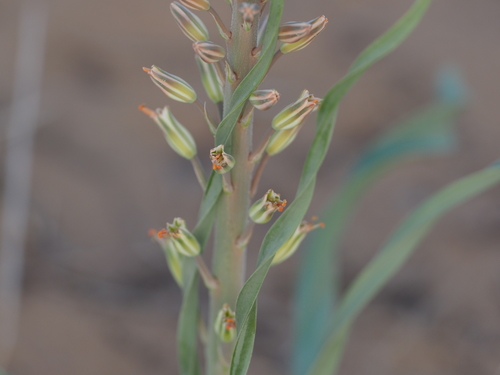
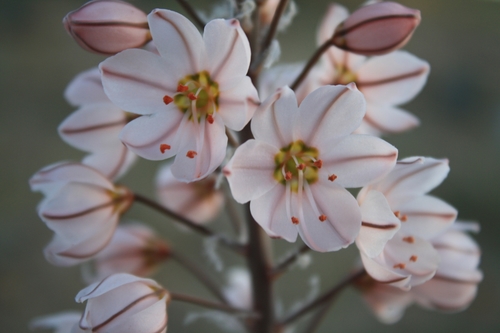
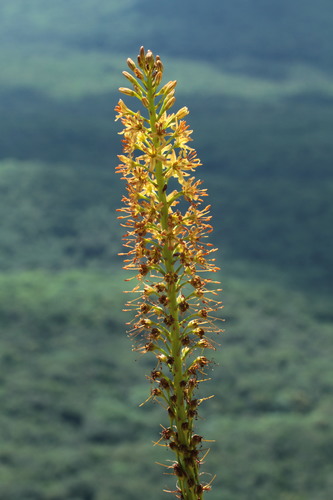
A perennial herb. It can grow to 3 m tall. The leaves are strap like and 1.2 m long. The pink starry flowers occur in a foxtail flower head. This can be 1.2 m long.
How to Grow
Propagation: Seed is best sown as soon as it is ripe in autumn in a cold frame. Stored seed should be sown in a greenhouse as soon as it is obtained. Germination is slow and can take 1–12 months at 15°C. Prick out seedlings into individual pots once large enough to handle and grow them through their first winter under glass. Plant out in late spring after the last expected frosts, taking care not to plant too deeply — the crown should remain slightly exposed. Division can be done after the plant dies down in late summer, but great care is needed as plants strongly resent root disturbance. Divide only when truly necessary, no more than once every 6 years, avoiding damage to the brittle roots. Potting up divisions and growing them on under glass until established is recommended.
Medicinal Uses
None known.
Other Uses
A glue is made from the roots. The plant also attracts wildlife.
Wikipedia
Source ↗Eremurus robustus, the foxtail lily or giant desert candle, is a species of flowering plant in the asphodel family, native to the Tien Shan and Pamir Mountains in Central Asia, that is often used as an ornamental plant. It is a very tall, narrow plant with a stem 6–10 ft (1.8–3.0 m) high, and leaves up to 48 in (120 cm) in length and 4 in (10 cm) in width - the widest in its genus. The deciduous leaves can vary in colour from bright green to bluish-green. The inflorescence grows to 4 ft (1.2 m) in length and is covered with many deep to pale pink or white flowers, 4 cm (1.6 in) across. At the base of each flower is a brown blotch with a green keel. The pedicels of the flowers are longest in those at the base of the inflorescence, decreasing in length toward its tip, while the flowers themselves, numbering some 700 to 800 per inflorescence, begin to bloom in June. By the time of flowering, the leaves will usually have already shrivelled. The Latin specific epithet robustus means "sturdy, growing strongly" (the species is the largest of its genus). The plant was introduced from Central Asia to Europe and North America in 1874 and is popular in gardens. However some may find the plant to be too tall for normal gardens. It prefers sandy, well-drained soil and full sun. In cultivation in the UK this plant has gained the Royal Horticultural Society's Award of Garden Merit.
Notes
There are about 50 Eremurus species. It has also been put in the family Xanthorrhoeaceae.
Names & Synonyms
Shirach, Stepska lilija
References (5)
- Cundall, P., (ed.), 2004, Gardening Australia: flora: the gardener's bible. ABC Books. p 547
- Gartenflora 22:257, t. 769. 1873
- Joyce, D., 1998, The Garden Plant Selector. Ryland, Peters and Small. p 225
- Khojimatov, O. K. et al, 2015, Some wild growing plants in traditional foods of Uzbekistan. Journal of Ethnic Foods. 2 (2015) 25-28
- Plants for a Future database, The Field, Penpol, Lostwithiel, Cornwall, PL22 0NG, UK. http://www.scs.leeds.ac.uk/pfaf/