Bridelia squamosa
Gaertn.
PhyllanthaceaeFruit

iNaturalist · cc-by-nc
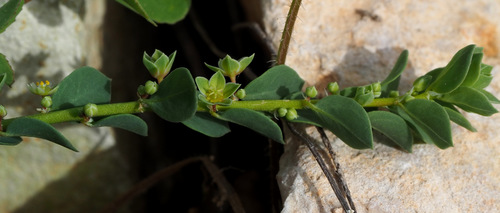
(c) Mayuresh Kulkarni, some rights reserved (CC BY-NC)
(c) Mayuresh Kulkarni, some rights reserved (CC BY-NC)

iNaturalist · cc-by-nc
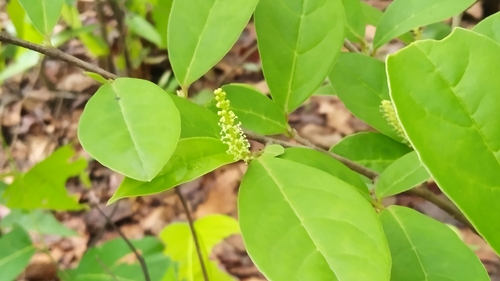
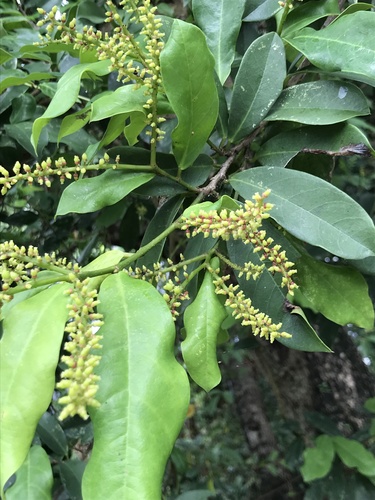
(c) Mayuresh Kulkarni, some rights reserved (CC BY-NC)
(c) Mayuresh Kulkarni, some rights reserved (CC BY-NC)
iNaturalist · cc-by-nc
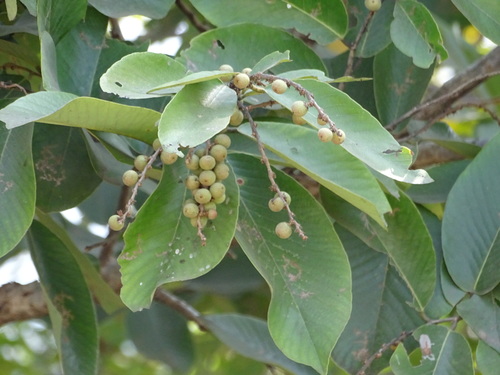
(c) Rujuta Vinod, some rights reserved (CC BY-NC)
(c) Rujuta Vinod, some rights reserved (CC BY-NC)
What to Eat
Edible parts: Fruit
The ripe fruit are eaten.
Where to Find It
A tropical plant.
Asia, India,
Countries: United Arab Emirates, Afghanistan, Armenia, Azerbaijan, Bangladesh, Bahrain, Brunei, Bhutan, China, Georgia, Indonesia, Israel, India, Iraq, Iran, Jordan, Japan, Kyrgyzstan, Cambodia, North Korea, South Korea, Kuwait, Kazakhstan, Laos, Lebanon, Sri Lanka, Myanmar, Mongolia, Maldives, Malaysia, Nepal, Oman, Philippines, Pakistan, Qatar, Saudi Arabia, Singapore, Syria, Thailand, Tajikistan, Timor-Leste, Turkmenistan, Turkey, Taiwan, Uzbekistan, Vietnam, Yemen
How to Identify
A tropical plant in the Phyllanthaceae family (likely Bridelia retusa based on nomenclatural notes).
Notes
There are about 60 Bridelia species. Bridelia squamosa (Lam.) Gehrm. is a synonym of Bridelia retusa (L.) A. Juss.
Names & Synonyms
Asan, Ashind, Ekdania
Bridelia retusa Spr.
References (5)
- Altschul, S.V.R., 1973, Drugs and Foods from Little-known Plants. Notes in Harvard University Herbaria. Harvard Univ. Press. Massachusetts. no. 2197
- Ambasta S.P. (Ed.), 2000, The Useful Plants of India. CSIR India. p 87
- Shah, G.L., 1984, Some economically important plant of Salsette Island near Bombay. J. Econ. Tax. Bot. Vol. 5 No. 4 pp 753-765
- Sharma, B.D., & Lakshminarasimhan, P., 1986, Ethnobotanical Studies on the Tribals of Nasik District (Maharashtra). J. Econ. Tax. Bot. Vol. 8 No. 2 pp 439-446
- Singh, H.B., Arora R.K.,1978, Wild edible Plants of India. Indian Council of Agricultural Research, New Delhi. p 50