Asphodelus aestivus
Brot.
Common asphodel

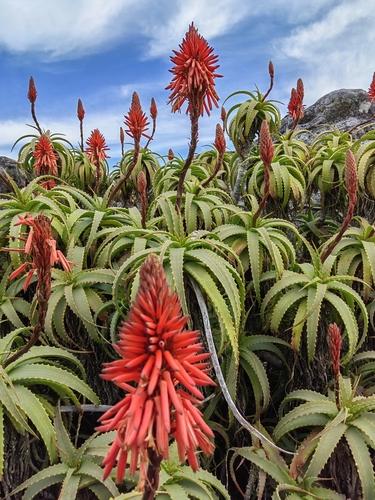
(c) Vladimir Tkalčić, some rights reserved (CC BY-NC), uploaded by Vladimir Tkalčić

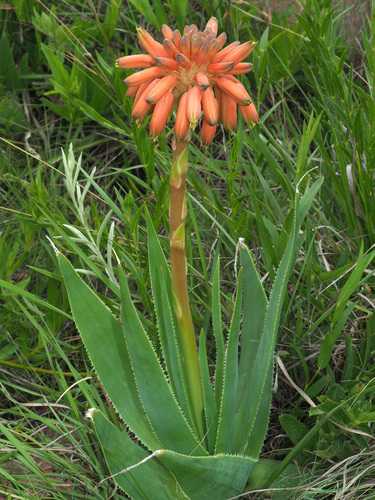
(c) Alenka Mihoric, some rights reserved (CC BY-NC), uploaded by Alenka Mihoric
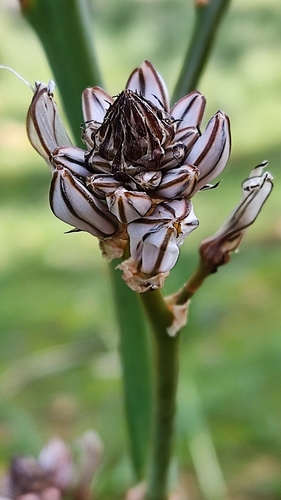
(c) Giorgos Nikolakakis, some rights reserved (CC BY-NC)
What to Eat
Edible parts: Root, Stem, Seeds, Tuber, Leaves
Edible Parts: Root Seed Stem Edible Uses: Tuber - cooked. Rich in starch. Dried and boiled in water it yields a mucilaginous matter which can be mixed with grain to make a nutritious bread. Boiling destroys the acrid principle in the tubers, rendering them quite pleasant to eat. Flowering stalk - cooked. Seed - roasted.
Where to Find It
It is a Mediterranean plant. It grows on rocky places and waste ground. It can grow in dry salty soil. It can grow in arid places. It suits hardiness zones 7-10.
Africa, Albania, Algeria, Arabia, Australia, Balkans, Canary Islands, Cyprus, Egypt, Europe, France, Greece, Iraq, Israel, Italy, Lebanon, Libya, Mediterranean, Middle East, Morocco, North Africa, Portugal, Slovenia, Spain, Syria, Tunisia, Turkey, Türkiye,
How to Identify
A clump forming herb which keeps growing from year to year. It grows 100 cm high. It spreads 60 cm wide. It has several fleshy roots. The leaves near the base are long and flat. They are strap like. They are grey-green and 12-30 mm wide. The flowering stems have short, side branches. The flowers are 20-30 mm wide. The flowers are star shaped and white. There is a central brown stripe on each petals. The fruit is a capsule 6-8 mm across.
How to Grow
Succeeds in ordinary garden soil, tolerating partial shade. Requires a well-drained soil. Prefers a deep rich sandy loamy soil. Prefers a sunny position and a soil that is not too rich. Grows well on hot dry banks. This species is not hardy in the colder areas of the country, it tolerates temperatures down to between -5 and -10°c. Plants are evergreen in mild winters. Plants seem to be immune to the predations of rabbits. This species is closely related to A. ramosus.
Propagation: Seed - sow March/April in a greenhouse and only just cover the seed. Germination usually takes place in 1 - 3 months at 15°c. When they are large enough to handle, prick the seedlings out into individual pots and grow them on in the greenhouse for at least their first winter. When the plants are large enough to handle, plant them out into their permanent positions in late spring or early summer. Division in early spring or autumn.
Medicinal Uses
Acrid Antispasmodic Diuretic Emmenagogue The root, gathered at the end of its first year, is acrid, antispasmodic, diuretic, emmenagogue. It was used in the treatment of several diseases by the Greeks and Romans, but is not employed in modern medicine.
Other Uses
Adhesive Dye The dried tuber is pulverized and mixed with cold water to make a strong glue that is used by bookmakers and shoemakers. A yellow dye is obtained from the tuber. Special Uses
Wikipedia
Source ↗Asphodelus aestivus, the summer asphodel, is a species of asphodel, a common Western Mediterranean geophyte with a short vertical rhizome and basal leaves. Its flowers are actinomorphic, pinkish-white, with six perianth segments, 14–19 mm long and six stamens of the same length, in two whorls. Its distribution is limited to the Western Mediterranean, mainly found in Portugal and Spain on the European mainland. There has been a lot of confusion over the nomenclature and taxonomy of the species, owing to its similarity to Asphodelus ramosus. It grows in dry grasslands, phrygana and on rocky or sandy ground.
Notes
There are 12 Asphodelus species. Also put in the family Asphodelaceae.
Names & Synonyms
Cebollina, Poletni zlati koren
References (8)
- Blamey, M and Grey-Wilson, C., 2005, Wild flowers of the Mediterranean. A & C Black London. p 469
- Blanco-Salas, J., et al, 2019, Wild Plants Potentially Used in Human Food in the Protected Area “Sierra Grande de Hornachos” of Extremadura (Spain). Sustainability 2019, 11, 456
- Cundall, P., (ed.), 2004, Gardening Australia: flora: the gardener's bible. ABC Books. p 197
- Fl. lusit. 1:525. 1804
- http://cypruswildflowers.com
- Plants for a Future database, The Field, Penpol, Lostwithiel, Cornwall, PL22 0NG, UK. http://www.scs.leeds.ac.uk/pfaf/
- Sinclair, V., 1992, The Floral Charm of Cyprus. Interworld Publications. p 50
- Royal Botanic Gardens, Kew (1999). Survey of Economic Plants for Arid and Semi-Arid Lands (SEPASAL) database. Published on the Internet; http://www.rbgkew.org.uk/ceb/sepasal/internet [Accessed 4th April 2011]