Asplenium trichomanes
L.
Maidenhair spleenwort

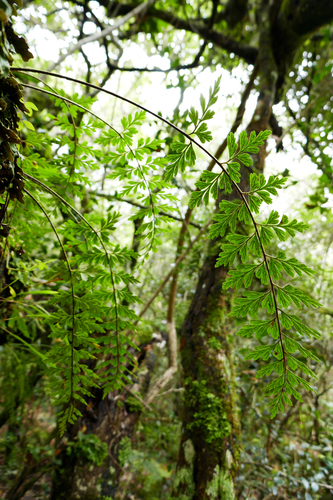
(c) David Claro, some rights reserved (CC BY-NC), uploaded by David Claro

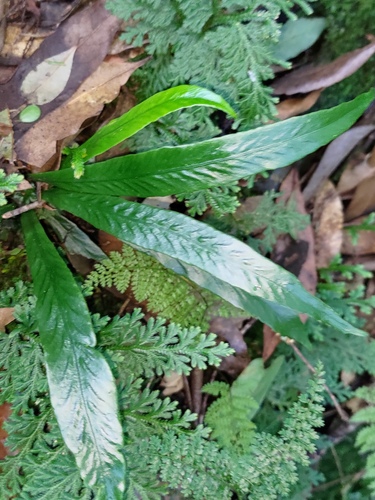
(c) Douglas Goldman, some rights reserved (CC BY-SA), uploaded by Douglas Goldman
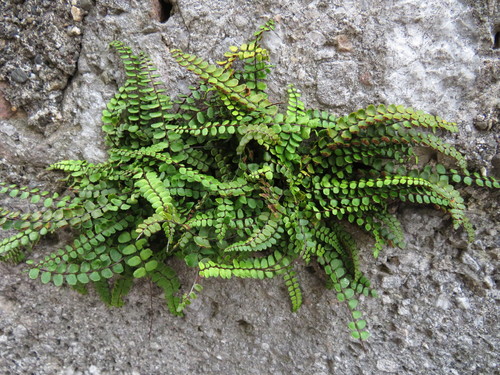
(c) Jurga Motiejūnaitė, some rights reserved (CC BY-NC), uploaded by Jurga Motiejūnaitė
What to Eat
Edible parts: Leaves - tea, Vegetable
Edible Parts: Edible Uses: Tea The dried fronds have been used as a tea substitute.
Known Hazards
Where to Find It
A temperate plant. It grows in cracks in rocks and on mossy boulders. It grows in the mountains in the tropics.
Albania, Andorra, Asia, Australia, Central Asia, China, Europe, Fiji, Himalayas, India, Korea, Luxembourg, NW India, Pacific, Slovenia, Switzerland, Tajikistan, Tasmania,
How to Identify
Evergreen fern growing at medium rate to 0.4m tall. Hardy to UK zone 6 with persistent foliage. Not self-fertile. Adapts to light sandy and medium loamy soils with good drainage. Tolerates mildly acid to mildly alkaline pH. Grows in full to semi-shade and prefers moist soil. Seeds ripen May to October.
How to Grow
Requires a well-drained position and lots of old mortar rubble in the soil. Requires a humid atmosphere and some shade. A good plant for growing on a shady part of an old dry-stone or brick wall. Plants are hardy to about -30°c. Members of this genus are rarely if ever troubled by browsing deer. Depending on the species and environmental conditions, spleenworts have a slow to moderate growth rate. They thrive in moist, shaded habitats.
Propagation: Spores - best sown as soon as they are ripe on the surface of a humus-rich sterilized soil. Keep the compost moist, preferably by putting a plastic bag over the pot. The spores usually germinate in the spring. Spring sown spores germinate in 1 - 3 months at 15°c. Pot on small clumps of plantlets as soon as they are large enough to handle and grow them on in light shade in a greenhouse. Keep the plants humid until they are well established. Once the plants are 15cm or more tall, plant them out into their permanent positions in the spring.
Medicinal Uses
Demulcent Emmenagogue Expectorant Laxative A tea made from the fronds is sweet, demulcent, expectorant and laxative. It has been used in the treatment of chest complaints and to promote menstruation.
Other Uses
Spleenworts can be utilized as ground cover in shaded areas, helping to stabilize soil and prevent erosion. They are also beneficial in enhancing biodiversity within shaded forest gardens. 1. Nectary - Flowers rich in nectar and pollen: No – Spleenworts do not produce flowers; they reproduce via spores. 2. Wildlife - Food (Fruit, Seeds, Leaf litter, Shelter, Nesting, Roosting): Yes – While not commonly consumed by humans, some species of spleenworts can be a food source for herbivorous insects. The dense foliage can provide shelter for small animals, although they are not typically used for nesting. 3. Invertebrate Shelter (Overwintering sites, Leaf litter, Groundcover): Yes – The fronds and leaf litter from spleenworts can provide habitat and shelter for invertebrates, as well as serve as overwintering sites. 4. Pest Confuser (Smell): No – Spleenworts do not have notable aromatic properties that would help confuse pests. Special Uses
Wikipedia
Source ↗Asplenium trichomanes, the maidenhair spleenwort (not to be confused with the similarly-named but very different maidenhair fern), is a small fern in the spleenwort genus Asplenium. It is a widespread and common species, occurring almost worldwide in a variety of rocky habitats. It is a variable fern with several subspecies. The specific epithet trichomanes refers to a Greek word for fern.
Notes
There are over 600-700 Asplenium ferns. They are mostly tropical and subtropical.
Names & Synonyms
Fir guri, Kandai, Rjavi sršaj
References (4)
- Abbet, C., et al, 2014, Ethnobotanical survey on wild alpine food plants in Lower and Central Valais (Switzerland). Journal of Ethnopharmacology 151 (2014) 624–634
- Khan, M. & Hussain, S., 2014, Diversity of wild edible plants and flowering phenology of district Poonch (J & K) in the northwest Himalaya. Indian Journal of Sci, Res. 9(1): 032-038
- Pieroni, A. & Soukand, R., 2017, The disappearing wild food and medicinal plant knowledge in a few mountain villages of North-Eastern Albania. Journal of Applied Botany and Food Quality 90, 58 - 67
- www.eFloras.org Flora of China