Phyllanthus amarus
Schum. & Thonn.
Fly roost
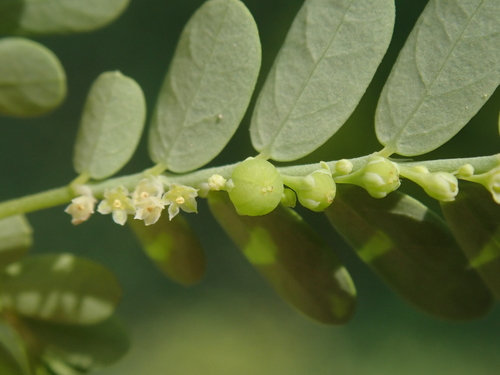
(c) Kuan-Chieh (Chuck) Hung, some rights reserved (CC BY-NC-SA), uploaded by Kuan-Chieh (Chuck) Hung
(c) Kevin Faccenda, some rights reserved (CC BY)
What to Eat
Edible parts: Fruit, Leaves
The fruit and leaves are edible, with the fruit being especially eaten by children.
Where to Find It
A tropical plant. It grows in sunny places. In Fiji it grows near sea level and up to 50 m altitude. It grows in flooded rice fields. In southern China it grows between 100-600 m above sea level. In Yunnan.
Africa, American Samoa, Asia, Australia, Benin, British Indian Ocean Terr., BIOT, Burkina Faso, Cambodia, Central Africa, Central African Republic, CAR, Central America, China, Chuuk, Congo DR, Costa Rica, Dominican Republic, East Africa, East Timor, Fiji, FSM, Ghana, Guinea, Guinée, Guinea-Bissau, Haiti, Himalayas, India, Indochina, Kiribati, Laos, Madagascar, Maldives, Marquesas, Marshall Islands, Micronesia, Mozambique, Nepal, Pacific, Pakistan, Palau, Philippines, Rotuma, Sao Tome and Principe, SE Asia, Sierra Leone, Sri Lanka, St Lucia, Taiwan, Thailand, Timor-Leste, Togo, Tuvalu, West Africa, West Indies,
How to Identify
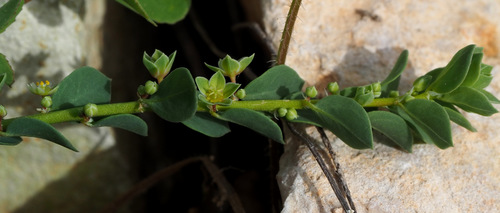
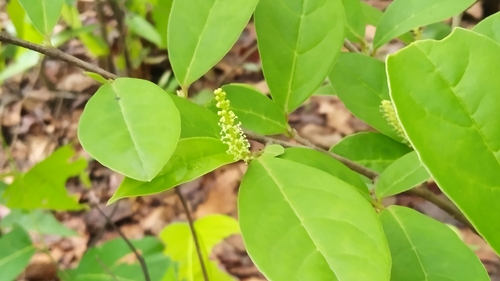
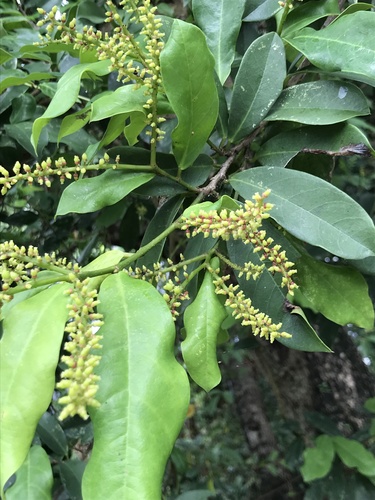
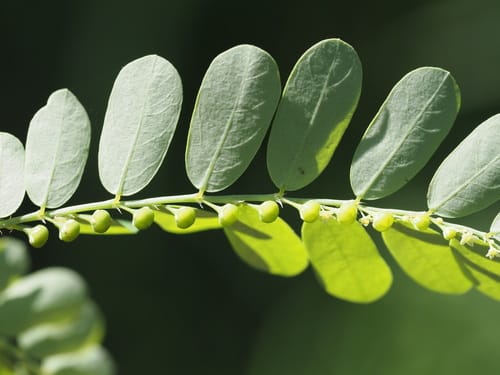
An annual herb. It grows 10-40 cm high. It almost lies along the ground. It is woody near the base. The leaves are in one plain. The flowers hang from one side of the branch. Flowers are separately male and female. The fruit is round and flattened. It splits into three. The seeds have ribs.
How to Grow
Requires a sunny position. Sandy loam and black soils with a pH of 7.5 - 8 are considered best. The plant has explosive seed capsules that propel the seeds some distance from the plant. Originally native to tropical America, the plant has spread to become a weed, often invasive, in many areas of the Tropics. The plant is reported to be a troublesome weed in pulses, soya bean, groundnut, cereals, sugar cane, cassava, taro, sesame, sunflower and cotton.
Propagation: Seed - requires light to germinate. Sow in situ - the small seed is usually mixed with sand. Germination is often less than 50%; germination of freshly harvested seeds is slower than that of older seeds. Seeds dried to 8% moisture content and treated with turmeric rhizome powder under ambient conditions maintained viability for up to 6 months; untreated seeds stored poorly.
Medicinal Uses
Phyllanthus amarus has been used in the traditional medicine of various cultures, including Amazonian tribes, Ayurveda and Sinhala folk medicine.
Other Uses
The leaves, rubbed between the hands, give a lather. Chloroform and ethanolic extracts of the aerial parts and roots showed significant larvicidal activity against Anopheles stephensi larvae. An ethanolic root extract possessed significant activity against Tribolium castaneum, a pest of stored grain. Norsecurinine, isolated from the aerial parts, showed significant activity against spore germination of the crop fungi Alternaria brassicae, Alternaria solani, Curvularia pennisetti, Erysiphe pisi and Helminthosporium frumentacei under glasshouse conditions. The plant is said to have sand-binding properties.
Wikipedia
Source ↗Phyllanthus amarus is a leafy herbal plant found in tropical regions in the Americas, Africa, India, China, Sri Lanka, and Southeast Asia. Commons names for this plant include gale of the wind, carry me seed, seed on the leaf, pick-a-back, stonebreaker, and dukung anak (Malay).
Production
In Central African Republic plants fruit in March.
Other Information
Fruit eaten especially by children.
Notes
There are about 750 Phyllanthus species. They are mostly in the tropics. It is used as a medicine to stimulate milk production. It has anticancer properties.
Names & Synonyms
Alenbeso, Alibiso, Bhui aonla, Bhuiavala, Ehli, Eyseiphsam srach, Foforou, Ji'jimo-awa, Kaalhu lunboa, Kanunung, Lakau o iere, Luktaibai, Mouku laupukupuku, Nerendim-faro, Pitawakka, Senkalen, Te kaimatu
References (25)
- Achigan-Dako, E, et al (Eds), 2009, Catalogue of Traditional Vegetables in Benin. International Foundation for Science.
- Batawila, K., et al, 2007, Diversite et gestion des legumes de cueillete au Togo. African Journal of Food, Agriculture, Nutrition and Development 7( 3& 4): 65
- Bonou, A., et al, 2013, Valeur economique des Produits Forestiers Non Ligneux (PFNL) au Benin. Editions Universitaires Europeennes p 97
- Cowie, I, 2006, A Survey of Flora and vegetation of the proposed Jaco-Tutuala-Lore National Park. Timor-Lests (East Timor) www.territorystories.nt/gov.au p 47
- Dansi, A., et al, 2008, Traditional leafy vegetables and their use in the Benin Republic. Genet Resour Crop Evol (2008) 55:1239–1256
- Dansi, A., et al, 2009, Traditional leafy vegetables in Benin: folk nomenclature, species under threat and domestication. Acta Bot. Gallica 156(2), 183-199
- Franklin, J., Keppel, G., & Whistler, W., 2008, The vegetation and flora of Lakeba, Nayau and Aiwa Islands, Central Lau Group, Fiji. Micronesica 40(1/2): 169–225, 2008
- Hussey, B.M.J., Keighery, G.J., Cousens, R.D., Dodd, J., Lloyd, S.G., 1997, Western Weeds. A guide to the weeds of Western Australia. Plant Protection Society of Western Australia. p 146
- Jackes, B.R., 2001, Plants of the Tropics. Rainforest to Heath. An Identification Guide. James Cook University. p 53
- Jiwajinda, S., et al, 2002, Suppressive Effects of Edible Thai Plants on Superoxide and Nitric Oxide Generation. Asian Pacific Journal of Cancer Prevention, Vol 3, 2002
- Kintzios, S. E., 2006, Terrestrial Plant-Derived Anticancer Agents and Plant Species Used in Anticancer research. Critical Reviews in Plant Sciences. 25: pp 79-113
- Kiran, K. C., et al, 2019, Diversity and Seasonal Availability of Potential Wild Edible Plants from Vidarbha Region of Maharashtra State, India. Int.J.Curr.Microbiol.App.Sci (2019) 8(2): 1434-1446
- Latham, P & Mbuta, A., 2017, Useful Plants of Central Province, Democratic Republic of Congo. Volume 2. Salvation Army p 102
- Manandhar, N.P., 2002, Plants and People of Nepal. Timber Press. Portland, Oregon. p 359
- Pandy, R. K. & Saini, S. K., 2007, Edible plants of tropical forests among tribal communities of Madhya Pradesh. Indian Journal of Traditional Knowledge. 6(1), pp 185-190
- Peduruhewa, P. S., et al, 2021, Potential of Underutilized Wild Edible Plants as the Food for the Future – A Review. Journal of Food Security, Vol. 9, No. 4, 136-147
- Phon, P., 2000, Plants used in Cambodia. © Pauline Dy Phon, Phnom Penh, Cambodia. p 497
- Plants of Haiti Smithsonian Institute http://botany.si.edu/antilles/West Indies
- C. F. Schumacher, Beskr. Guin. pl. 421. 1827
- Sujanapal, P., & Sankaran, K. V., 2016, Common Plants of Maldives. FAO & Kerala FRI, p 205
- Thaman, R. R., 1987, Plants of Kiribati: A listing and analysis of vernacular names. Atoll Research Bulletin No. 296
- Thaman, R. R, 2016, The flora of Tuvalu. Atoll Research Bulletin No. 611. Smithsonian Institute p 84
- Topp, J. M. W., 1988, An Annotated Check List of the Flora of Diego Garcia, British Ocean Territory. Atoll Research Bulletin No. 313
- Wiersema, J. H. & Leon, B., 2013, World Economic Plants. A Standard Reference CRC Press. 2nd Ed. p 520
- World Checklist of Useful Plant Species 2020. Royal Botanic Gardens, Kew