Glochidion acuminatum
Mull.Arg.
Tsin Pui Tsz Shue
(c) 陳育賢, some rights reserved (CC BY-NC), uploaded by 陳育賢

(c) 水牛, some rights reserved (CC BY-NC)

(c) 郭伯川, some rights reserved (CC BY-NC)
What to Eat
Edible parts: Fruit, Leaves - tea
The young shoots have a sweet flavour. This report refers to the subspecies Glochidion acuminatum siamense, which differs from the main species in having leaves which are far more velutinous.
Where to Find It
It is a subtropical plant. It grows between 500-2,600 m above sea level.
Asia, Bhutan, China, Himalayas, India, Japan, Myanmar, Nepal, Northeastern India, SE Asia, Sikkim, Thailand,
How to Identify
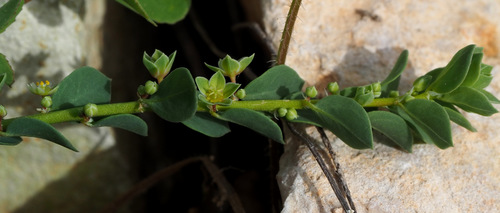
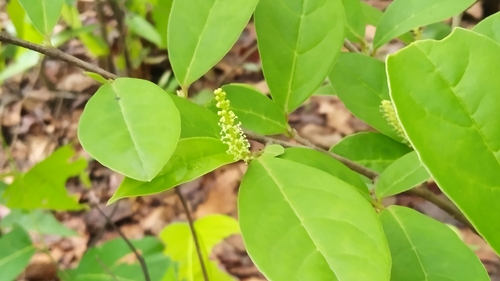
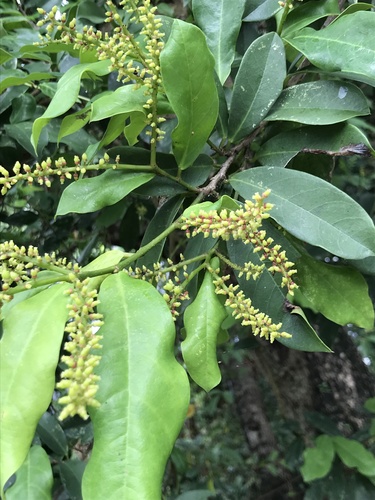
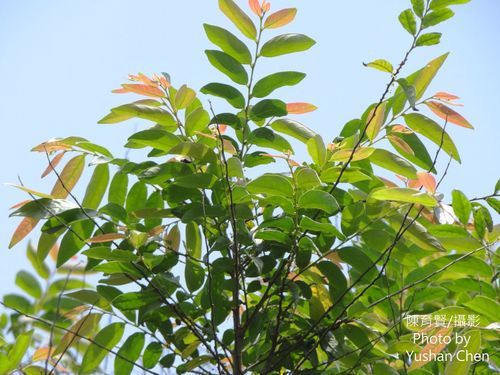
A shrub or small tree. It grows 3-8 m tall. The small branches are angular. The leaves are alternate and entire. They are narrowly oval and 4-13 cm long by 2-5 cm wide. The fruit are round but flattened. There are 6-8 deep grooves. The seeds are triangle shaped and 3 mm across.
How to Grow
Found in the wild on soils over granite bedrock. This species is noteworthy for its pollination mechanism, which involves a symbiotic relationship with moths of the genus Epicephala. This closely parallels that found in Yucca species.
Other Uses
The red to reddish-grey wood is hard, with a prominent and pretty, silver grain on radial sections. Unfortunately, the wood splits rather badly, but it is a handsome one and might be useful in turnery.
Notes
There are about 300 Glochidion species.
Names & Synonyms
Lathi kath
References (2)
- Altschul, S.V.R., 1973, Drugs and Foods from Little-known Plants. Notes in Harvard University Herbaria. Harvard Univ. Press. Massachusetts. no. 2114 (As Glochidion hayatae)
- Mukhia, P.K., et al, 2013, Wild plants as Non Wood Forest Products used by the rural community of Dagana, a southern foothill district of Bhutan, SAARC Journal, 27 pages