Baccaurea annamensis
Gagnep.
Du trung bo
PhyllanthaceaeFruit

gbif · cc0
President and Fellows of Harvard College
President and Fellows of Harvard College

gbif · cc0
President and Fellows of Harvard College
President and Fellows of Harvard College
What to Eat
Edible parts: Fruit
The fruit has a sweetish-sour taste and is eaten fresh or used for drinks. The young leaves and fruit are also used in soups.
Where to Find It
A tropical plant. It normally grows in tropical monsoon forests in river valleys below 1,000 m altitude.
Asia, Cambodia, China, Indochina, Laos, SE Asia, Vietnam,
Countries: United Arab Emirates, Afghanistan, Armenia, Azerbaijan, Bangladesh, Bahrain, Brunei, Bhutan, China, Georgia, Indonesia, Israel, India, Iraq, Iran, Jordan, Japan, Kyrgyzstan, Cambodia, North Korea, South Korea, Kuwait, Kazakhstan, Laos, Lebanon, Sri Lanka, Myanmar, Mongolia, Maldives, Malaysia, Nepal, Oman, Philippines, Pakistan, Qatar, Saudi Arabia, Singapore, Syria, Thailand, Tajikistan, Timor-Leste, Turkmenistan, Turkey, Taiwan, Uzbekistan, Vietnam, Yemen
How to Identify
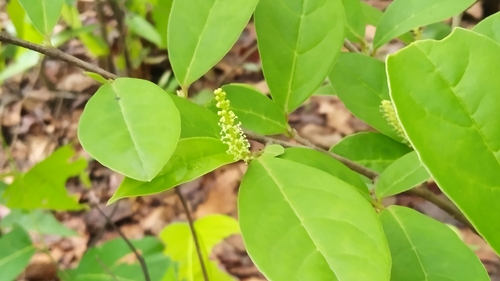
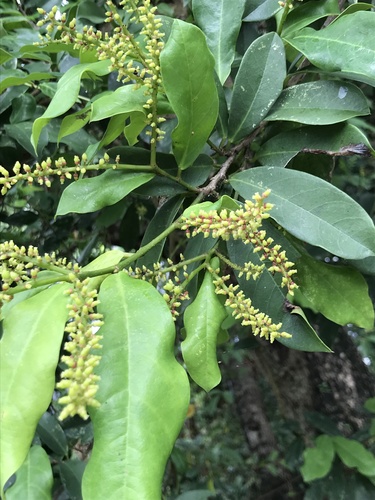
A small evergreen tree. It grows to 10 m high. The trunk can be 18-20 cm across. The small branches are robust. The leaves are simple and alternate. They are oval or broadly sword shaped. They are 20 cm long by 10-13 cm wide. The fruit is a round berry. They are 2.5-3 cm across.
How to Grow
Seedlings need shade to develop.
Notes
There are about 80 Baccaurea species.
Names & Synonyms
Du long
Baccaurea harmandii Gagnep.
References (1)
- Forest Inventory and Planning Institute, 1996, Vietnam Forest Trees. Agriculture Publishing House p 189. Also p 190 (As Baccaurea harmandii)