Baccaurea macrocarpa
(Miq.) Mull. Arg.
Greater Tampoi

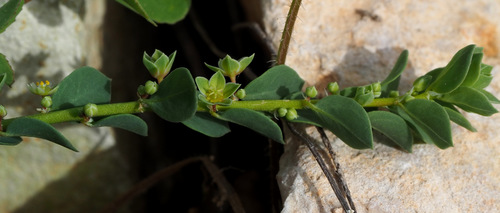
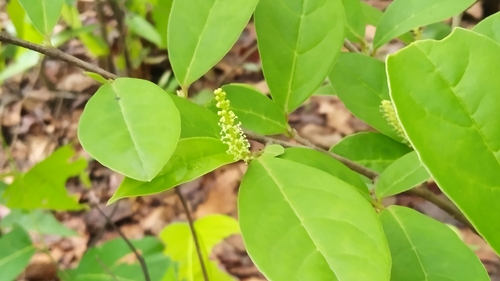
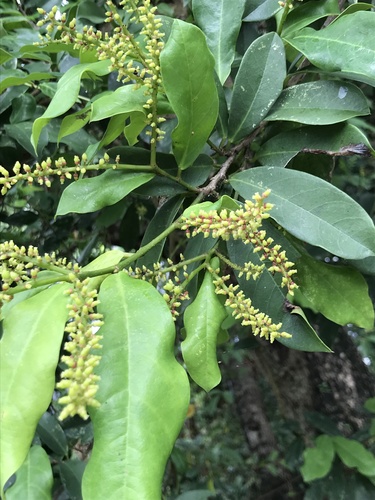
(c) Tony Rodd,保留部分权利(CC BY-NC-SA)
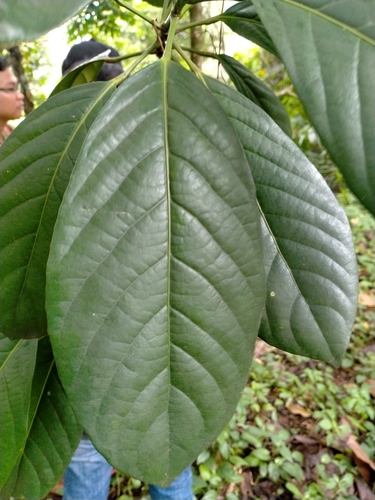
(c) Asih Desi Sartika, some rights reserved (CC BY-NC)
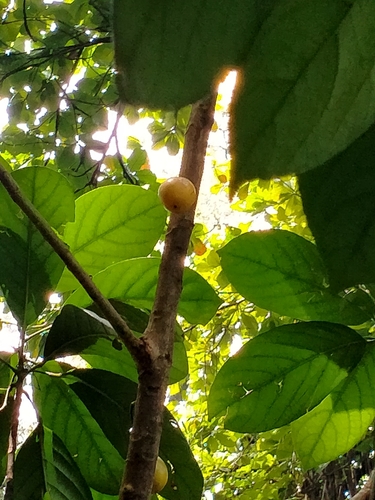
(c) Asih Desi Sartika, some rights reserved (CC BY-NC)
What to Eat
Edible parts: Fruit
Fruit - raw or cooked. A soft, juicy, off-white flesh with a sweet to sour flavour. It can be eaten raw, stewed or preserved. The golden-yellow spherical fruit ranges in diameter from 25 - 60mm, and is borne in small clusters of 3 - 5 fruits.
Where to Find It
A tropical plant. It grows in rainforest and swamp forest. It grows from sea level to 1,600 m altitude.
Asia, Brunei, Indochina, Indonesia, Malaysia, Sarawak, SE Asia, Thailand,
How to Identify
A tree. It grows 27 m high. Male and female flowers are on separate trees. The leaves are oval and 9-37 cm long by 3-18 cm wide. They have long leaf stalks. The leaves are a rusty brown colour underneath. Fruit are large and round. They are 2.5-4.0 cm across. The skin is dull brown. It is slightly rough with little brown spots. The pulp is white and lets light through when ripe.
Nutrition Score: 33/100
| Part | Moisture | kJ | kcal | Protein | Vit A | Vit C | Iron | Zinc |
|---|---|---|---|---|---|---|---|---|
| Fruit | 79.8 | 326 | 78 | 1.5 | — | 0.1 | 0.9 | 18.3 |
How to Grow
Plants can be grown from seeds.
Propagation: Seed - when sown fresh it usually germinates in a few days.
Medicinal Uses
We have no specific information on this species, but the bark of several members of this genus is used to relieve eye inflammation.
Other Uses
We have no specific information for this species, but the bark of several members of this genus is used, along with other ingredients, as a dyestuff to colour silk yellow, red or mauve, using the dyeing process known as 'pekan' in Malay. The timber is strong and durable, used in construction. Although we have no more specific information for this species, most members of this genus produce an excellent timber, which can be used to build houses and boats and to make furniture. In common with other trees that produce their flowers and fruits on the trunk of the tree, members of this genus are generally considered to be good support trees for the climbing rattan palms, which are grown to provide material for basket making, weaving into furniture, making ropes etc.
Wikipedia
Source ↗Baccaurea macrocarpa, also called tampoi, is a small, tropical rainforest substory fruit tree in the family Phyllanthaceae native to Southeast Asia, especially Borneo. It is dioecious, and the female tree bear fruit directly on the trunk and large branches. The fruit is large, orange-skinned, white-fleshed, with a delicious tangy flavour somewhat like mandarin (tangerine). Depending on conditions, the fruit may closely clothe the trunk beautifully, like the fruit of many Ficus species.
Other Information
Fruit are sold in markets. Trees are cultivated.
Notes
There are about 80 Baccaurea species.
Names & Synonyms
Buah setei, Embah cerila, Embak kapur, Jantikan, Jintek merah, Kapul, Kerepis, Kupis, Lang khae, Larah, Pasim salai, Pasin, Pegak, Pekang, Puak tampoi, Pugi, Rambai utan, Setai, Taban, Tampin, Tampoi bunga, Tampoi butang, Tampoi Putih, Tampoi, Terai
References (21)
- Bircher, A. G. & Bircher, W. H., 2000, Encyclopedia of Fruit Trees and Edible Flowering Plants in Egypt and the Subtropics. AUC Press. p 51
- Burkill, I.H., 1966, A Dictionary of the Economic Products of the Malay Peninsula. Ministry of Agriculture and Cooperatives, Kuala Lumpur, Malaysia. Vol 1 (A-H) p 281 (As Baccaurea griffithii)
- Chai, P. P. K. (Ed), et al, 2000, A checklist of Flora, Fauna, Food and Medicinal Plants. Lanjak Entimau Wildlife Sanctuary, Sarawak. Forestry Malaysia & ITTO. p 167
- Chin, H.F., & Yong, H.S., 1996, Malaysian Fruits in Colour. Tropical press, Kuala Lumpur p 82 (As Baccaurea griffithii)
- Chin, H.F., & Yong, H.S., 1996, Malaysian Fruits in Colour. Tropical press, Kuala Lumpur p 82
- A. L. P. P. de Candolle, Prodr. 15(2):459. 1866
- Facciola, S., 1998, Cornucopia 2: a Source Book of Edible Plants. Kampong Publications, p 100
- Giesen, W., 2013, Paludiculture: sustainable alternatives on degraded peat land in Indonesia (revised draft)
- Hoare, A., 2003, Food use of the Lundayeh SW Sabah. Borneo Research Council.
- Hoe, V. B. & Siong, K. H., 1999, The nutritional value of indigenous fruit and vegetables in Sarawak. Asia Pacific J. Clin. Nutr. 8(1):24-31
- Khoo, H. E., et al, 2008, Carotenoid Content of Underutilized Tropical Fruits. Plant Foods for Human Nutrition 63:170-175
- Macmillan, H.F. (Revised Barlow, H.S., et al) 1991, Tropical Planting and Gardening. Sixth edition. Malayan Nature Society. Kuala Lumpur. p 294 (As Baccaurea griffithii)
- Milow, P., et al, 2013, Malaysian species of plants with edible fruits or seeds and their evaluation. International Journal of Fruit Science. 14:1, 1-27
- PROSEA
- Siong, K. H., 2003, Indigenous Fruits of Sarawak. ITTO & Sarawak Forest Department. p 59
- Slik, F., www.asianplant.net
- Sukarya, D. G., (Ed.) 2013, 3,500 Plant Species of the Botanic Gardens of Indonesia. LIPI p 144
- USDA, ARS, National Genetic Resources Program. Germplasm Resources Information Network - (GRIN). [Online Database] National Germplasm Resources Laboratory, Beltsville, Maryland. Available: www.ars-grin.gov/cgi-bin/npgs/html/econ.pl (10 April 2000)
- Wiersema, J. H. & Leon, B., 2013, World Economic Plants. A Standard Reference CRC Press. 2nd Ed. p 89
- World Checklist of Useful Plant Species 2020. Royal Botanic Gardens, Kew
- www.nationalherbarium.nl/thaueuph/ Flora of Thailand.