Baccaurea multiflora
Burck ex J. J. Smith
Tampui burung

Summer Pearce

Conveyor Belt

Royal Botanic Gardens, Kew
What to Eat
Edible parts: Fruit
Fruit - raw. A slightly acid flavour, they are eaten as a snack. The globose fruit is up to 28mm in diameter.
Where to Find It
A tropical plant. It grows in coastal areas. It grows on Bangka Island in Indonesia. It grows between 50-900 m above sea level.
Asia, Indochina, Indonesia, SE Asia, Vietnam,
How to Identify
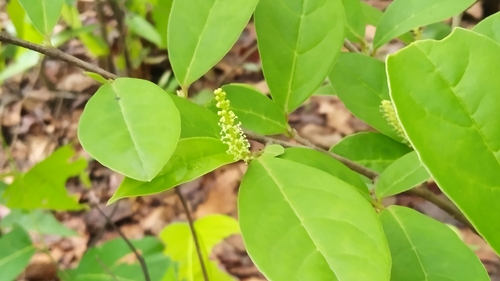
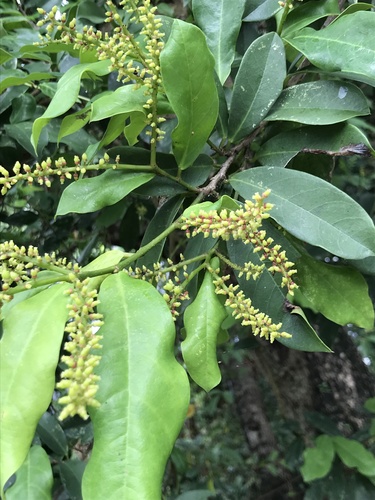
A tree. It grows 8-15 m tall. The trunk is 15 cm across. It has branches low down. The bark is dark grey to brown. The leaves are almost oval. The flowers are small and in the axils of leaves or on the trunk. They can occur singly or in clusters. The fruit are round and yellow. They are 2.5 cm across. The pulp is white and acid.
How to Grow
Plants can be grown by seeds and by grafting.
Propagation: Seed - when sown fresh it usually germinates in a few days.
Medicinal Uses
We have no specific information on this species, but the bark of several members of this genus is used to relieve eye inflammation.
Other Uses
We have no specific information for this species, but the bark of several members of this genus is used, along with other ingredients, as a dyestuff to colour silk yellow, red or mauve, using the dyeing process known as 'pekan' in Malay. Although we have no specific information for this species, most members of this genus produce an excellent timber, which can be used to build houses and boats and to make furniture. In common with other trees that produce their flowers and fruits on the trunk of the tree, members of this genus are generally considered to be good support trees for the climbing rattan palms, which are grown to provide material for basket making, weaving into furniture, making ropes etc.
Notes
There are about 80 Baccaurea species.
References (4)
- Bircher, A. G. & Bircher, W. H., 2000, Encyclopedia of Fruit Trees and Edible Flowering Plants in Egypt and the Subtropics. AUC Press. p 51
- Sukarya, D. G., (Ed.) 2013, 3,500 Plant Species of the Botanic Gardens of Indonesia. LIPI p 145
- Verheij, E. W. M. and Coronel, R.E., (Eds.), 1991, Plant Resources of South-East Asia. PROSEA No 2. Edible fruits and nuts. Pudoc Wageningen. p 320
- World Checklist of Useful Plant Species 2020. Royal Botanic Gardens, Kew