Baccaurea papuana
F. M. Bailey

President and Fellows of Harvard College

President and Fellows of Harvard College

President and Fellows of Harvard College
What to Eat
Edible parts: Fruit
Fruit - raw. Harsh, but refreshing. The pear-shaped to globose fruits are up to 43mm long and 40mm wide.
Where to Find It
A tropical plant. They occur in several lowland areas from sea level up to 1600 m altitude. They are mainly eaten in Gulf and Milne Bay Provinces of Papua New Guinea. It can grow in sago swamps.
Pacific, Papua New Guinea, PNG, Solomon Islands,
How to Identify
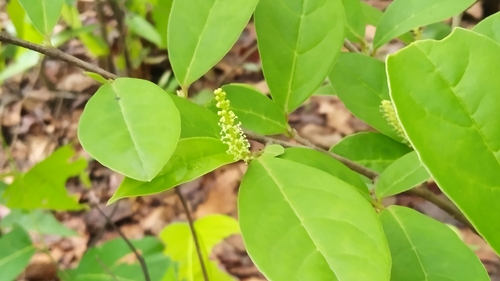
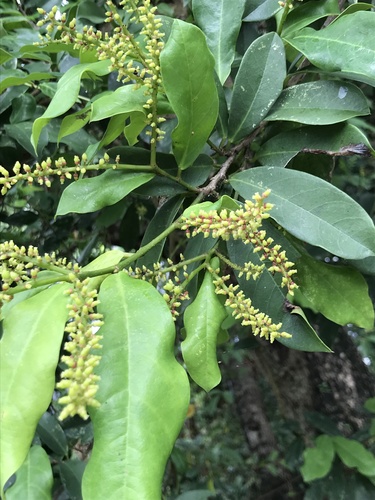
A small tree up to 12 m tall but often only 3-4 m high. The leaves are rather rough and clustered at the ends of the small branches. The leaves are 10 to 18 cm long and 6 to 8 cm wide. The edges of the leaves are wavy and the leaf is tapered towards the base. Flowers form long yellow stalks. These female flower stalks are 15-20 cm long. They have a sweet smell. The fruit hang on a chain (raceme) from the branches and main trunk. The fruit are 4-5 cm across and turn yellow when ripe. Male and female trees occur. The flower gives off a strong smell. The fruit have several seeds inside.
How to Grow
They are both cultivated and grow wild from seed.
Propagation: Seed - when sown fresh it usually germinates in a few days.
Medicinal Uses
We have no specific information on this species, but the bark of several members of this genus is used to relieve eye inflammation.
Other Uses
We have no specific information for this species, but the bark of several members of this genus is used, along with other ingredients, as a dyestuff to colour silk yellow, red or mauve, using the dyeing process known as 'pekan' in Malay. Although we have no specific information for this species, most members of this genus produce an excellent timber, which can be used to build houses and boats and to make furniture. In common with other trees that produce their flowers and fruits on the trunk of the tree, members of this genus are generally considered to be good support trees for the climbing rattan palms, which are grown to provide material for basket making, weaving into furniture, making ropes etc.
Other Information
An indigenous tree in Papua New Guinea, valued in some areas and at least worth evaluation.
Notes
There are about 80 Baccaurea species.
Names & Synonyms
Mapiok, Matrugam, Motroka, Yanak
References (5)
- Flora of Papua New Guinea Lae National Herbarium
- French, B.R., 1986, Food Plants of Papua New Guinea, Asia Pacific Science Foundation p 235
- Leach, G. J., 1988, Bush Food Plants of the Blackwater and Karawari Rivers Area, East Sepik Province, Papua New Guinea. Science in New Guinea 14(2). p 100
- Walter, A. & Sam C., 2002, Fruits of Oceania. ACIAR Monograph No. 85. Canberra. p 278
- World Checklist of Useful Plant Species 2020. Royal Botanic Gardens, Kew