Baccaurea ramiflora
Lour.
Burmese-grape

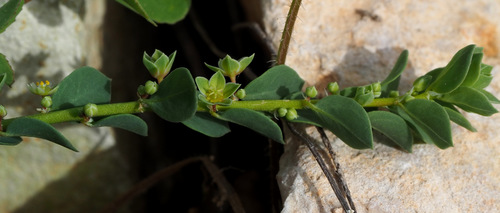
(c) 刘光裕 Liu Guangyu, some rights reserved (CC BY-NC), uploaded by 刘光裕 Liu Guangyu

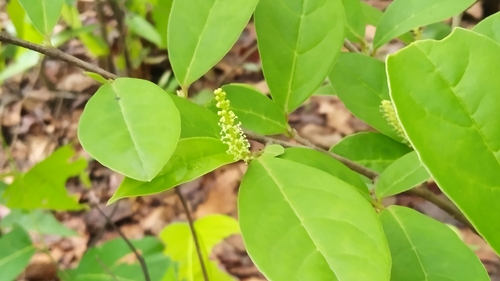
(c) Phuong Tran, some rights reserved (CC BY)
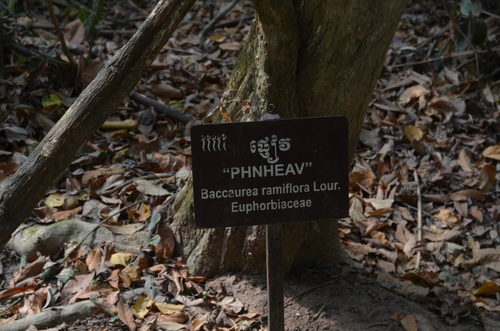
(c) berkovec, some rights reserved (CC BY-NC)
What to Eat
Edible parts: Fruit, Leaves, Flowers
The bark, roots, and wood are dried and ground before boiling in water. Fruits can be kept fresh for 4–5 days, or boiled and mixed with salt after which it keeps well in closed jars. The fruit has marginal importance, used and sold locally.
Where to Find It
A tropical plant. It grows in dense forest. They suit the humid tropical lowlands. In Yunnan in China it grows between 800-1100 m altitude. It grows in limestone areas. In XTBG Yunnan.
Andamans, Asia, Bangladesh, Bhutan, Cambodia, China, Himalayas, India, Indochina, Indonesia, Laos, Malaysia, Myanmar, Nepal, Northeastern India, SE Asia*, Sikkim, Thailand, Vietnam,
How to Identify
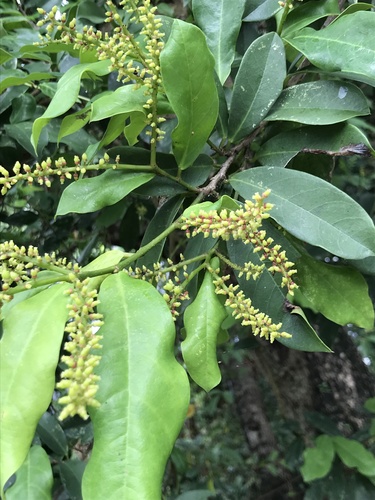
An evergreen tree. It grows 10-15 m tall. The trunk is 20-30 cm across. The branches have velvety hairs pressed against them. The leaves are broadly sword shaped and taper to a very short tip. The leaves are oval and 10-20 cm long by 4-9 cm wide. The leaf stalks are 1-8 cm long. The leafy growth at the base of the leaves (stipule) is sword shaped and with a fringe on the edge. The flowering stalks occur on the branches and the trunk. Male and female flowers are on separate trees. The male flowering stalks are 3-8 cm long. Female flowering stalks are 14 cm long. Fruit are oval and about 3-4 cm across. The fruit do not have hairs. They ripen to pinkish or bright red.
Nutrition Score: 34/100
| Part | Moisture | kJ | kcal | Protein | Vit A | Vit C | Iron | Zinc |
|---|---|---|---|---|---|---|---|---|
| Fruit | 84.7 | 218.6 | 52.3 | 9.3 | — | 1.6 | — | — |
| Leaves | 118 | 28 | 0.6 | — | 2 | — | — | — |
| Fruit | — | — | 5.6 | — | 273 | — | — | — |
| Flowers | — | — | — | — | — | — | — | — |
| Leaves | — | — | — | — | — | — | — | — |
| Fruit | 35.6 | — | — | 5.6 | — | 0.3 | — | — |
How to Grow
Plants are grown from fresh seed. Seedlings need shade.
Propagation: Seed - easily germinated, when fresh it usually germinates in a matter of days. Air layering. Budding and grafting.
Medicinal Uses
The fruit is harvested and used locally, eaten as a fruit, stewed or made into wine; it is also used medicinally to treat skin diseases. The bark, roots and wood are harvested for medicinal uses. The fruit is oval, colored yellowish, pinkish to bright red or purple, 2.5–3.5 cm (0.98–1.38 in) in diameter, glabrous, with 2–4 large purple-red seed, with white aril.
Other Uses
The bark, roots and wood are used to produce a brown-red dye.. We have no specific information for this species, but the bark of several members of this genus is used, along with other ingredients, as a dyestuff to colour silk yellow, red or mauve, using the dyeing process known as 'pekan' in Malay. The bark is used as a mordant in dyeing. The heartwood is yellowish brown, darkening to brown with an orange-yellow to purple-red tinge; it is not clearly differentiated from the sapwood. The grain can be straight or interlocked; texture moderately fine and uneven due to wide rays; wood with slight silver grain on quarter-sawn surface. The wood is moderately hard, moderately strong, reputed to be durable. It is used for cabinet work, construction, agricultural implements, furniture, boats and for smaller items[, 404. 598]. The tree is often cultivated in the home garden and intercropped with other tropical fruits like durian, rambutan, and mango. In common with other trees that produce their flowers and fruits on the trunk of the tree, members of this genus are generally considered to be good support trees for the climbing rattan palms, which are grown to provide material for basket making, weaving into furniture, making ropes etc.
Wikipedia
Source ↗Baccaurea ramiflora is a species of flowering plant in the family Phyllanthaceae. This slow-growing evergreen tree is sometimes referred to in English by the common name Burmese grape. It grows up to 25 m (82 ft) in height, with a spreading crown and thin bark.
Production
In India fruit are available September to November. Trees can yield 21-156 kg per tree.
Other Information
It is a cultivated food plant. Fruit are sold in markets. The fruit are popular.
Notes
There are about 80 Baccaurea species. It is high in antioxidant activity. It is rich in Vitamin C.
Names & Synonyms
Bheri aash, Bhubi, Bubi, Bureng, Buri, Dampejuk, Dampiyu, Dau da dat, Dau trai nhon, Dazau mien dzu o'i, Dojuka, Du qua nhon, F'ai, Fai, Giau gia dat, Giau tien, Haichao, Hamkang, Harphata, Heipan, Kabum, Kalaphal, Kanazo, Kataphal, Kauchi, Khattaphal, Khusmai, Khusumai, Kojuka, Kosmai thai, Kusum, Lateku, Latka, Latkan, Latqua, Lerkho, Lerko, Leteku, Letuk, Lot-Kon, Lutco, Lotkua, Ma-fai, Mafai setambun, Mafai, Mafei, Ma phai, Men lai biu, Motok hei, Mu nai guo, Notko, Otumethi, Pangkai thei, Perpel, Phnhiev, Phnhiew, Phnu, Pnheav, Puli, Purpor, Sa-shu-la, Si shuo si, Si suo a si, Sohmyndong, Soh-ram-dieng, Somfai, Tajan molek, Tampoi, Tempui, Theipangkai, Xisu
References (104)
- A. L. P. P. de Candolle, Prodr. 15(2):459. 1866 (As Baccaurea sapida)
- Aiguo, C. & Zhiling, D., 2001, Managing Agricultural Resources for Biodiversity Conservation. Case Study Yunnan, Southwest China. Environment Liaison Center International. p 15, 44
- Altschul, S.V.R., 1973, Drugs and Foods from Little-known Plants. Notes in Harvard University Herbaria. Harvard Univ. Press. Massachusetts. no. 2152, no. 2153 (As Baccaurea cauliflora)
- Ambasta S.P. (Ed.), 2000, The Useful Plants of India. CSIR India. p 65
- Anderson, E. F., 1993, Plants and people of the Golden Triangle. Dioscorides Press. p 203
- Arora, K., Indigenous Forest Management in the Andaman and Nicobar Islands, India.
- Arora, R. K., 2014, Diversity in Underutilized Plant Species - An Asia-Pacific Perspective. Bioversity International. p 60
- Baishya, S. Kr., et al, 2013, Survey of Wild Edible Fruits of Dhubri District, Assam, India. Plant Archives Vol 13 (1): 155-158
- BARC, 2016, State of Biodiversity for Food and Agriculture in Bangladesh. Bangladesh Agricultural Research Council.
- Bingtao, Li, et al, Euphorbiaceae. p 216
- Bircher, A. G. & Bircher, W. H., 2000, Encyclopedia of Fruit Trees and Edible Flowering Plants in Egypt and the Subtropics. AUC Press. p 51 (Also as Baccaurea wrayi and Baccaurea cauliflora and Baccaurea oxycarpa and Baccaurea sapida and Baccaurea wrayi)
- Blench, R., 2004, Fruits and Arboriculture in the Indo-Pacific Region. Indo-Pacific Prehistory Association Bulletin 24. (Taipei Papers Volume 2) p 35
- Brahma, S., et al, 2013, Wild edible fruits of Kokrajhar district of Assam, North-East India, Asian Journal of Plant Science and Research 3(6):95-100
- Burkill, I.H., 1966, A Dictionary of the Economic Products of the Malay Peninsula. Ministry of Agriculture and Cooperatives, Kuala Lumpur, Malaysia. Vol 1 (A-H) p 284 (As Baccaurea wrayi)
- Cao, Y., et al, 2020, Ethnobotanical study on wild edible plants used by three trans-boundary ethnic groups in Jiangcheng County, Pu’er, Southwest China. Journal of Ethnobiology and Ethnomedicine (2020) 16:66
- Cengel, D. J. & Dany. C., (Eds), 2016, Integrating Forest Biodiversity Resource Management and Sustainable Community Livelihood Development in the Preah Vihear Protected Forest. International Tropical Timber Organization p 110
- Chakraborty, S. & Chaturbedi, H. P., 2014, Some Wild Edible Fruits of Tripura- A Survey. Indian Journal of Applied research. (4) 9
- Das, T. & Das, A. K., 2005, Inventorying plant biodiversity in homegardens: A case study in Barak Valley, Assam, North East India. CURRENT SCIENCE, VOL. 89, NO. 1, 10 JULY 2005
- Delang, C. O., 2007, Ecological Succession of Usable Plants in an Eleven-Year Fallow Cycle in North Lao P.D.R., Ethnobotany Research and Applications. Vol. 5:331-350 (As Baccaurea oxycarpa)
- Devi, O.S., P. Komor & D. Das, 2010, A checklist of traditional edible bio-resources from Ima markets of Imphal Valley, Manipur, India. Journal of Threatened Taxa 2(11): 1291-1296 (As Baccaurea sapida)
- Dobriyal, M. J. R. & Dobriyal, R., 2014, Non Wood Forest Produce an Option for Ethnic Food and Nutritional Security in India. Int. J. of Usuf. Mngt. 15(1):17-37
- Eiadthong, W., et al, 2010, Management of the Emerald Triangle Protected Forests Complex. Botanical Consultant Technical Report. p 23
- Ethnobotany of Karbis. Chapter 4 in p 103
- Flora of China Vol. 11, p 216 and Flora of China. www.eFloras.org
- Forest Inventory and Planning Institute, 1996, Vietnam Forest Trees. Agriculture Publishing House p 191 (As Baccaurea oxycarpa)
- Ghorbani, A., et al, 2012, A comparison of the wild food plant use knowledge of ethnic minorities in Naban River Watershed Nature Reserve, Yunnan, SW China. Journal of Ethnobiology and Ethnomedicine; 8:17
- Hazarika, T. K., et al, 2012, Studies on wild fruits of Mizoram, India used as ethno-medicines. Genetic Resources and Crop Evolution. Published on line 03 February, 2012
- Hazarika, B. et al. (2020). An overview of the unexplored underutilized fruit crops of Assam, India. Journal of Applied and Natural Science, 12(3): 442 - 453. (As Baccaurea sapida)
- Hedrick, U.P., 1919, (Ed.), Sturtevant's edible plants of the world. p 89 (As Baccaurea sapida)
- Hu, Shiu-ying, 2005, Food Plants of China. The Chinese University Press. p 509
- Jeeva, S., 2009, Horticultural potential of wild edible fruits used by the Khasi tribes of Meghalaya. Journal or Horticulture and Forestry Vol. 1(9) pp. 182-192 (Also as Baccaurea sapida)
- Jin, Chen et al, 1999, Ethnobotanical studies on Wild Edible Fruits in Southern Yunnan: Folk Names: Nutritional Value and Uses. Economic Botany 53(1) pp 2-14
- Kachenchart, B., et al, 2008, Phenology of Edible Plants at Sakaerat Forest. In Proceedings of the FORTROP II: Tropical Forestry Change in a Changing World. Bangkok, Thailand.
- Kar, A., & Borthakur, S. K., 2008, Wild edible fruits of Karbi's of Karbi Anglong district of Assam, India, Pleione 2(2): 175-181 (As Baccaurea sapida)
- Lalfakzuala, R., 2007, Ethnobotanical usages of plants in western Mizoram. Indian Journal of Traditional Knowledge. Vol 6(3) pp 480-493
- Lungphi, P., Wangpan, T. & Tangjang, S., 2018, Wild edible plants and their additional uses by the Tangsa community living in the Changlang district of Arunachal Pradesh, India. Pleione 12(2): 151 - 164. 2018.
- Luo, B., et al, 2019, Wild edible plants collected by Hani from terraced rice paddy agroecosystem in Honghe Prefecture, Yunnan, China. Journal of Ethnobiology and Ethnomedicine 15:56
- Macmillan, H.F. (Revised Barlow, H.S., et al) 1991, Tropical Planting and Gardening. Sixth edition. Malayan Nature Society. Kuala Lumpur. p 294
- Majumdar, K and Datta, N., 2009, Traditional wild edible fruits for the forest dwellers of Tripura, India. Pleione 3(2) 167-178
- Medhi, P., Sarma, A and Borthakur, S. K., 2014, Wild edible plants from the Dima Hasao district of Assam, India. Pleione 8(1): 133-148
- Maikhuri, R, K, and Gangwar, A. K., 1993, Ethnobiological Notes on the Khasi and Garo Tribes of Meghalaya, Northeast India, Economic Botany, Vol. 47, No. 4, pp. 345-357 (As Baccaurea sapida)
- Manju, S., and Sundriyal, R. C., 2001, Wild Edible Plants of the Sikkim Himalaya: Nutritive Values of Selected Species. Economic Botany 55(3): 377-390 (As Baccaurea sapida)
- Manju Sundriyal, and R. C. Sundriyal, 2003, Underutilized edible plants of the Sikkim Himalaya: Need for domestication. Current Science, Vol. 85, No. 6, p 731 (As Baccaurea sapida)
- Mann, S., et al, 2016, Evaluation of nutritional and phytochemical profiling of Baccaurea ramiflora Lour. syn. Baccaurea sapida (Roxb.) Mull.Arg. fruits. Indian Journal of Traditional Knowledge. Vol. 15(1) PP. 135-142
- Martin, F.W. & Ruberte, R.M., 1979, Edible Leaves of the Tropics. Antillian College Press, Mayaguez, Puerto Rico. p 191 (As Baccaurea sapida)
- Martin, M.A., 1971, Introduction L'Ethnobotanique du Cambodge. Centre National de la Recherche Scientifique. Paris. (As Baccaurea sapida)
- McMakin, P.D., 2000, Flowering Plants of Thailand. A Field Guide. White Lotus. p 106 (As Baccaurea sapida)
- Medhi, P. & Borthakur, S. K., 2012, Phytoresources from North Cachur Hills of Assam -3: Edible plants sold at Hflong market. Indian Journal of Natural Products and Resources. 3(1) pp 84-109
- Milow, P., et al, 2013, Malaysian species of plants with edible fruits or seeds and their evaluation. International Journal of Fruit Science. 14:1, 1-27
- Mozhui, R., et al, 2011, Wild edible fruits used by the tribals of Dimapur district of Nagaland, India. Pleione 5(1): 56 - 64.
- Mot So Rau Dai an Duoc O Vietnam. Wild edible Vegetables. Ha Noi 1994, p 222
- Murtem, G. & Chaudhrey, P., 2016, An ethnobotanical note on wild edible plants of Upper Eastern Himalaya, India. Brazilian Journal of Biological Sciences, 2016, v. 3, no. 5, p. 63-81 (As Baccaurea sapida)
- Ong, H., et al, 2012, Traditional knowledge and usage of edible plants among the Semai community of Kampung Batu 16, Tapah, Perak, Malaysia. Scientific Research and Essays Vol. 7(4), pp. 441-445, 30 January, 2012
- Pandey, Y., Upadhyay, S. & Bhatt, S. S., 2018, Phyto-chemical constituent os some wild edible fruits of Sikkim Himalaya. Journal of Pharmacognosy and Phytochemistry 2018; 7(3): 1045-1047 (As Baccaurea sapida)
- Partha, P., 2014, Ethnobotany of the Laleng (Patra) Community in Bangladesh. Journal of Pharmacognosy and Phytochemistry. 2(6):173-184
- Pasha, M. K. & Uddin, S. B., 2019, Minor Edible Fruits of Bangladesh. Bangladesh J. Plant Taxon. 26(2): 299–313
- Patiri, B. & Borah, A., 2007, Wild Edible Plants of Assam. Geethaki Publishers. p 126
- Paul, A., 2013, Minor and uncultivated fruits of Eastern India, 2nd International Symposium on Minor Fruits and Medicinal Plants (As Baccaurea sapida)
- Pegu, R., et al, 2013, Ethnobotanical study of Wild Edible Plants in Poba Reserved Forest, Assam, India. Research Journal of Agriculture and Forestry Sciences 1(3):1-10
- Pfoze, N. L., et al, 2012, Assessment of Local Dependency on Selected Wild Edible Plants and fruits from Senapati district, Manipur, Northeast India. Ethnobotany Research & Applications 10:357-367 (As Baccaurea sapida)
- Pfoze, N. L., et al, 2012, Survey and assessment of floral diversity on wild edible plants from Senapati district of Manipur, Northeast India. Journal of Biodiversity and Environmental Sciences. 1(6):50-52 (As Baccaurea sapida)
- Phangchopi, U., et al, 2015, Diversity of wild edible plants in Marat Longri Wildlife Sanctuary, Assam. Indian Journal of Natural Products and Resources Vol. 6(4), December 2015 pp. 305-313
- Phon, P., 2000, Plants used in Cambodia. © Pauline Dy Phon, Phnom Penh, Cambodia. p 83
- PROSEA (Plant Resources of South East Asia) handbook, Volume 2, 1991, Edible fruits and nut. p 98
- PROSEA handbook Volume 9 Plants yielding non-seed carbohydrates. p 187
- Purseglove, J.W., 1968, Tropical Crops Dicotyledons, Longmans. p 139 (As Baccaurea sapida)
- Ray, A., et al, 2020, How many Wild Edible Plants do we Use. Frontiers in Sustainable Food Systems. 4:56 p 12
- Rymbai, H., et al, 2016, Analysis study on potential underutilized edible fruit genetic resources of the foothills track of Eastern Himalayas, India. Genetic. Resourc. Crop Evol. (2016) 63:125-139
- Sang, D. T., & Mizoue, K. O. N., 2012, Use of Edible Forest Plants among Indigenous Ethnic Minorities in Cat Tien Biosphere Reserve, Vietnam. Asian Journal of Biodiversity Vol. 3 (1), p 23-49 (Also as Baccaurea oxycarpa)
- Sarma, H., et al, 2010, Updated Estimates of Wild Edible and Threatened Plants of Assam: A Meta-analysis. International Journal of Botany 6(4): 414-423
- Savita, et al, 2006, Studies on wild edible plants of ethnic people in east Sikkim. Asian J. of Bio Sci. (2006) Vol. 1 No. 2 : 117-125 (As Baccaurea sapida)
- Sawian, J. T., et al, 2007, Wild edible plants of Meghalaya, North-east India. Natural Product Radiance Vol. 6(5): p 413 (Also as Baccaurea sapida)
- Seal, T., et al, 2014, Nutritional potential of wild edible fruits traditionally used by the local people of Meghalaya state in India. Indian Journal of Natural Products and Resources. Vol. 5(4) December 2014 pp. 359-364 (As Baccaurea sapida)
- Singh, B., et al, 2012, Wild edible plants used by Garo tribes of Nokrek Biosphere Reserve in Meghalaya, India. Indian Journal of Traditional Knowledge. 11(1) pp 166-171
- Singh, V. B., et al, (Ed.) Horticulture for Sustainable Income and Environmental Protection. Vol. 1 p 214
- Singh, H.B., Arora R.K.,1978, Wild edible Plants of India. Indian Council of Agricultural Research, New Delhi. p 50 (As Baccaurea sapida)
- Singh, P.K., Singh, N.I., and Singh, L.J., 1988, Ethnobotanical Studies on Wild Edible Plants in the Markets of Manipur - 2. J. Econ. Tax. Bot. Vol. 12 No. 1 pp 113-119 (As Baccaurea sapida)
- Singh, K.K., Singh, M. & Joshi, S. C., 2014, Phenolic content and Antioxidant Activity of some Underutilized Wild Edible Fruits of the Sikkim Himalaya. SMU Medical Journal. Vol. 1, No. 2 July 2014 (As Baccaurea sapida)
- Sosef, M. S. M., Hong, L. T., & Prawirohatmodjo, S., (Eds.), 1998, Timber tree: Lesser-known timbers. Plant Resources of South-East Asia, 5(3), p 92
- Suksri, S., et al, 2005, Ethnobotany in Bung Khong Long Non-Hunting Area, Northeast Thailand. Kasetsart J., (Nat. Sci) 39: 519-533
- Sundriyal, M., et al, 1998, Wild edibles and other useful plants from the Sikkim Himalaya, India. Oecologia Montana 7:43-54 (As Baccaurea sapida)
- Sundriyal, Manju and Sundriyal R. C., 2001, Seed Germination and Response of Stem-cuttings to Hormonal Treatment in Six Priority Wild Edible Fruit Species in Sikkim Himalaya. Indian Forester Vol. 127 No. 6 June 2001. pp 695-717
- Sundriyal, M. & Sundriyal, R. C., 2001, Wild Edible Plants of the Sikkim Himalaya: Nutritive Value of Selected Species. Economic Botany 55(3): 377-390 (As Baccaurea sapida)
- Sundriyal, M. & Sundriyal, R. C., 2003, Underutilized edible plants of the Sikkim Himalaya: Need for domestication. Current Science. Vol. 85, No. 6
- Sundriyal, Manju and R. C. Sundriyal, Wild Edible Plants of the Sikkim Himalaya: Marketing, Value Addition and Implications for Management. Economic Botany: Vol. 58, No. 2, pp. 300–315 (As Baccaurea sapida)
- Sundriyal, M., et al, 2004, Dietary Use of Wild Plant Resources in the Sikkim Himalaya, India. Economic Botany 58(4) pp 626-638 (As Baccaurea sapida)
- Sundriyal, M. & Sundriyal, R. C., 2004, Structure, Phenology, Fruit Yield, and Future Prospects of some Prominent Wild Edible Plant Species of the Sikkim Himalaya, India. Journal of Ethnobiology 24(1): 113-138 (As Baccaurea sapida)
- Suresh, C. P. et al, 2014, Wild Edible Tree Fruits of Sikkim Himalayas. Journal of Tree Sciences 33(1): 43-48
- Taram, M., et al, 2018, Wild Food Plant Resources of Komkar Adi Tribe of Upper Siang District in Arunachal Pradesh, India. Bulletin of Arunachal Forest Research, Vol. 33(2), 27-35
- Teron, R. & Borthakur, S. K., 2016, Edible Medicines: An Exploration of Medicinal Plants in Dietary Practices of Karbi Tribal Population of Assam, Northeast India. In Mondal, N. & Sen, J.(Ed.) Nutrition and Health among tribal populations of India. p 151
- Thitiprasert, W., et al, 2007, Country report on the State of Plant Genetic Resources for Food and Agriculture in Thailand (1997-2004). FAO p 95
- Thorng, R., et al, 2015, Roles of Wild Food Plants in Ethnic Group Communities in Mondulkiri Province, Northeastern Cambodia. Journal of Mekong Societies Vol.11 No.2 May-August 2015 pp. 1-17
- Turreira Garcia, N., et al, 2017, Ethnobotanical knowledgeof the Kuy and Khmer people in Prey Lang, Cambodia. Cambodian Journal of Natural History 2017 (1): 76-101
- Uprety, Y., et al, 2016, Traditional use and management of NTFPs in Kangchenjunga Landscape: implications for conservation and livelihoods. Journal of Ethnobiology and Ethnomedicine (2016) 12:19
- USDA, ARS, National Genetic Resources Program. Germplasm Resources Information Network - (GRIN). [Online Database] National Germplasm Resources Laboratory, Beltsville, Maryland. Available: www.ars-grin.gov/cgi-bin/npgs/html/econ.pl (10 April 2000)
- Van Sam, H. et al, 2004, Trees of Laos and Vietnam: A Field Guide to 100 Economically or Ecologically Important Species. Blumea 29 (2004) 201-349
- Van Sam, H. et al, 2008, Uses and Conservation of Plant Species in a National Park. A case study of Ben En, Vietnam. Economic Botany 62:574-593
- Wiersema, J. H. & Leon, B., 2013, World Economic Plants. A Standard Reference CRC Press. 2nd Ed. p 89
- Wild edible plants of Himachal Pradesh (As Baccaurea sapida)
- World Checklist of Useful Plant Species 2020. Royal Botanic Gardens, Kew
- www.nationalherbarium.nl/thaueuph/ Flora of Thailand.
- Xu, Z., Tao, G. & Tan, J., 1988, Tropical Wild Flowers and Plants in Xishuangbanna, Agricultural Publishing House. photo 108
- Zawiah, N. & Othaman, H., 2012, 99 Spesies Buah di FRIM. Institut Penyelidikan Perhutanan Malaysia. p 60
- Zeven, A. C. & de West, J. M. J., 1982, Dictionary of cultivated plants and their regions of diversity. Wageningen. p 73 (As Baccaurea sapida)