Baccaurea malayana
(Jack) King ex Hook.f.
Tampoi
PhyllanthaceaeFruit

gbif · cc-by
GBIF
GBIF
What to Eat
Edible parts: Fruit
The fruit are eaten.
Where to Find It
A tropical plant.
Asia, Indonesia, Malaysia, Pacific, Philippines, SE Asia,
Countries: United Arab Emirates, Afghanistan, Armenia, Australia, Azerbaijan, Bangladesh, Bahrain, Brunei, Bhutan, China, Fiji, Micronesia, Georgia, Indonesia, Israel, India, Iraq, Iran, Jordan, Japan, Kyrgyzstan, Cambodia, Kiribati, North Korea, South Korea, Kuwait, Kazakhstan, Laos, Lebanon, Sri Lanka, Marshall Islands, Myanmar, Mongolia, Maldives, Malaysia, Nepal, Nauru, New Zealand, Oman, Papua New Guinea, Philippines, Pakistan, Palau, Qatar, Saudi Arabia, Solomon Islands, Singapore, Syria, Thailand, Tajikistan, Timor-Leste, Turkmenistan, Tonga, Turkey, Tuvalu, Taiwan, Uzbekistan, Vietnam, Vanuatu, Samoa, Yemen
How to Identify
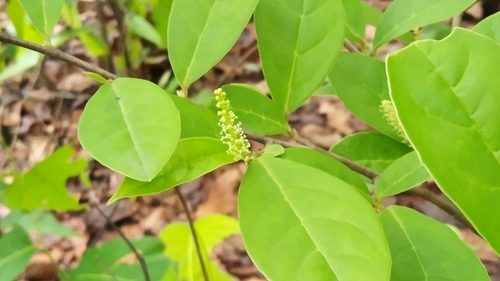
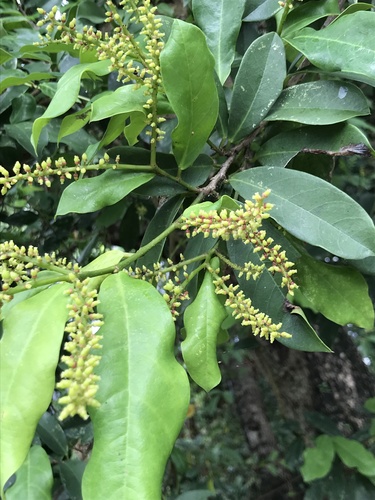
A big tree. It grows 20-25 m high. The leaves are narrowly oval. Male and female flowers are on separate trees. Male flowers are slender and like spikes. The female flowers have a grey covering. The fruit are pale green to yellow. They are 2-5 cm long. The white flesh around the seeds is edible.
Other Information
The fruit are sold in markets.
Notes
There are about 80 Baccaurea species.
Names & Synonyms
Berket, Jahakah, Kandim, Knep, Lara, Marish, Paloh, Peli, Tabeng, Tampon tungau, Tampul, Tempuni
Hedycarpus malayanus Jack
References (4)
- Bircher, A. G. & Bircher, W. H., 2000, Encyclopedia of Fruit Trees and Edible Flowering Plants in Egypt and the Subtropics. AUC Press. p 51
- Burkill, I.H., 1966, A Dictionary of the Economic Products of the Malay Peninsula. Ministry of Agriculture and Cooperatives, Kuala Lumpur, Malaysia. Vol 1 (A-H) p 281
- Coronel, R.E., 1982, Fruit Collections in the Philippines. IBPGR Newsletter p 9
- Ong, H., et al, 2012, Traditional knowledge and usage of edible plants among the Semai community of Kampung Batu 16, Tapah, Perak, Malaysia. Scientific Research and Essays Vol. 7(4), pp. 441-445, 30 January, 2012