Tacca integrifolia
Ker.-Gawl.
Cat's whiskers, Bat-flower

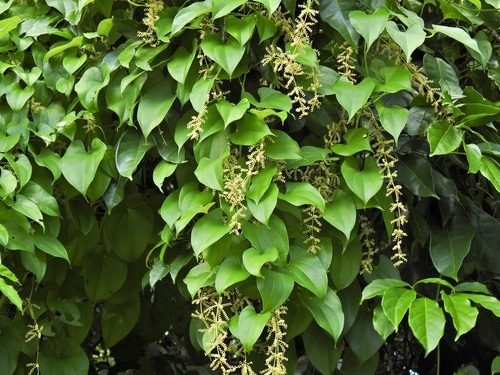
(c) Vicki Ashton, some rights reserved (CC BY-NC-SA)

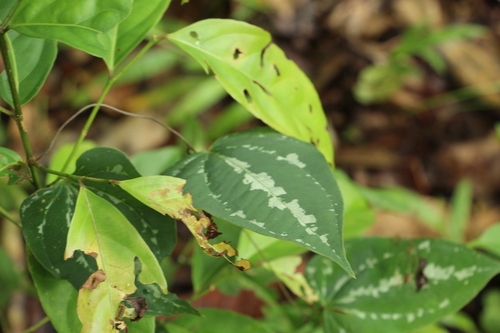
(c) Tim Park, some rights reserved (CC BY), uploaded by Tim Park
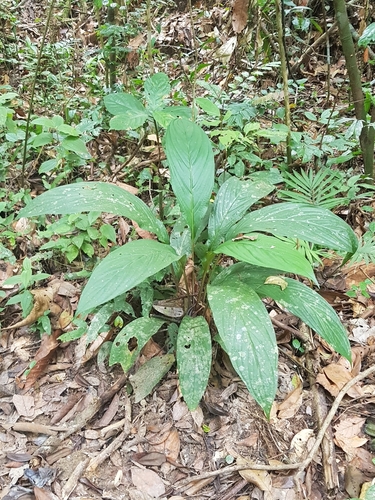
(c) Cheongweei Gan, some rights reserved (CC BY-NC), uploaded by Cheongweei Gan
What to Eat
Edible parts: Tubers, Root, Leaf stalk
In the Malay Peninsula, its leaves are dried to make cigarette wrappers.
Where to Find It
A tropical plant. It grows on monsoon forest. It needs a seasonally moist and dry climate. It needs a fertile, humus-rich, well-drained soil. In Tibet is grows on mountain slopes between 800-900 m above sea level. It needs a neutral to acid pH. It needs light shade. It suits hardiness zones 10-12. In Cairns Botanical Gardens.
Asia*, Australia, Bangladesh, Bhutan, Cambodia, China, Himalayas, India, Indochina, Indonesia, Laos, Malaysia, Myanmar, Northeastern India, Pakistan, SE Asia, Sri Lanka, Thailand, Tibet, Vietnam,
How to Identify
A herb which has tubers and becomes dormant for part of the year. It grows 75 cm high. The leaves form at the base and are sword shaped or broadly oval. They are 50 cm long. They are glossy dark green. The leaf stalks are purple. The flowers are purplish. They have short stalks. There are 2 broad, spreading bracts. These are white to purple. There are 2 narrower bracts below. There are long threadlike bracteoles. These are 20-25 cm long.
How to Grow
They are grown by division or from cuttings of old tubers. Seeds can be used and these take 3 years to flowering. The seeds are sown on the soil surface.
Wikipedia
Source ↗Tacca integrifolia, also known as the white batflower or the black lily, is a species of flowering plant in the family Dioscoreaceae. It is native to tropical and subtropical rainforests in hilly regions of South Asia, including Pakistan, Bangladesh, Indochina, the Malay Peninsula, Sumatra, Java and eastern China.
Notes
Also put in the family Taccaceae.
Names & Synonyms
Barba del gato, Dukerkanda, Handigedde, Keladi murai, Kya-mokseik, Motimunda, Thialkha, Vrahikanda, Ye-kya
References (10)
- Ambasta, S.P. (Ed.), 2000, The Useful Plants of India. CSIR India. p 616 (Also as Tacca laevis)
- Bot. Mag. 36: t. 1488. 1812
- Cundall, P., (ed.), 2004, Gardening Australia: flora: the gardener's bible. ABC Books. p 1396
- Hibbert, M., 2002, The Aussie Plant Finder 2002, Florilegium. p 296
- Kar, A., et al, 2013, Wild Edible Plant Resources used by the Mizos of Mizoram, India. Kathmandu University Journal of Science, Engineering and Technology. Vol. 9, No. 1, July, 2013, 106-126
- Lalfakzuala, R., 2007, Ethnobotanical usages of plants in western Mizoram. Indian Journal of Traditional Knowledge. Vol 6(3) pp 480-493
- Llamas, K.A., 2003, Tropical Flowering Plants. Timber Press. p 355
- Mohd, N. G. et al, 2014, A Preliminary Flora Survey in Gunung Kajang, Pulau Tioman, Pahang Darul Makmur, Malaysia. Malays. Appl. Biol. 43(2): 17-23
- Rahangdale, D.R. & Rahangdale, S.S., 2014, Potential Wild Edible Plant Resources from Maharashtra Future Prospects for their Conservation and Improvement. Life Science Leaflets. http://lifesciencesleaflets.ning.com
- Sukarya, D. G., (Ed.) 2013, 3,500 Plant Species of the Botanic Gardens of Indonesia. LIPI p 1137