Phormium colensoi
Hook.f.
Wharariki, Mountain flax
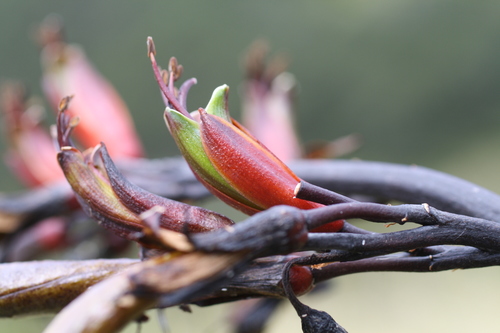
(c) memopob, some rights reserved (CC BY-NC), uploaded by memopob

Wikimedia Commons - Avenue

Wikimedia Commons - Avenue
What to Eat
Edible parts: Flower nectar, Gum
Wharariki - a variety from Urewera has a superior fibre quality that may be woven into a soft kete [traditional Māori basket]. It has a slight yellow colouration when dried. Whakaari - a variety with leaves suitable for weaving kete, but less suitable than other cultivars for piupiu [Māori waist-to-knees garment made of flax - has a wide waistband and is used in modern times for kapa haka performances]. The leaves have strong blades and dry naturally to a deep green colour, or to a pale greenish-fawn after being boiled for a minute.
Where to Find It
It is a temperate plant. It grows on coastal cliffs and mountain slopes in New Zealand. It can grow in light shade. It is best in moist or wet soil. It can tolerate exposure to seaside conditions. It is hardy to hardiness zone 8. Hobart Botanical gardens.
Australia, Britain, Europe, New Zealand*, Tasmania,
How to Identify
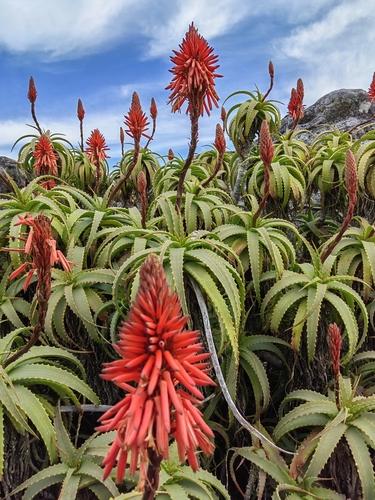
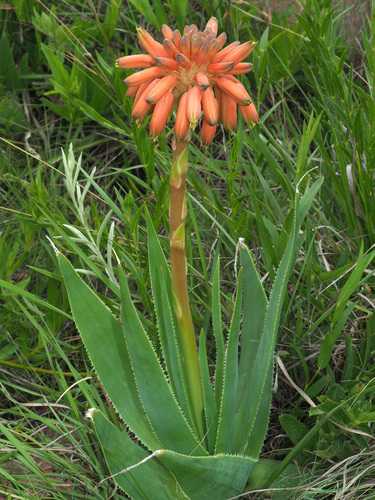
A herb. It keeps growing from year to year. It grows 1.2 m tall. The leaves are 2 m long. The flowers are green, yellow or orange. The fruit are twisted seed pods.
How to Grow
Plants can be grown from seeds. They can be slow to germinate. Plants can also be grown by division.
Wikipedia
Source ↗Phormium colensoi (syn. Phormium cookianum – see below), also called mountain flax, or wharariki in Māori, is a perennial plant that is endemic to New Zealand. The greenish, yellow or orange flowers are followed by twisted seed pods. It is less common than the other Phormium species, P. tenax or harakeke. Mountain flax is also known as whararipi, whatariki, mangaeka, kōrari tuauru (Williams 1971), wauraki (Bell 1890 sic.), coastal flax, hill flax and lesser New Zealand flax.
Notes
Also put in the family Hemerocallidaceae.
Names & Synonyms
References (2)
- Crowe, A., 1997, A Field Guide to the Native Edible Plants of New Zealand. Penguin. p 88
- London J. Bot. 7:536. 1848