Bridelia ovata
Decne
Makaa tree

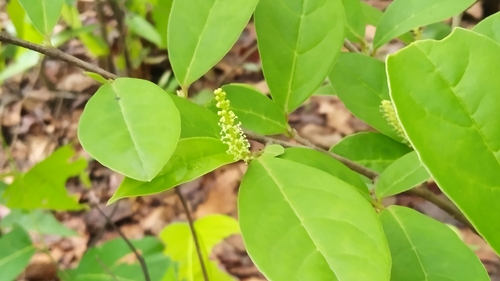
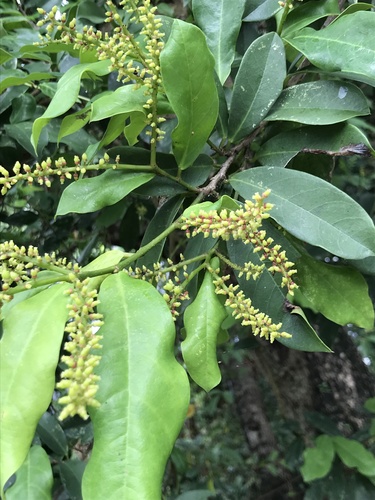
(c) 106611639464075912591, some rights reserved (CC BY-NC-SA), uploaded by 106611639464075912591
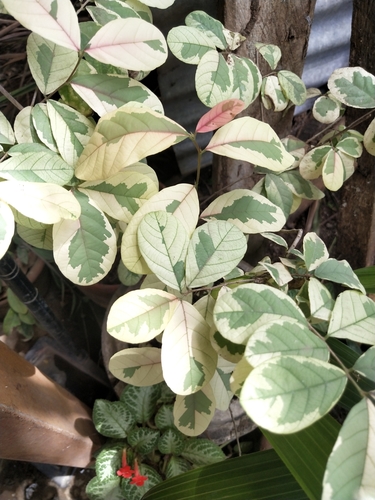
(c) Greg III Espera, some rights reserved (CC BY)
What to Eat
Edible parts: Fruit
The small black fruits are eaten, especially by children.
Where to Find It
It is a tropical plant. It grows on sand dunes and in open forest.
Asia, Australia, Cambodia, East Timor, Indonesia, Malaysia, Myanmar, SE Asia, Thailand, Timor-Leste,
How to Identify
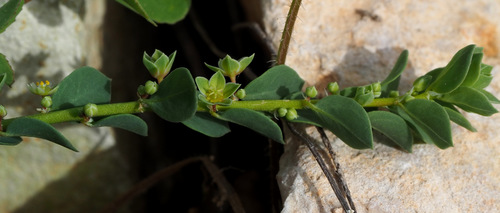
A shrub or small tree. It grows 2.5-10 m high. It has many stems. The leaves are small and oval. They are 3-8 cm wide by 8-12 cm long. The flowers are small and white with yellow centres. They lie along the stem. They have a sweet scent. The fruit are small and green but turn black when ripe. There is one seed in each fruit.
How to Grow
Plants can be grown from seed.
Medicinal Uses
The leaves are purgative. Another report says that they are a mild laxative. They are used in the treatment of syphilis.
Wikipedia
Source ↗Bridelia ovata is a species of flowering plant in the family Phyllanthaceae, native from Indo-China to west Malesia. It was first described by Joseph Decaisne in 1834.
Notes
There are about 60 Bridelia species.
Names & Synonyms
Pnektrey, Pohon congcong behut, Seik-che, Seik-che-phalan
References (4)
- Cherikoff V. & Isaacs, J., The Bush Food Handbook. How to gather, grow, process and cook Australian Wild Foods. Ti Tree Press, Australia p 145
- Levitt, D., 1981, Plants and people. Aboriginal uses of plants on Groote Eylandt. Australian Institute of Aboriginal Studies, Canberra. p 94
- Sukarya, D. G., (Ed.) 2013, 3,500 Plant Species of the Botanic Gardens of Indonesia. LIPI p 162
- Turreira Garcia, N., et al, 2017, Ethnobotanical knowledgeof the Kuy and Khmer people in Prey Lang, Cambodia. Cambodian Journal of Natural History 2017 (1): 76-101