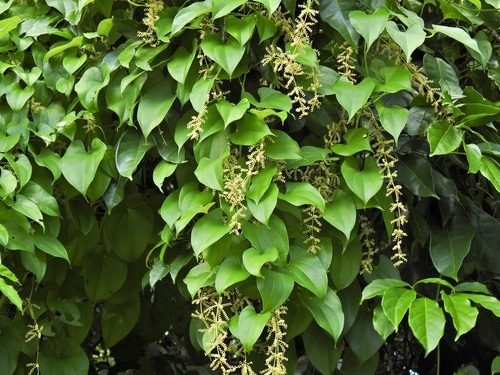
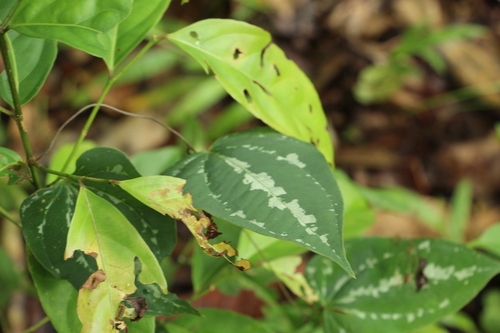
Dioscorea hirtiflora subsp. pedicellata
, Milne-Redh.
Siboyane

gbif · cc-by
Royal Botanic Gardens, Kew
Royal Botanic Gardens, Kew

gbif · cc-by
Royal Botanic Gardens, Kew
Royal Botanic Gardens, Kew

gbif · cc-by-nc-sa
MBG
MBG
What to Eat
Edible parts: Tubers, Root, Caution
The tubers and roots are eaten.
Known Hazards
Where to Find It
It is a tropical plant. It grows in vegetation near rivers. It can be in open grassland and on termite mounds.
Africa, Central Africa, Congo, East Africa, Malawi, Mozambique, Namibia, Southern Africa, Tanzania, Uganda, Zambia, Zimbabwe,
Countries: Angola, Burkina Faso, Burundi, Benin, Botswana, Congo (DRC), Central African Republic, Congo (Republic), Cote d'Ivoire, Cameroon, Cape Verde, Djibouti, Algeria, Egypt, Eritrea, Ethiopia, Gabon, Ghana, Gambia, Guinea, Equatorial Guinea, Guinea-Bissau, Kenya, Comoros, Liberia, Lesotho, Libya, Morocco, Madagascar, Mali, Mauritania, Mauritius, Malawi, Mozambique, Namibia, Niger, Nigeria, Rwanda, Seychelles, Sudan, Sierra Leone, Senegal, Somalia, South Sudan, Sao Tome & Principe, Eswatini, Chad, Togo, Tunisia, Tanzania, Uganda, South Africa, Zambia, Zimbabwe
How to Identify
A tropical yam (Dioscoreaceae) with characteristically hairy stems, found in vegetation near rivers, open grassland, and on termite mounds.
Other Information
It is a famine food.
Names & Synonyms
Dioscorea hirtiflora var. nyassica Burkill
References (1)
- Wilkin, P., 2001, Dioscoreaceae of South-Central Africa. Kew Bulletin, Vol. 56, No. 2 (2001), pp 361-404