Dioscorea sylvatica
Ecklon
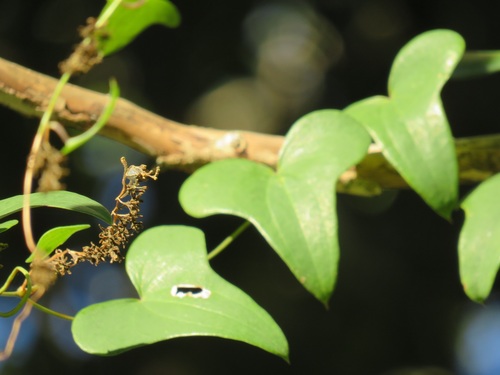
(c) magdastlucia, some rights reserved (CC BY-NC), uploaded by magdastlucia
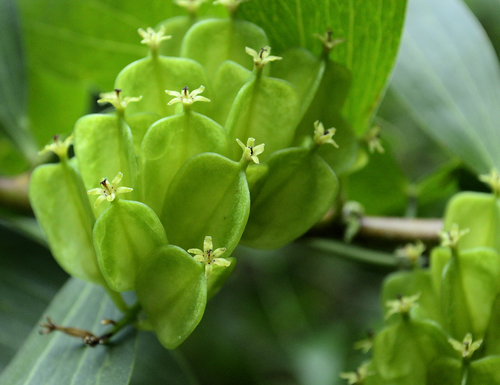
(c) Adriaan Grobler, some rights reserved (CC BY-NC)
What to Eat
Edible parts: Tuber, Root, Caution
The tubers have been used as food after soaking and processing.
Known Hazards
Where to Find It
It is a tropical to subtropical plant. It grows in rocky areas and also on sandy soils. It can grow from sea level to 1,800 m altitude. It is best in light, well-drained soils. It suits an open, sunny position. It is damaged by drought and frost. It can grow in arid places.
Africa*, Australia, East Africa, Mozambique, South Africa, Southern Africa, Zambia, Zimbabwe,
How to Identify
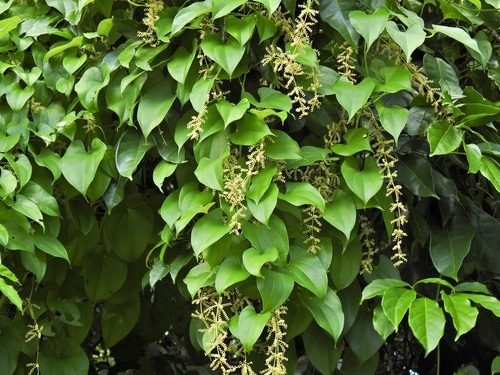
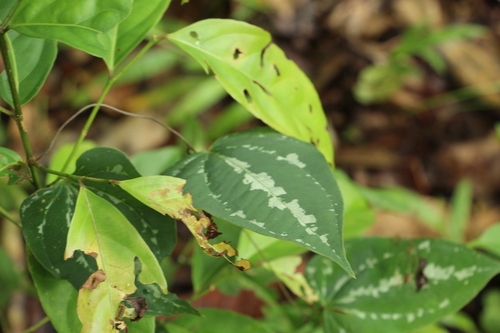
A yam vine. The tubers are single. They are 30 cm across. They have deep lobes. They have a corky covering. It can be in a scale like pattern. The stems twine to the left. There are no bulbils. The leaves are alternate and can be entire or have 3 lobes. They are heart shaped. They are papery to rough. It is similar to Dioscorea elephantipes.
How to Grow
It can be grown from seed or by cuttings.
Wikipedia
Source ↗Dioscorea sylvatica ("forest elephant's foot") is a species of a twining tuberous vine that is native to Africa. It is common and widespread in forest and thicket, throughout the summer rainfall areas of East and Southern Africa.
Names & Synonyms
References (5)
- Bodkin, F., 1991, Encyclopedia Botanica. Cornstalk publishing, p 345
- Fowler, D. G., 2007, Zambian Plants: Their Vernacular Names and Uses. Kew. p 86
- Royal Botanic Gardens, Kew (1999). Survey of Economic Plants for Arid and Semi-Arid Lands (SEPASAL) database. Published on the Internet; http://www.rbgkew.org.uk/ceb/sepasal/internet [Accessed 16th April 2011]
- Wilkin, P., 2001, Dioscoreaceae of South-Central Africa. Kew Bulletin, Vol. 56, No. 2 (2001), pp 361-404
- World Checklist of Useful Plant Species 2020. Royal Botanic Gardens, Kew