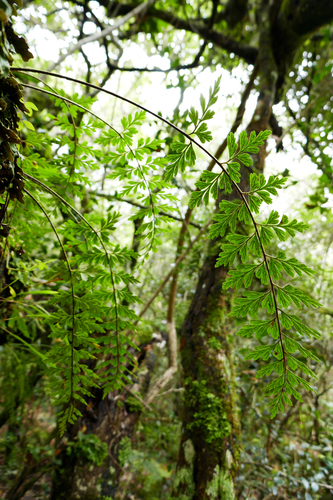
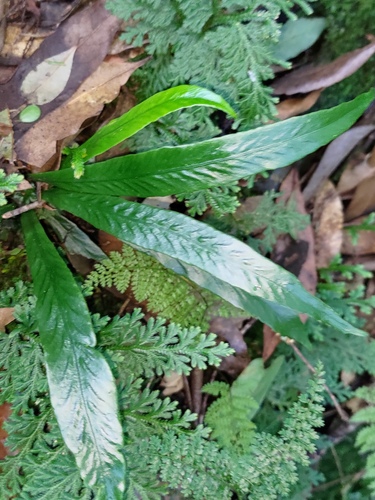
Thelypteris nudata
(Roxb.) C. V. Morton
Rubro-ow
AspleniaceaeLeaves

iNaturalist · cc-by-nc
(c) hasenzahn, some rights reserved (CC BY-NC)
(c) hasenzahn, some rights reserved (CC BY-NC)

iNaturalist · cc-by-nc
(c) hasenzahn, some rights reserved (CC BY-NC)
(c) hasenzahn, some rights reserved (CC BY-NC)

iNaturalist · cc-by-nc
(c) hasenzahn, some rights reserved (CC BY-NC)
(c) hasenzahn, some rights reserved (CC BY-NC)
What to Eat
Edible parts: Leaves, Fronds
The fronds and leaves are eaten.
Where to Find It
It is a tropical plant. It grows in shaded places in forests on slopes between 100-1,600 m above sea level in southern China. It grows on humus rich slopes.
Asia, Bhutan, Cambodia, China, Himalayas, India, Indochina, Indonesia, Myanmar, Nepal, Northeastern India, Philippines, SE Asia, Thailand, Vietnam,
Countries: United Arab Emirates, Afghanistan, Armenia, Azerbaijan, Bangladesh, Bahrain, Brunei, Bhutan, China, Georgia, Indonesia, Israel, India, Iraq, Iran, Jordan, Japan, Kyrgyzstan, Cambodia, North Korea, South Korea, Kuwait, Kazakhstan, Laos, Lebanon, Sri Lanka, Myanmar, Mongolia, Maldives, Malaysia, Nepal, Oman, Philippines, Pakistan, Qatar, Saudi Arabia, Singapore, Syria, Thailand, Tajikistan, Timor-Leste, Turkmenistan, Turkey, Taiwan, Uzbekistan, Vietnam, Yemen
How to Identify
A fern. It grows 2.5 m tall. It has a creeping rhizome. This is about 5 mm across. The stipes are 40-80 cm long and the blade 50-100 cm long by 25-50 cm wide. The side leaflets are sword shaped and narrow towards the tip.
Notes
Also put in the family Thelypteridaceae.
Names & Synonyms
Koche
Polypodium nudatum Roxb.Pronephrium nudatum (Roxb.) HolttumProbably now Cyclosorus nudatus (Roxb.) B. K. Nayar & S. Kaur
References (3)
- Gangwar, A. K. & Ramakrishnan, P. S., 1990, Ethnobotanical Notes on Some Tribes of Arunachal Pradesh, Northeastern India. Economic Botany, Vol. 44, No. 1 pp. 94-105 (As Pronephrium nudatum)
- Ojha, R. & Devkota, H. P., 2021, Edible and Medicinal Pteridophytes of Nepal: A Review. Ethnobotany Research & Applications 22:16
- www.eFloras.org Flora of China (As Pronephrium nudatum)