Baccaurea griffithii
Hook. f.
PhyllanthaceaeFruit

wikimedia · cc-by
Wikimedia Commons - Toshiko Go
Wikimedia Commons - Toshiko Go

wikimedia · cc-by-sa
Wikimedia Commons - Wibowo Djatmiko (Wie146)
Wikimedia Commons - Wibowo Djatmiko (Wie146)
What to Eat
Edible parts: Fruit
The ripe fruit are eaten fresh or cooked.
Where to Find It
It is a tropical plant. It suits the hot, humid tropical lowlands.
Asia, Malaysia, SE Asia,
Countries: United Arab Emirates, Afghanistan, Armenia, Azerbaijan, Bangladesh, Bahrain, Brunei, Bhutan, China, Georgia, Indonesia, Israel, India, Iraq, Iran, Jordan, Japan, Kyrgyzstan, Cambodia, North Korea, South Korea, Kuwait, Kazakhstan, Laos, Lebanon, Sri Lanka, Myanmar, Mongolia, Maldives, Malaysia, Nepal, Oman, Philippines, Pakistan, Qatar, Saudi Arabia, Singapore, Syria, Thailand, Tajikistan, Timor-Leste, Turkmenistan, Turkey, Taiwan, Uzbekistan, Vietnam, Yemen
How to Identify
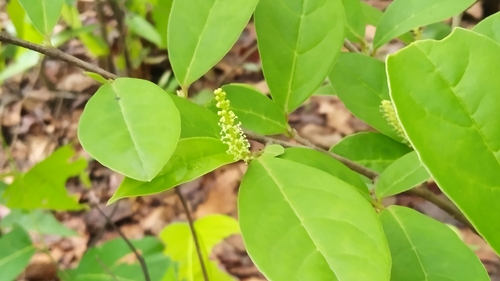
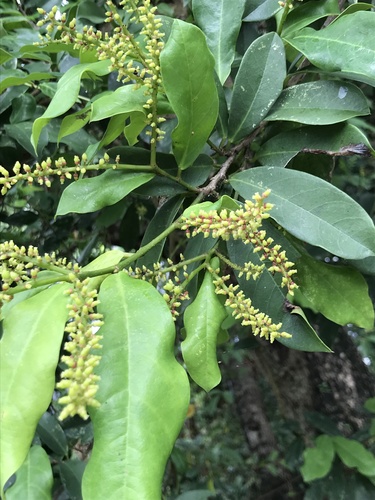
A tree. It grows 7-20 m high. The leaves are narrowly sword shaped and leathery. They taper to the tip. The plants are separately male and female. The fruit are along long stalks. The fruit are thick walled and acid. They are 3-6 cm across. The fruit are in clusters of 3-5. The fruit are brown on the outside with white flesh.
How to Grow
Plants are grown by seed.
Notes
Also in Euphorbiaceae.
Names & Synonyms
Larah, Rambai utan, Taban
References (8)
- Bircher, A. G. & Bircher, W. H., 2000, Encyclopedia of Fruit Trees and Edible Flowering Plants in Egypt and the Subtropics. AUC Press. p 51
- INFOODSUpdatedFGU-list.xls
- Martin, F. W., et al, 1987, Perennial Edible Fruits of the Tropics. USDA Handbook 642 p 27
- Milow, P., et al, 2013, Malaysian species of plants with edible fruits or seeds and their evaluation. International Journal of Fruit Science. 14:1, 1-27
- Ong, H., et al, 2012, Traditional knowledge and usage of edible plants among the Semai community of Kampung Batu 16, Tapah, Perak, Malaysia. Scientific Research and Essays Vol. 7(4), pp. 441-445, 30 January, 2012
- Ong, H.C. et al, 2012, Traditional knowledge and usage of edible plants among the Temuan villagers, Malaysia. Indian Journal of Traditional Knowledge. 11(1) pp 161-165
- Reis, S. V. and Lipp, F. L., 1982, New Plant Sources for Drugs and Foods from the New York Botanical Garden herbarium. Harvard. p 154
- Saw, L.G., LaFrankie, J. V. Kochummen, K. M., Yap S. K., 1991, Fruit Trees in a Malaysian Rain Forest. Economic Botany, Vol. 45, No. 1, pp. 120-136