Bulbinella hookeri
(Colenso ex Hook.) Cheeseman
Maori onion

(c) Simon Nicholas, some rights reserved (CC BY-NC)

(c) Simon Nicholas, some rights reserved (CC BY-NC)

(c) Simon Nicholas, some rights reserved (CC BY-NC)
What to Eat
Edible parts: Root
Edible Parts: Root Edible Uses: Root - fleshy. No further details are given.
Where to Find It
It grows in the mountain areas in New Zealand. It is best in light, well-mulched, well-drained soils. It can grow in partly shaded positions. It is resistant to drought and frost. It suits hardiness zones 7-9.
Australia, New Zealand*,
How to Identify
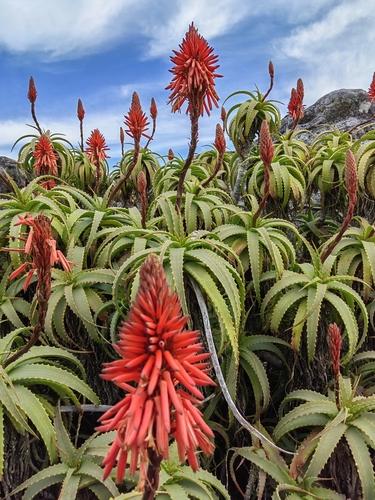
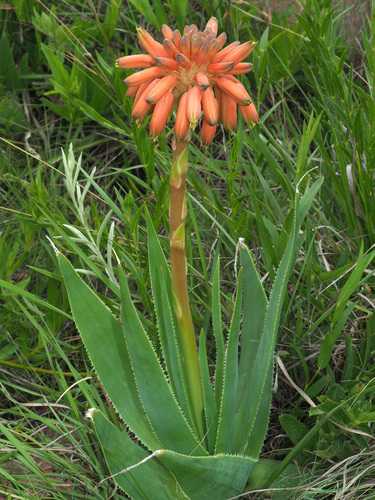
It grows to 90 cm high and spreads 60 cm wide. It has fleshy roots. The leaves are like straps. The leaves are tall and blue-green. The flowers are bright yellow. They are in the upper third of the flower stalks.
How to Grow
Plants can be raised from seed. It can also be grown by division of the plant.
Propagation: Seed - best sown in a cold frame as soon as it is ripe. Sow stored seed in a greenhouse as early in the year as possible. The seed usually germinates in 1 - 3 months at 13°c. When large enough to handle, prick the seedlings out into individual pots and grow them on in the greenhouse for at least their first two winters, planting them out into their permanent positions in late spring or early summer, after the last expected frosts. Division in the spring. Best done as the plants come into growth. Pot the divisions up and grow them on in a cold frame until they are established then plant them out in the summer.
Medicinal Uses
None known
Other Uses
None known Special Uses
Wikipedia
Source ↗Bulbinella hookeri, commonly known as the Māori lily, is a species of flowering plant in the family Asphodelaceae. It is endemic to New Zealand; its range covers the North, South, and Stewart Islands. It is commonly found in tussock grasslands, and in soils with high water content. B. hookeri reaches a height of up to 120 cm (50 in) tall. B. hookeri was first described in 1851 by the botanists Joseph Dalton Hooker and William Colenso as Chrysobactron hookeri. It gets its specific epithet, hookeri, after Hooker, who first described the species with Colenso.
Notes
There are 20 Bulbinella species. Most are in South Africa and 6 in New Zealand. Also put in the family Asphodelaceae.
References (9)
- Bodkin, F., 1991, Encyclopedia Botanica. Cornstalk publishing, p 176
- Crowe, A., 1997, A Field Guide to the Native Edible Plants of New Zealand. Penguin. p 157
- Cundall, P., (ed.), 2004, Gardening Australia: flora: the gardener's bible. ABC Books. p 267
- Hibbert, M., 2002, The Aussie Plant Finder 2002, Florilegium. p 47
- Man. New Zealand fl. 718. 1906
- Matthews, J., 1987, New Zealand Native Plants for your Garden. Pacific Publishers, p 24
- Plants for a Future database, The Field, Penpol, Lostwithiel, Cornwall, PL22 0NG, UK. http://www.scs.leeds.ac.uk/pfaf/
- Reis, S. V. and Lipp, F. L., 1982, New Plant Sources for Drugs and Foods from the New York Botanical Garden herbarium. Harvard. p 25
- Skinner, G. & Brown, 1981, C., Simply Living. A gatherer's guide to New Zealand's fields, forests and shores. Reed. p 14