Dioscorea burkilliana
Miege
DioscoreaceaeRoots

gbif · cc-by
Royal Botanic Gardens, Kew
Royal Botanic Gardens, Kew

gbif · cc-by-nc-sa
MBG
MBG

gbif · cc-by-nc-sa
MBG
MBG
What to Eat
Edible parts: Tubers, Root
The tubers are cooked and eaten as a starchy staple.
Where to Find It
It is a tropical plant.
Africa, Benin, Cameroon, Central Africa, Congo DR, Côte d'Ivoire, Ivory Coast, Nigeria, Sierra Leone, West Africa,
Countries: Angola, Burkina Faso, Burundi, Benin, Botswana, Congo (DRC), Central African Republic, Congo (Republic), Cote d'Ivoire, Cameroon, Cape Verde, Djibouti, Algeria, Egypt, Eritrea, Ethiopia, Gabon, Ghana, Gambia, Guinea, Equatorial Guinea, Guinea-Bissau, Kenya, Comoros, Liberia, Lesotho, Libya, Morocco, Madagascar, Mali, Mauritania, Mauritius, Malawi, Mozambique, Namibia, Niger, Nigeria, Rwanda, Seychelles, Sudan, Sierra Leone, Senegal, Somalia, South Sudan, Sao Tome & Principe, Eswatini, Chad, Togo, Tunisia, Tanzania, Uganda, South Africa, Zambia, Zimbabwe
How to Identify
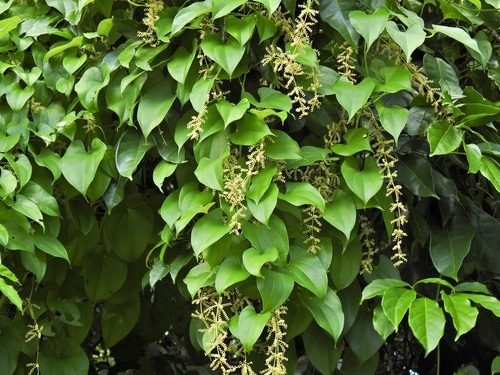
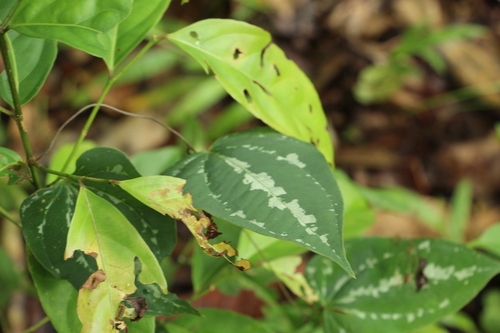
A yam. It is a vine plant. The tubers keep developing form year to year. The stems twine to the right. The stems can be 8 m long.
Medicinal Uses
The tubers are also considered medicinal.
Notes
It is also considered as medicine.
Names & Synonyms
An-buk, An-tankali, An-tantali, Epheli, G-beli-gbeli, Ipheli, Keke, Kokua, Liphe, Mbole, Yuphe
References (7)
- Billong Fils, P. E., et al, 2020, Ethnobotanical survey of wild edible plants used by Baka people in southeastern Cameroon. Journal or Ethnobiology and Ethnomedicine. 16:64 p 7
- Burkill, H. M., 1985, The useful plants of west tropical Africa. Vol. 1
- Idohou, I., et al, 2013, National inventory and prioritization of crop wild relatives: case study for Benin. Genet Resour Crop Evol (2013) 60:1337–1352
- Termote, C., et al, 2011, Eating from the wild: Turumbu, Mbole and Bali traditional knowledge of non-cultivated edible plants, District Tshopo, DRCongo, Gen Resourc Crop Evol. 58:585-618
- Sato, H., 2001, The potential of edible wild yams and yam-like plants as a staple food resource in the African Tropical Rain Forest. African Study Monographs Suppl. 26:123-134
- Yasuoka, H., 2006, Long-Term Foraging Expeditions (Molongo) among the Baka Hunter-Gatherers in the Northwestern Congo Basin, with Special Reference to the "Wild Yam Question". Human Ecology, Vol. 34, No. 2, April 2006, pp 275 ff
- Yasuoka, H., 2009, Concentrated Distribution of Wild Yam Patches: Historical Ecology and the Subsistence of African Rainforest Hunter-Gatherers. Human Ecology 37:577-587