Antidesma laciniatum
Mull. Arg.

(c) peterneuenschwander, some rights reserved (CC BY-NC)

(c) peterneuenschwander, some rights reserved (CC BY-NC)
What to Eat
Edible parts: Leaves, Spice
The leaves of var. membranaceum are used for scenting plates on which meat is served. The fruits are said to be not edible
Where to Find It
It is a tropical plant. It grows in moist deciduous and secondary forest in West Africa. It grows between 200-1,275 m above sea level.
Africa, Cameroon, Central Africa, Central African Republic, CAR, Congo DR, Côte d'Ivoire, Equatorial Guinea, Gabon, Ghana, Guinea, Guinée, Ivory Coast, Liberia, Nigeria, Sierra Leone, Sudan, Togo, Uganda, West Africa,
How to Identify
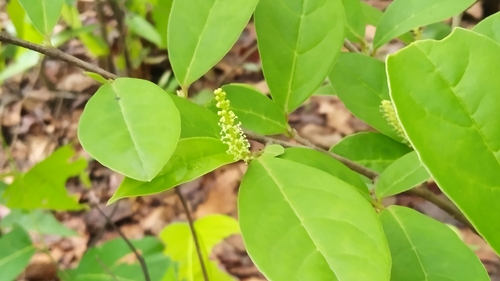
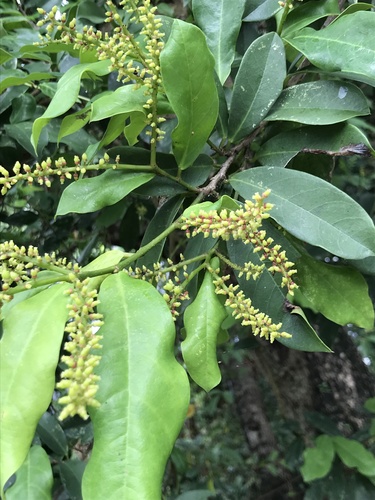
A shrub or small tree. It can grow 15 m high. One variety is more hairy underneath the leaf. The trunk is usually crooked and branched from near the base. The trunk is 10-35 cm across.
How to Grow
A dioecious species, both male and female forms need to be grown if fruit and seed are required.
Medicinal Uses
The leaves are used in traditional West African medicine.
Other Uses
The leaves contain around 1.8% (on a dry weight basis) of an essential oil with a sweet, balsamic aroma. The heartwood is yellowish-white; the sapwood a light, creamy-brown. The wood is hard and does not work well. It is used to make tool handles and as poles in traditional house construction.. The wood is used for fuel and to make charcoal.
Names & Synonyms
Bufas, Bu yidi, Ehetti, Joijane, Kafa-guli, Katale, Kundexanfi, Ogbomaton, Yom-kefo
References (2)
- Burkill, H. M., 1985, The useful plants of west tropical Africa, Vol. 2. Kew.
- Global Plants JSTOR