Bridelia ndellensis
Beille
Yelimadu
PhyllanthaceaeFruit

gbif · cc-by
Royal Botanic Gardens, Kew
Royal Botanic Gardens, Kew

gbif · cc-by-nc
DAV - University of California, Davis Center for Plant Diversity - Vascular Plants (DAV-DAV)
DAV - University of California, Davis Center for Plant Diversity - Vascular Plants (DAV-DAV)

gbif · cc-by-nc-sa
MBG
MBG
What to Eat
Edible parts: Fruit
The fruit is eaten.
Where to Find It
It is a tropical plant. It grows in the under-storey in dry forest in West Africa. It grows in stony ground and near swamps.
Africa, Cameroon, Central Africa, Congo, East Africa, Ghana, Nigeria, Sudan, Uganda, West Africa,
Countries: Angola, Burkina Faso, Burundi, Benin, Botswana, Congo (DRC), Central African Republic, Congo (Republic), Cote d'Ivoire, Cameroon, Cape Verde, Djibouti, Algeria, Egypt, Eritrea, Ethiopia, Gabon, Ghana, Gambia, Guinea, Equatorial Guinea, Guinea-Bissau, Kenya, Comoros, Liberia, Lesotho, Libya, Morocco, Madagascar, Mali, Mauritania, Mauritius, Malawi, Mozambique, Namibia, Niger, Nigeria, Rwanda, Seychelles, Sudan, Sierra Leone, Senegal, Somalia, South Sudan, Sao Tome & Principe, Eswatini, Chad, Togo, Tunisia, Tanzania, Uganda, South Africa, Zambia, Zimbabwe
How to Identify
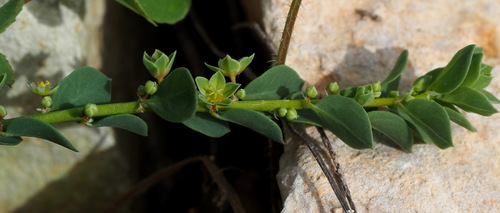
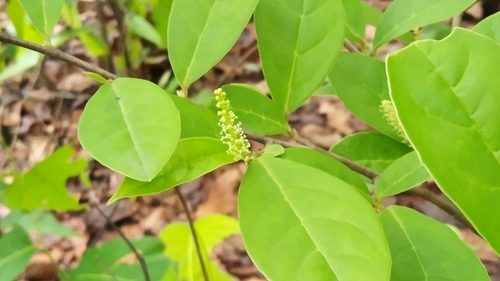
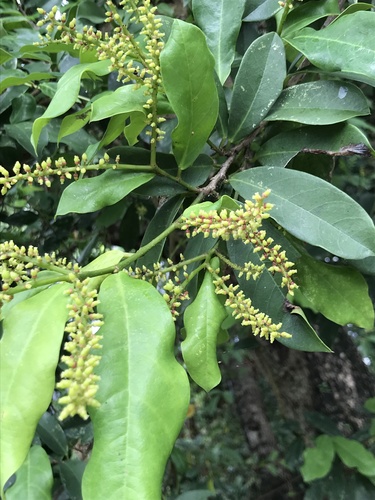
A shrub or small tree. It can grow 15 m high. It has stilt roots. The trunk can be 10-30 cm across. It has many branches and it loses its leaves during the year. It has woody spines 1-5 cm long.
Names & Synonyms
Bridelia aubrevillei auct. AndrewsBridelia ferruginea var. orientalis Hutch.Gentilia hygrophila Beille
References (3)
- Burkill, H. M., 1985, The useful plants of west tropical Africa, Vol. 2. Kew.
- Le Houerou, H. N., (Ed.), 1980, Browse in Africa. The current state of knowledge. International Livestock Centre for Africa, Ethiopia. p 162
- World Checklist of Useful Plant Species 2020. Royal Botanic Gardens, Kew