Maesobotrya longipes
(Pax.) Hutch.
PhyllanthaceaeFruit

gbif · cc-by-nc-sa
MBG
MBG

gbif · cc-by-nc-sa
MBG
MBG

gbif · cc-by-nc-sa
MBG
MBG
What to Eat
Edible parts: Fruit
The whole fruit are eaten raw.
Where to Find It
It is a tropical plant.
Africa, Cameroon, Central Africa, Central African Republic, CAR, Congo DR, Gabon,
Countries: Angola, Burkina Faso, Burundi, Benin, Botswana, Congo (DRC), Central African Republic, Congo (Republic), Cote d'Ivoire, Cameroon, Cape Verde, Djibouti, Algeria, Egypt, Eritrea, Ethiopia, Gabon, Ghana, Gambia, Guinea, Equatorial Guinea, Guinea-Bissau, Kenya, Comoros, Liberia, Lesotho, Libya, Morocco, Madagascar, Mali, Mauritania, Mauritius, Malawi, Mozambique, Namibia, Niger, Nigeria, Rwanda, Seychelles, Sudan, Sierra Leone, Senegal, Somalia, South Sudan, Sao Tome & Principe, Eswatini, Chad, Togo, Tunisia, Tanzania, Uganda, South Africa, Zambia, Zimbabwe
How to Identify
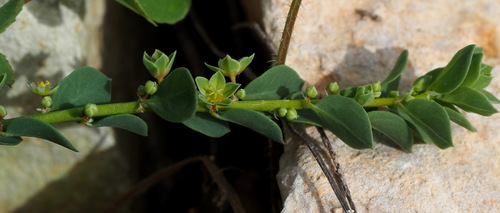
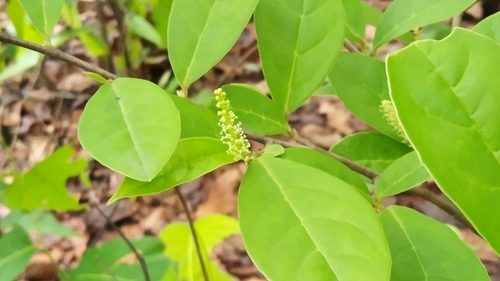
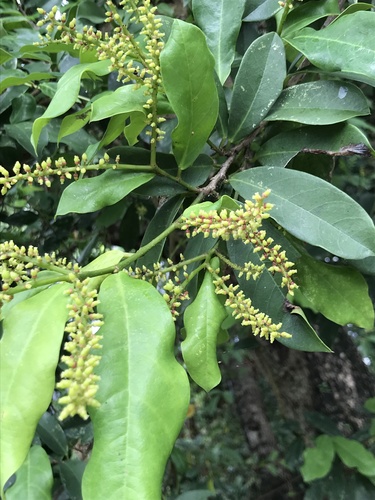
A tree. It grows 2-8 m tall. The trunk can be 7-12 cm across. The leaves are 8-33 cm long by 3-13 cm wide. The flowers and fruit are on the trunks and old branches. They are in dense hanging groups. The fruit are oval to round and 17-19 mm long.
Production
Fruiting is seasonal.
Names & Synonyms
Ndako ya hongo, Salasala, Sokokolongo
References (2)
- J. Léonard, J., 1995, Flore d'Afrique Centrale (Zaïre – Rwanda – Burundi): Euphorbiaceae (II). p. 58
- Termote, C., et al, 2011, Eating from the wild: Turumbu, Mbole and Bali traditional knowledge of non-cultivated edible plants, District Tshopo, DRCongo, Gen Resourc Crop Evol. 58:585-618