Phyllanthus polyanthus
Pax

(c) Geoff Nichols, some rights reserved (CC BY-NC), uploaded by Geoff Nichols
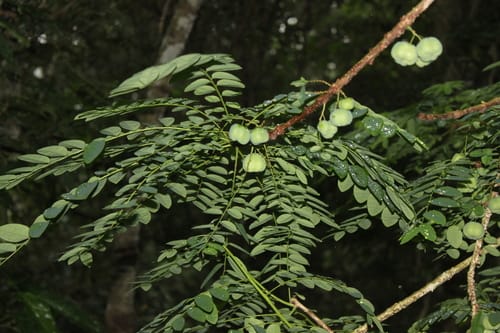
(c) Erwin Sieben, some rights reserved (CC BY-NC)
What to Eat
Edible parts: Fruit
The fruit are cooked and eaten as a vegetable.
Where to Find It
It is a tropical plant. It grows in coastal forests. It can be in seasonally flooded forests.
Africa, Angola, Cameroon, Central Africa, Central African Republic, CAR, Congo DR, Congo R, Gabon, Mozambique,
How to Identify
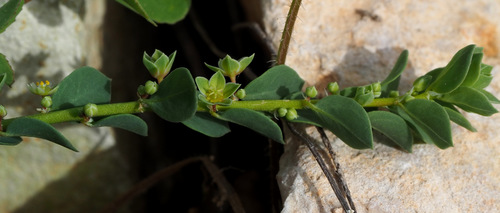
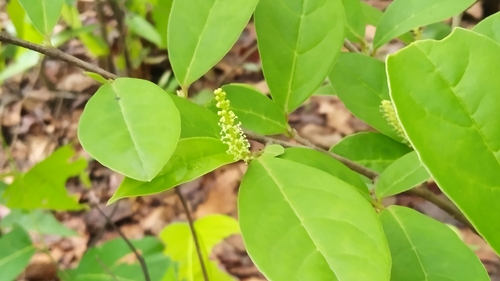
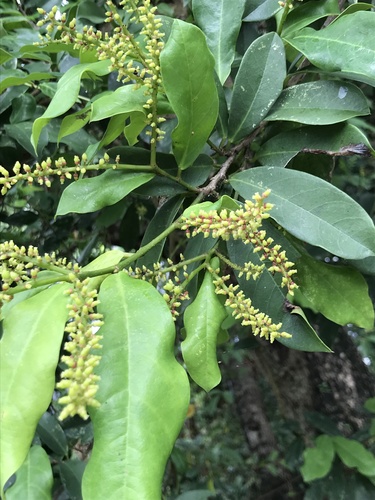
A small tree. It grows 3-9 m tall. It can grow 30 m tall. It loses its leaves during the year. The bark is light coloured. The branches are spreading. The leaves are simple and oval. They are 8 cm long by 3 cm wide. They are rough and shiny on both surfaces. The edges are slightly wavy. The male flowers are in slender groups 8 cm long. They are on woody branches. The fruit are celled capsules. The seeds are very hard with a thick wall.
Production
In Central African Republic plants flower and fruit in February.
Names & Synonyms
Mantomina, Okolo
References (2)
- Baker, J. G., 1913, Flora of Tropical Africa. Vol. 6 Part 1 p 441
- Termote, C., et al, 2011, Eating from the wild: Turumbu, Mbole and Bali traditional knowledge of non-cultivated edible plants, District Tshopo, DRCongo, Gen Resourc Crop Evol. 58:585-618