Phyllanthus indofischeri
Bennet
Myrobalan emblic
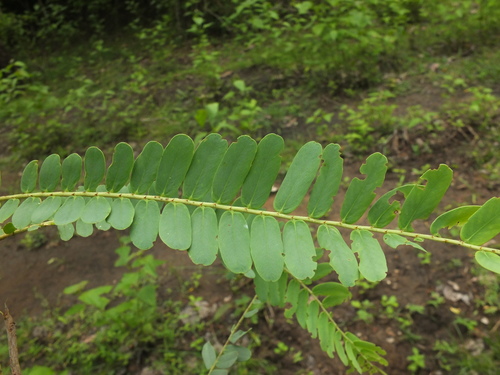
(c) Siddarth Machado, some rights reserved (CC BY), uploaded by Siddarth Machado
What to Eat
Edible parts: Fruit
Fruit - raw. The fully ripe fruits are eaten raw whilst unripe fruits are used in the preparation of pickles. The greenish, globose fruit is a drupe around 25 - 40mm in diameter.
Where to Find It
It is a tropical plant. It grows in scrub forests and low altitude deciduous forest.
Asia, India,
How to Identify
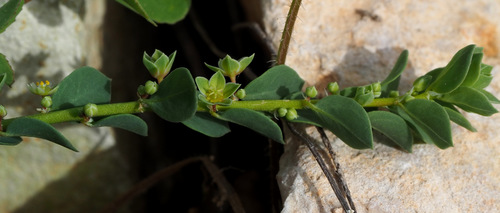
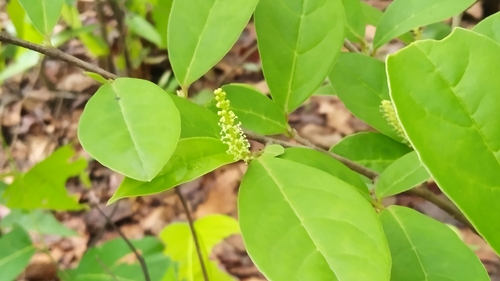
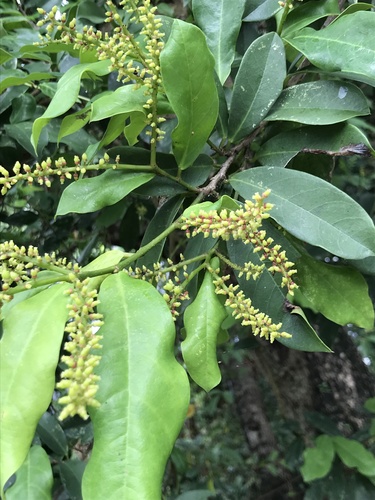
A tree. It grows 12 m tall. The branches are stout. The bark is smooth. The branchlets are usually less than 25 cm long. There are about 50 leaves per branch. The leaves are 2.8 cm long by 1.3 cm wide. They are oblong with a rounded tip and a heart shaped base. The fruit are 2.5-4 cm across.
How to Grow
Requires a sunny position in a well-drained soil. Established plants are very drought tolerant.
Medicinal Uses
The fruits of this species are used as substitute to Phyllanthus emblica locally known as 'Amla'. Phyllanthus emblica is of great importance in traditional Asiatic medicine, not only as an antiscorbutic, but also in the treatment of diverse ailments, especially those associated with the digestive organs. It is an ingredient in a large number of polyherbal preparations. The leaves, fruits and bark extract are used to treat diseases such as diabetes, inflammation and age related renal diseases. A handful of the tender young leaves, mixed with honey, is given to children to arrest dysentery.
Other Information
The fruit are enjoyed.
Names & Synonyms
Amla, Karanelli, Malainelli, Nelli
References (7)
- Ambasta, S.P. (Ed.), 2000, The Useful Plants of India. CSIR India. p 195 (As Emblica fischeri)
- Narayanan, M. K., R., et al, 2011, Ethnobotanically important trees and their uses by Kattunaikka tribe in Wayanad Wildlife Sanctuary, Kerala, India. Journal of Medicinal Plants research. 5(4): 704-612
- Ramachandran, V. S., 2007, Wild edible plants of the Anamalais, Coimbatore district, western Ghats, Tamil Nadu. Indian Journal or Traditional Knowledge. 6(1) pp 173-176 (As Emblica fischeri)
- Rasingam, L., 2012, Ethnobotanical studies on the wild edible plants of Irula tribes of Pillur Valley, Coimbatore district, Tamil Nadu, India. Asian Pacific Journal of Tropical Biomedicine. (2012) S1493-S1497
- Sasi, R. & Rajendran, A., 2012, Diversity of Wild Fruits in Nilgiri Hills of the Southern Western Ghats - Ethnobotanical Aspects. IJABPT, 3(1) p 82-87
- Sharma, B.B., 2005, Growing fruits and vegetables. Publications Division. Ministry of Information and broadcasting. India. p 7 (As Emblica fischeri)
- Singh, H.B., Arora R.K.,1978, Wild edible Plants of India. Indian Council of Agricultural Research, New Delhi. p 76 (As Emblica fischeri)