Phyllanthus fraternus
Webster

no rights reserved, uploaded by cwarneke

(c) Howard Horne, some rights reserved (CC BY-NC)
What to Eat
Edible parts: Fruit, Leaves
The tender young leaves, shoots, and fruit are eaten raw or cooked, boiled or fried.
Known Hazards
Where to Find It
It is a subtropical plant.
Africa, Asia, Botswana, Burkina Faso, India, Northeastern India, West Africa,
How to Identify
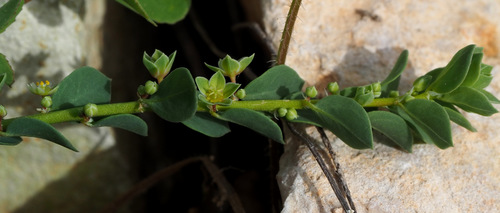
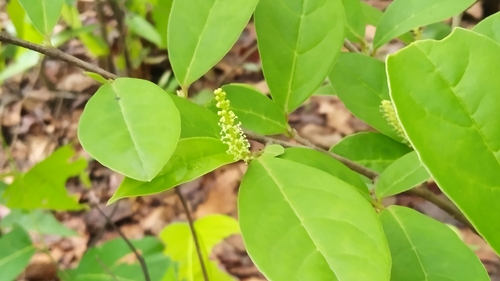
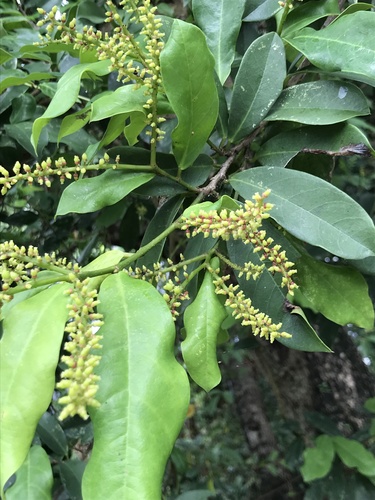
A small herb. It grows each year from seeds. The branches are angled. The leaves are compound with leaflets along the stalk that do not have leaflet stalks. The flowers are small and under the leaf stalk. The fruit are small and round.
How to Grow
The plant tolerates dry conditions but does not survive in waterlogged conditions. A widespread weed of roadsides, cultivated land and waste places.
Medicinal Uses
The leaves are strongly diuretic. A decoction is drunk to facilitate childbirth, and against oedema, costal pain and fever. In Sudan the leaves are given against dysentery. The young leaves are given to children as a treatment for coughs and hiccups. A plant extract is reported to be strongly diuretic and is taken to allay spasms, such as griping in dysentery. The plant is also used as a laxative and to treat gonorrhoea, dropsy, diarrhoea and malaria. The plant extract is applied externally to treat skin infections. The plant sap is applied to treat bruises, sores and ulcers, and mixed with oil against ophthalmia and conjunctivitis. The fruits are used in the treatment of ulcers, wounds, sores, scabies, ringworm and other skin problems. Fresh roots are taken against jaundice, and crushed with milk are used as a galactagogue. A decoction of roots and leaves is used to treat malaria. Powdered roots and leaves are made into a poultice with rice-water to treat oedema and ulcers. In India Phyllanthus fraternus, in a mixture with other Phyllanthus spp., is sold in a herbal medicine called 'Bhumyamlaki', which is widely used against jaundice and is considered acrid, carminative, cooling and useful in the treatment of thirst, bronchitis, asthma, leprosy, anaemia, venereal diseases, problems of the genito-urinary tract, anuria, biliousness and hiccups. The lignans phyllanthin and hypophyllanthin have been isolated from the leaves, but some reports indicate that this may be due to confusion with Phyllanthus amarus. The leaves also contain the lignans niranthin, nirtetralin and phyltetralin. Other compounds isolated from the plant include alkamides, a quinolizidine alkaloid, the flavone tricin, triterpenoids, the tetraterpenoid phyllanthusone, and waxes. An alcohol extract of the root contained the seco-sterols phyllanthosterol, phyllanthosecosteryl ester, phyllanthostigmasterol and fraternusterol. The seed oil contains ricinoleic acid, linoleic acid and linolenic acid. The two isolated alkamides possessed moderate antiplasmodial activity in vitro. An aqueous extract of the plant showed protection against the effect of chronic alcohol consumption on the liver. The decrease in cytochrome content of the cells was partly undone by the extract. A root extract of plants from Sudan showed high toxicity to Bulinus and Biomphalaria snails, but the plant extracts are also poisonous to frogs and fish.
Other Uses
A black dye is obtained from the stem and leaves. It is used to dye cotton, and can also be used as an ink.
Names & Synonyms
Bhui amlokhi, Longle thelu, Mat amlokhi, Mitthi sunula
References (7)
- Ethnobotany of Karbis. Chapter 4 in p 99
- Kar, A., et al, 2013, Wild Edible Plant Resources used by the Mizos of Mizoram, India. Kathmandu University Journal of Science, Engineering and Technology. Vol. 9, No. 1, July, 2013, 106-126
- Patiri, B. & Borah, A., 2007, Wild Edible Plants of Assam. Geethaki Publishers. p 129
- Pegu, R., et al, 2013, Ethnobotanical study of Wild Edible Plants in Poba Reserved Forest, Assam, India. Research Journal of Agriculture and Forestry Sciences 1(3):1-10
- Sarma, H., et al, 2010, Updated Estimates of Wild Edible and Threatened Plants of Assam: A Meta-analysis. International Journal of Botany 6(4): 414-423
- Teron, R. & Borthakur, S. K., 2016, Edible Medicines: An Exploration of Medicinal Plants in Dietary Practices of Karbi Tribal Population of Assam, Northeast India. In Mondal, N. & Sen, J.(Ed.) Nutrition and Health among tribal populations of India. p 152
- World Checklist of Useful Plant Species 2020. Royal Botanic Gardens, Kew