Aporosa nitida
Merr.
PhyllanthaceaeFruit

gbif · cc0
President and Fellows of Harvard College
President and Fellows of Harvard College

gbif · cc0
President and Fellows of Harvard College
President and Fellows of Harvard College

gbif · cc0
President and Fellows of Harvard College
President and Fellows of Harvard College
What to Eat
Edible parts: Fruit
The fruit are edible but sour.
Where to Find It
It is a tropical plant. It grows in forests up to 800 m above sea level. It grows on alluvial soils.
Asia, Brunei, Indonesia, Malaysia, SE Asia,
Countries: United Arab Emirates, Afghanistan, Armenia, Azerbaijan, Bangladesh, Bahrain, Brunei, Bhutan, China, Georgia, Indonesia, Israel, India, Iraq, Iran, Jordan, Japan, Kyrgyzstan, Cambodia, North Korea, South Korea, Kuwait, Kazakhstan, Laos, Lebanon, Sri Lanka, Myanmar, Mongolia, Maldives, Malaysia, Nepal, Oman, Philippines, Pakistan, Qatar, Saudi Arabia, Singapore, Syria, Thailand, Tajikistan, Timor-Leste, Turkmenistan, Turkey, Taiwan, Uzbekistan, Vietnam, Yemen
How to Identify
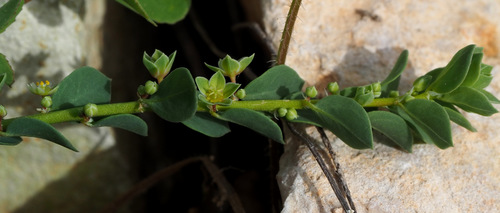
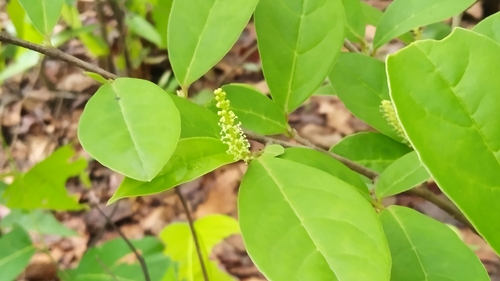
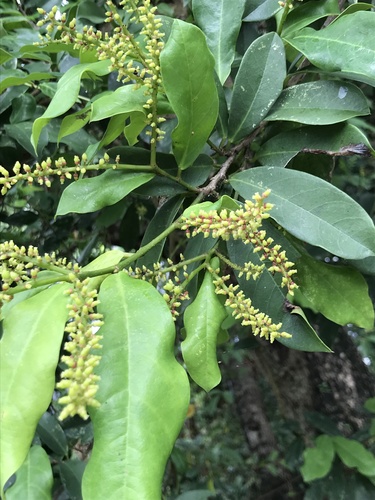
A tree, It grows 23 m high. The leaves are alternate and simple. The flowers are 0.3 mm across and yellow. They are in club shaped flower arrangements. The fruit are 2 cm long. They are yellow to orange. The seeds have an orange fleshy layer around them.
Names & Synonyms
Bilung, Janggau, Kayu besi, Mata rusa, Punu-punu, Susu diangas
References (2)
- Schot, A. M., 2004, Systematics of Aporosa (Euphorbiaceae). Blumea Supplement 17. p 219
- Slik, F., www.asianplant.net