Baccaurea tetrandra
(Baill.) Mull.Arg.
(c) Pizzas fear me,保留部分权利(CC BY-NC), 由 Pizzas fear me 上传
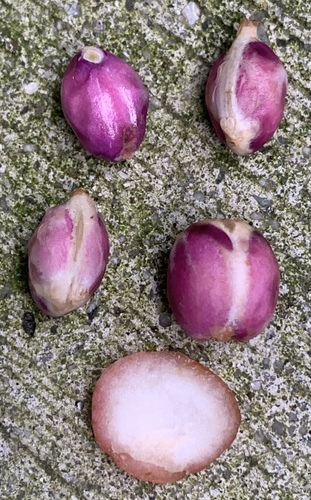
(c) Pizzas fear me, some rights reserved (CC BY-NC)
What to Eat
Edible parts: Fruit
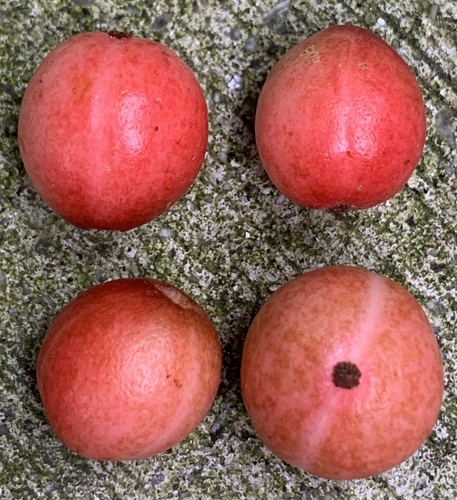
Fruit - raw. A sweet to sour flavour. The blue flesh surrounding the seeds is eaten. The orange-red, globose fruits are up to 15mm in diameter.
Where to Find It
It is a tropical plant. It grows up to 500 m above sea level. It grows on alluvial clay soils.
Asia, Brunei, Indonesia, Malaysia, Philippines, SE Asia,
How to Identify
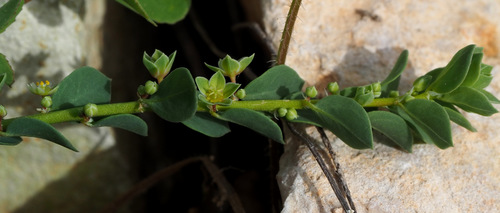
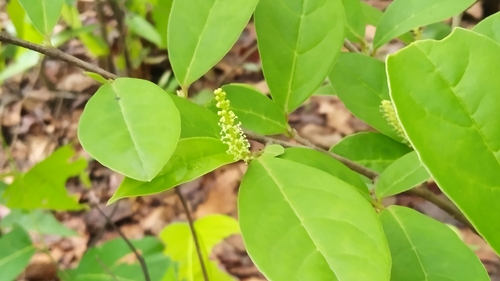
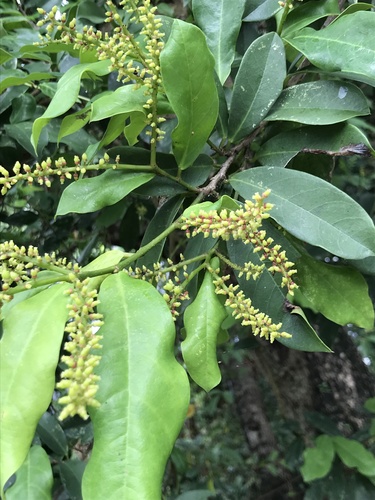
A small tree. It grows 12 m tall. The leaves are crowded at the ends of twigs. They are alternate and simple. The flowers are 1 mm across and yellow. The fruit are 1 cm long. They are orange red. The seeds have a blue covering or aril.
How to Grow
Plants grow in the wild on sand, clay and loam soils. Plants can flower and fruit all year round. A dioecious species, both male and female forms need to be grown if fruit and seed are required.
Propagation: Seed - when sown fresh it usually germinates in a few days.
Medicinal Uses
We have no specific information on this species, but the bark of several members of this genus is used to relieve eye inflammation.
Other Uses
We have no specific information for this species, but the bark of several members of this genus is used, along with other ingredients, as a dyestuff to colour silk yellow, red or mauve, using the dyeing process known as 'pekan' in Malay. The wood is locally used for poles used in traditional house construction. In common with other trees that produce their flowers and fruits on the trunk of the tree, members of this genus are generally considered to be good support trees for the climbing rattan palms, which are grown to provide material for basket making, weaving into furniture, making ropes etc.
Wikipedia
Source ↗Baccaurea tetrandra, also known as mata kunau in Malay and more locally as kunau-kunau or enkuni, is a species of flowering plant, a tropical forest fruit-tree in the tampoi family, that is native to Southeast Asia.
Names & Synonyms
Engkuni, Keramaian, Konkuning, Kunau, Kunau-kunau, Kuni, Mata kunau, Mata pelandok, Mata pelandu, Sekunau
References (2)
- Altschul, S.V.R., 1973, Drugs and Foods from Little-known Plants. Notes in Harvard University Herbaria. Harvard Univ. Press. Massachusetts. no. 2159 (As Baccaurea stipulata)
- Slik, F., www.asianplant.net