Dioscorea floribunda
M. Martens & Galeotti
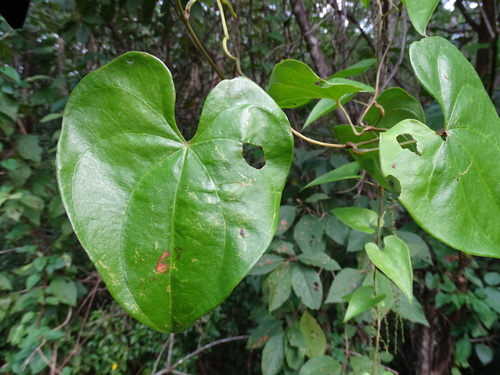
(c) Alexis López Hernández, some rights reserved (CC BY), uploaded by Alexis López Hernández
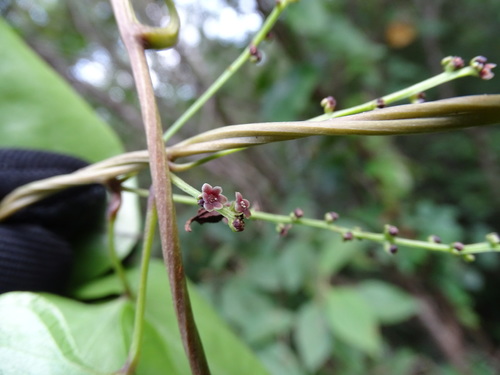
(c) Alexis López Hernández, some rights reserved (CC BY), uploaded by Alexis López Hernández
What to Eat
Edible parts: Tuber
The tubers are cooked and eaten.
Where to Find It
It is a tropical plant. It grows in moist forest up to 1,500 m above sea level. It is best in places where the annual day temperatures are between 25°-30°C. It is best with an annual rainfall between 900-1,200 mm but grows in areas with higher and lower rainfall. It is best in a sunny position with a fertile, well-drained soil
Belize, Central America, El Salvador, Guatemala, Honduras, Mexico, North America,
How to Identify
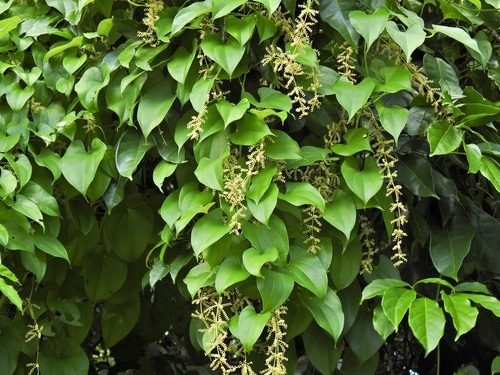
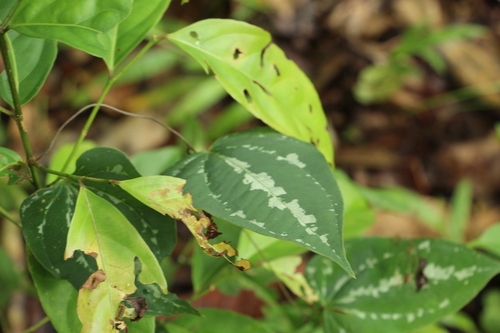
A yam. It keeps growing from year to year. It has a tuberous rootstock and produces annual stems or vines. These twine to the left.
How to Grow
A plant of the dry to moist tropics and subtropics, where it is found at elevations up to 1,500 metres. It grows best in areas where annual daytime temperatures are within the range 25 - 30°c, but can tolerate 15 - 38°c. It can be killed by temperatures of 9°c or lower. It prefers a mean annual rainfall in the range 900 - 1,200mm, but tolerates 600 - 2,300mm. Prefers a sunny position, but also succeeds in some shade. Grows best in a well-drained, light to medium soil of at least moderate fertility. Prefers a pH in the range 6 - 6.5, tolerating 5.8 - 7.2. The edible tubers are harvested from wild plants 3- 4 years old.
Wikipedia
Source ↗Dioscorea floribunda, the medicinal yam or mule's-hoof, is a species of flowering plant in the family Dioscoreaceae. It is found from central Mexico to northern Central America. It is grown commercially for its diosgenin content.
Production
Tubers take 3-4 years to develop.
Names & Synonyms
References (4)
- FAO Ecocrop
- Fern, K., 2012, Tropical Species Database http://theferns.info/tropical/
- Flora of Guatemala,
- INFOODSUpdatedFGU-list.xls