Phyllanthus boehmii
Pax

gbif · cc-by
Royal Botanic Gardens, Kew
Royal Botanic Gardens, Kew

gbif · cc-by
Royal Botanic Gardens, Kew
Royal Botanic Gardens, Kew

gbif · cc-by-nc-sa
MBG
MBG
What to Eat
Edible parts: Leaves, Shoots
The leaves and shoots are eaten.
Where to Find It
It is a tropical plant. In Ethiopia it grows between 530-1,900 m above sea level.
Africa, East Africa, Ethiopia,
Countries: Angola, Burkina Faso, Burundi, Benin, Botswana, Congo (DRC), Central African Republic, Congo (Republic), Cote d'Ivoire, Cameroon, Cape Verde, Djibouti, Algeria, Egypt, Eritrea, Ethiopia, Gabon, Ghana, Gambia, Guinea, Equatorial Guinea, Guinea-Bissau, Kenya, Comoros, Liberia, Lesotho, Libya, Morocco, Madagascar, Mali, Mauritania, Mauritius, Malawi, Mozambique, Namibia, Niger, Nigeria, Rwanda, Seychelles, Sudan, Sierra Leone, Senegal, Somalia, South Sudan, Sao Tome & Principe, Eswatini, Chad, Togo, Tunisia, Tanzania, Uganda, South Africa, Zambia, Zimbabwe
How to Identify
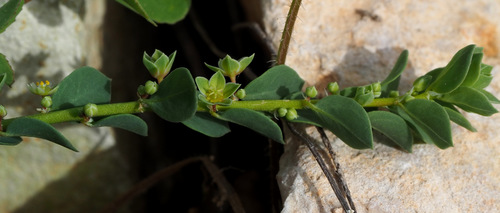
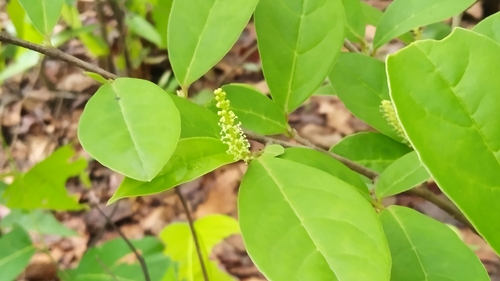
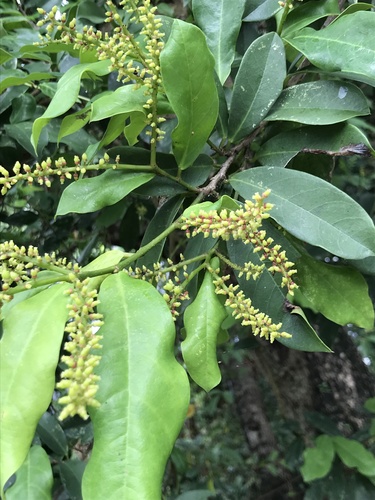
A herb. It grows each year from seed. It grows 20-30 cm tall. The leaflets are oblong. Male and female flowers are separate. The female flowers are nearer the top of the branches.
Notes
Also put in the family Euphorbiaceae.
Names & Synonyms
Butnot
Phyllanthus boehmii var. boehmiiPhyllanthus paivanus Jean F. Brunel
References (3)
- Awas, T., 1997, A Study on the Ecology and Ethnobotany of Non-cultivated Food Plants and Wild Relatives of Cultivated crops in Gambella Region, Southwestern Ethiopia. Addis Ababa University. p 49
- Lulekal, E., et al, 2011, Wild edible plants in Ethiopia: a review on their potential to combat food insecurity. Afrika Focus - Vol. 24, No 2. pp 71-121
- World Checklist of Useful Plant Species 2020. Royal Botanic Gardens, Kew