Dioscorea stemonoides
Prain & Burkill
DioscoreaceaeRoots

gbif · cc-by
Royal Botanic Gardens, Kew
Royal Botanic Gardens, Kew
What to Eat
Edible parts: Tuber, Root
The tubers and roots are edible.
Where to Find It
It is a tropical plant. It occurs at about 400 m above sea level in Thailand.
Asia, Indochina, SE Asia, Thailand,
Countries: United Arab Emirates, Afghanistan, Armenia, Azerbaijan, Bangladesh, Bahrain, Brunei, Bhutan, China, Georgia, Indonesia, Israel, India, Iraq, Iran, Jordan, Japan, Kyrgyzstan, Cambodia, North Korea, South Korea, Kuwait, Kazakhstan, Laos, Lebanon, Sri Lanka, Myanmar, Mongolia, Maldives, Malaysia, Nepal, Oman, Philippines, Pakistan, Qatar, Saudi Arabia, Singapore, Syria, Thailand, Tajikistan, Timor-Leste, Turkmenistan, Turkey, Taiwan, Uzbekistan, Vietnam, Yemen
How to Identify
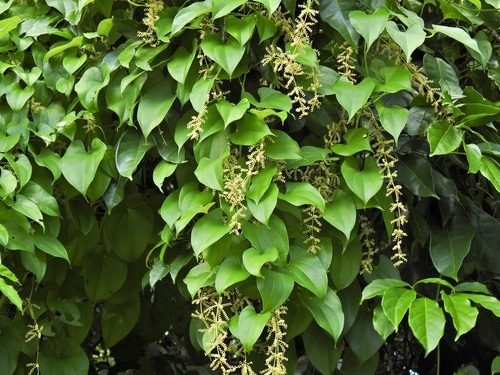
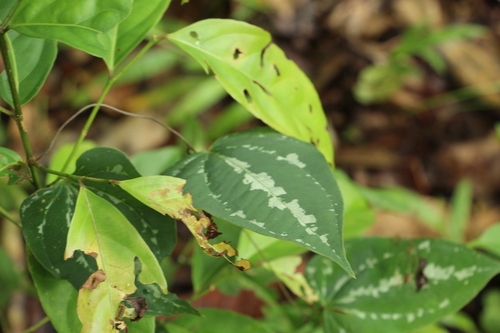
A yam. It is a small climbing vine. It is 3 m long. The stems twine to the right. The stems can be spiny near the base. It produces tubers about 7 cm long by 3 cm wide. There can be 4-10 tubers. They have a thin papery skin. It also sometimes produces bulbils along the stem. This occurs when the stems touch the ground. The leaves are small and broadly oval. They are simple and opposite. They can be 3-6 cm long by 2-5 cm wide. They are heart shaped at the base and taper to the tip.
Names & Synonyms
Kungkwad, Kungwad, Man men, Man rueng nep
References (3)
- Lim, T. K., 2015, Edible Medicinal and Non Medicinal Plants. Volume 9, Modified Stems, Roots, Bulbs. Springer p 38
- Mareenoon, K. et al, 2008, Ethnobotany of Dioscorea L. (Dioscoreaceae), a Major Food Plant of the Sakai Tribe at Banthad Range, Peninsular Thailand. Ethnobotany Reaearch & Applications 6:385-394
- Prain and Burkill, 1928, Bull. Misc. Inform. Kew:244