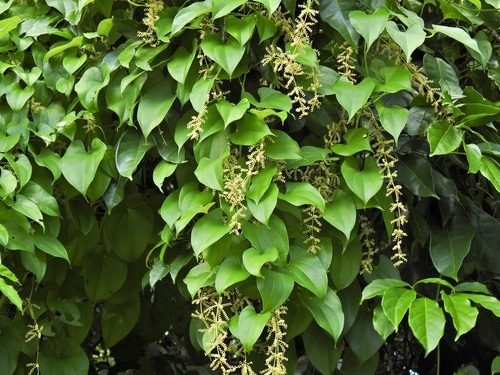
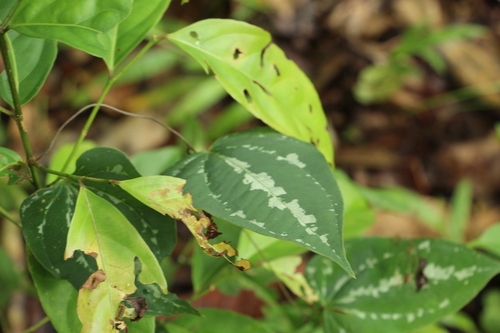
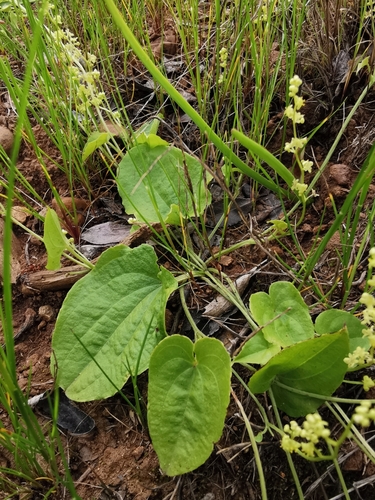
Dioscorea humifusa
Poepp.
iNaturalist · cc-by
(c) Aira Francisca Faúndez Fallau, some rights reserved (CC BY), uploaded by Aira Francisca Faúndez Fallau
(c) Aira Francisca Faúndez Fallau, some rights reserved (CC BY), uploaded by Aira Francisca Faúndez Fallau

iNaturalist · cc-by-nc
(c) Maxi, some rights reserved (CC BY-NC)
(c) Maxi, some rights reserved (CC BY-NC)

iNaturalist · cc-by-nc
(c) Maxi, some rights reserved (CC BY-NC)
(c) Maxi, some rights reserved (CC BY-NC)
What to Eat
Edible parts: Tuber, Root
The tubers and roots are eaten.
Where to Find It
It is a tropical plant.
Chile, South America,
How to Identify
A tropical vine in the yam family (Dioscoreaceae) with edible underground tubers and roots.
Nutrition Score: 17/100
| Part | Moisture | kJ | kcal | Protein | Vit A | Vit C | Iron | Zinc |
|---|---|---|---|---|---|---|---|---|
| Tubers | 9.9 | — | — | 3.6 | — | — | — | — |
Names & Synonyms
Dioscorea filipendula Dombey ex KunthDioscorea nigrescens Phil.
References (4)
- Cordero, S. E., Abello, L. A., & Galvez, F. L., 2017, Plantas silvestres comestibles y medicinales de Chile y otras partes del mundo. CORMA p 264
- Kermath, B. M., et al, 2014, Food Plants in the Americas: A survey of the domesticated, cultivated and wild plants used for Human food in North, Central and South America and the Caribbean. On line draft. p 309
- Leon-Lobos, P., et al, 2022, Patterns of Traditional and Modern Uses of Wild Edible Native Plants of Chile: Challenges and Future Perspectives. Plants (Basel) v 11 (6) Table S1
- Schmeda-Hirschmann, G., et al, 1999, Proximate Composition and Biological Activity of Food Plants gathered by Chilean Amerindians. Economic Botany Vol. 53. No. 2. pp. 177-187