Aporosa acuminata
Thwaites
(c) Siddarth Machado, some rights reserved (CC BY), uploaded by Siddarth Machado

Wikimedia Commons - NCF
What to Eat
Edible parts: Fruit
The aril, or fleshy layer around the seeds, is eaten.
Where to Find It
It is a tropical plant. It grows in the understorey in evergreen forests up to 900 m above sea level.
Asia, India, Sri Lanka,
How to Identify
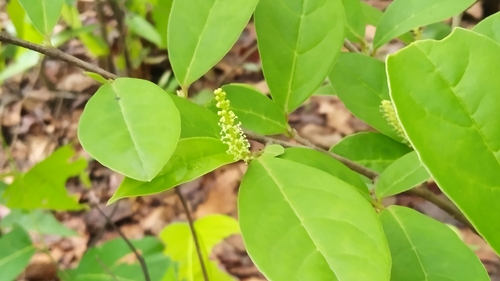
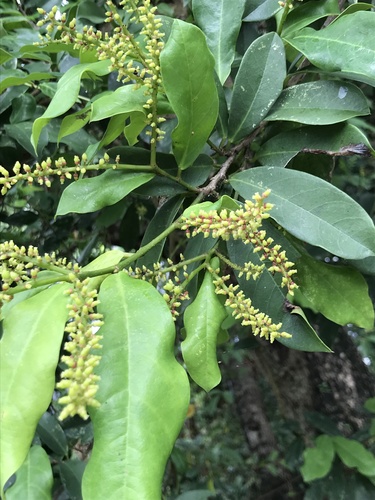
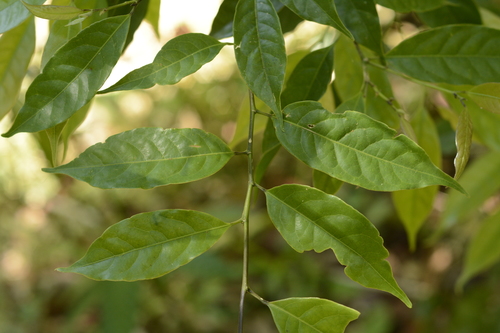
A tree. It grows 5 m tall. The small branches are slender. The leaves are simple and alternate or in spirals. The leaves are 5-11 cm long by 2-4 cm wide. Male and female flowers are separate on the same plant. Male flowers are in 1.5 cm long spikes. The flowers are densely packed. The fruit is a capsule. It is round and red. There is one seed.
Wikipedia
Source ↗Aporosa acuminata is a species of plant in the family Phyllanthaceae. It is endemic to Western Ghats of India and Sri Lanka. It is an understory tree with 5m tall. Flowers are unisexual and dioecious, where male flowers are green to white in color. Reddish capsular fruits are one-seeded.
Production
In southern India it flowers and fruits January to May.
Names & Synonyms
Neervetti, Nirvetti, Nirvittil, Vetti
References (1)
- Binu, S., 2010, Wild edible plants by the tribals in Pathanamthitta district, Kerala. Indian Journal of Traditional Knowledge. 9(2): 309-312