Dioscorea longicuspis
R. Knuth

gbif · cc-by
Royal Botanic Gardens, Kew
Royal Botanic Gardens, Kew

gbif · cc-by-nc-sa
MBG
MBG

gbif · cc-by
Royal Botanic Gardens, Kew
Royal Botanic Gardens, Kew
What to Eat
Edible parts: Tubers, Root
The tubers are eaten as a root vegetable.
Known Hazards
Where to Find It
It is a tropical plant. It occurs between 1,000-2,000 m above sea level.
Africa, East Africa, Tanzania,
Countries: Angola, Burkina Faso, Burundi, Benin, Botswana, Congo (DRC), Central African Republic, Congo (Republic), Cote d'Ivoire, Cameroon, Cape Verde, Djibouti, Algeria, Egypt, Eritrea, Ethiopia, Gabon, Ghana, Gambia, Guinea, Equatorial Guinea, Guinea-Bissau, Kenya, Comoros, Liberia, Lesotho, Libya, Morocco, Madagascar, Mali, Mauritania, Mauritius, Malawi, Mozambique, Namibia, Niger, Nigeria, Rwanda, Seychelles, Sudan, Sierra Leone, Senegal, Somalia, South Sudan, Sao Tome & Principe, Eswatini, Chad, Togo, Tunisia, Tanzania, Uganda, South Africa, Zambia, Zimbabwe
How to Identify
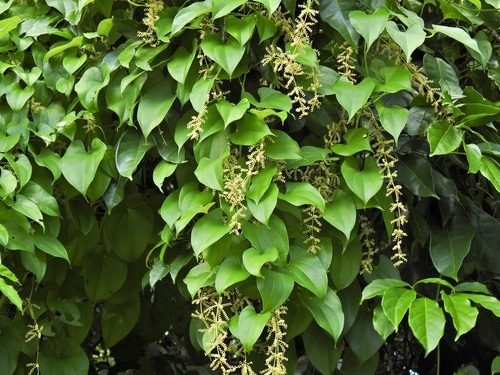
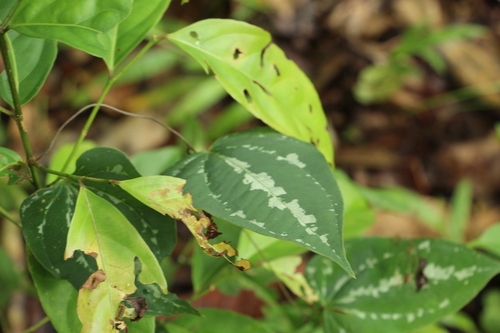
A yam. It is a vine 6 m long. It has a tuber 60 cm long and 10 cm across. The leaves are usually opposite but sometimes alternate. The leaf blade is oval to heart shaped. The leaves can be 12 cm long by 8 cm wide. They can have small hairs. The male flowers are in groups of up to 6 in the axils of leaves and along stalks that are 7-10 cm long. The flowers do not have stalks. The female flowers are in groups or 3 along stalks 25 cm long. The fruit capsule is 4 cm across. The seeds are round with wings. They are 2 cm across.
Notes
It is a vulnerable plant.
Names & Synonyms
Dioscorea schimperiana var. nigrescens Uline ex R. Knuth
References (1)
- Ruffo, C. K., Birnie, A. & Tengnas, B., 2002, Edible Wild Plants of Tanzania. RELMA p 279