Baccaurea javanica
(Blume) Mull.Arg.
Burmese grape tree, Engkuni fruit tree

Wikimedia Commons - Bùi Thụy Đào Nguyên

Wikimedia Commons - Sakurai Midori
What to Eat
Edible parts: Fruit
The fruit are eaten raw.
Where to Find It
It is a tropical plant. It grows in rainforest and freshwater swamps. It occurs from sea level to 1,800 m above sea level.
Asia, India, Indonesia, Malaysia, Nicobar, SE Asia,
How to Identify
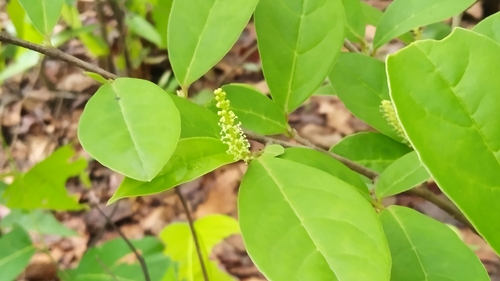
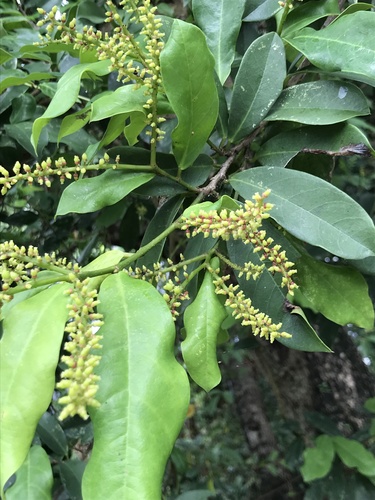
A shrub or small tree. It grows 3-12 m tall. The trunk can be 30 cm across. It can have buttresses. The leaves are simple and alternate. The male and female flowers are on separate plants. The flowers and fruit are produced on the trunk. The fruit are round and 11-17 mm across.
How to Grow
Plants are grown from fresh seeds. Seeds germinate in a few days.
Propagation: Seed - when sown fresh it usually germinates in a few days.
Medicinal Uses
We have no specific information on this species, but the bark of several members of this genus is used to relieve eye inflammation.
Other Uses
We have no specific information for this species, but the bark of several members of this genus is used, along with other ingredients, as a dyestuff to colour silk yellow, red or mauve, using the dyeing process known as 'pekan' in Malay. Although we have no specific information for this species, most members of this genus produce an excellent timber, which can be used to build houses and boats and to make furniture. In common with other trees that produce their flowers and fruits on the trunk of the tree, members of this genus are generally considered to be good support trees for the climbing rattan palms, which are grown to provide material for basket making, weaving into furniture, making ropes etc.
Production
Flowers and fruit can be produced all year round.
Names & Synonyms
Pohon menteng jawa
References (2)
- Fern, K., 2012, Tropical Species Database http://theferns.info/tropical/
- Sukarya, D. G., (Ed.) 2013, 3,500 Plant Species of the Botanic Gardens of Indonesia. LIPI p 144