Dioscorea linearicordata
Prain & Burkill
DioscoreaceaeRoots

gbif · cc-by
Royal Botanic Gardens, Kew
Royal Botanic Gardens, Kew

gbif · cc-by
The Trustees of the Natural History Museum, London
The Trustees of the Natural History Museum, London

gbif · cc-by
Royal Botanic Gardens, Kew
Royal Botanic Gardens, Kew
What to Eat
Edible parts: Tubers, Root
The tubers and roots are eaten.
Where to Find It
It is a tropical plant. It grows in open forests in southern China between 400-800 m above sea level.
Asia, China,
Countries: United Arab Emirates, Afghanistan, Armenia, Azerbaijan, Bangladesh, Bahrain, Brunei, Bhutan, China, Georgia, Indonesia, Israel, India, Iraq, Iran, Jordan, Japan, Kyrgyzstan, Cambodia, North Korea, South Korea, Kuwait, Kazakhstan, Laos, Lebanon, Sri Lanka, Myanmar, Mongolia, Maldives, Malaysia, Nepal, Oman, Philippines, Pakistan, Qatar, Saudi Arabia, Singapore, Syria, Thailand, Tajikistan, Timor-Leste, Turkmenistan, Turkey, Taiwan, Uzbekistan, Vietnam, Yemen
How to Identify
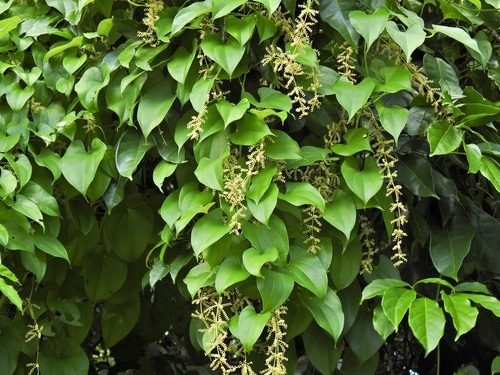
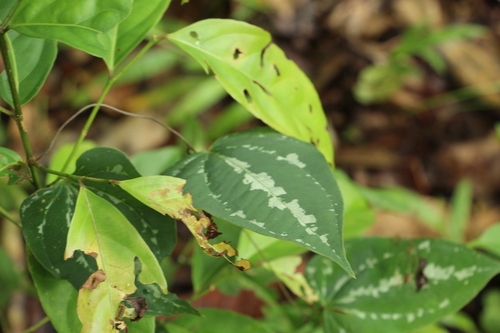
A yam. The tubers are cylinder shaped and vertical. The stems twine to the right. There are bulbils on the stem. The leaves are alternate at the base and opposite on the stem. The leaves are narrow to sword shaped and 5-15 cm long by 1-3 cm wide.
References (1)
- Reis, S. V. and Lipp, F. L., 1982, New Plant Sources for Drugs and Foods from the New York Botanical Garden herbarium. Harvard. p 29