Antidesma pleuricum
Tul.
PhyllanthaceaeFruit
iNaturalist · cc-by
(c) 呂一起(Lu i-chi), some rights reserved (CC BY), uploaded by 呂一起(Lu i-chi)
(c) 呂一起(Lu i-chi), some rights reserved (CC BY), uploaded by 呂一起(Lu i-chi)

iNaturalist · cc-by-nc
(c) Gordon Chen, some rights reserved (CC BY-NC)
(c) Gordon Chen, some rights reserved (CC BY-NC)

iNaturalist · cc-by-nc
(c) Gordon Chen, some rights reserved (CC BY-NC)
(c) Gordon Chen, some rights reserved (CC BY-NC)
What to Eat
Edible parts: Fruit
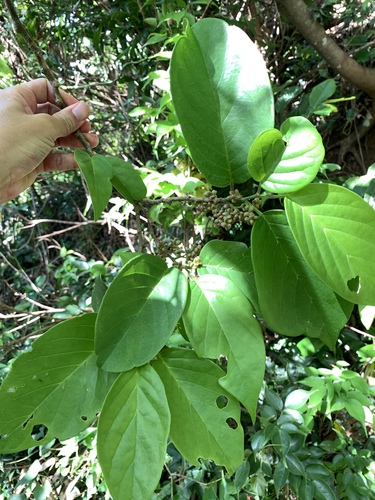
Fruit - raw. The fruits are lenticular to almost bean-shaped, laterally compressed, 3 - 4mm long and 3 - 4mm wide.
Where to Find It
It is a tropical plant. It grows in forests up to 600 m above sea level.
Asia, China, Philippines, SE Asia, Sri Lanka, Taiwan,
Countries: United Arab Emirates, Afghanistan, Armenia, Azerbaijan, Bangladesh, Bahrain, Brunei, Bhutan, China, Georgia, Indonesia, Israel, India, Iraq, Iran, Jordan, Japan, Kyrgyzstan, Cambodia, North Korea, South Korea, Kuwait, Kazakhstan, Laos, Lebanon, Sri Lanka, Myanmar, Mongolia, Maldives, Malaysia, Nepal, Oman, Philippines, Pakistan, Qatar, Saudi Arabia, Singapore, Syria, Thailand, Tajikistan, Timor-Leste, Turkmenistan, Turkey, Taiwan, Uzbekistan, Vietnam, Yemen
How to Identify
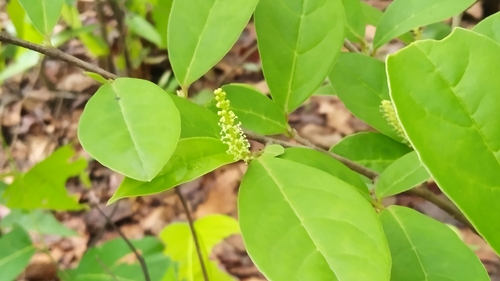
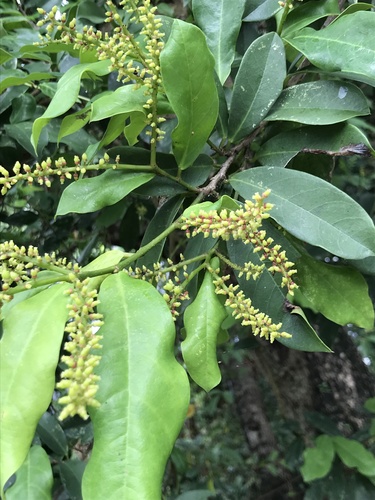
A tree. It grows 10 m tall. The trunk can be 25 cm across. The leaves are 4-13 cm long by 3-7 cm wide. Plants are separately male and female. The fruit are 3-4 mm long by 3-4 mm wide.
How to Grow
A dioecious species, both male and female forms need to be grown if fruit and seed are required.
Other Uses
The sapwood is whitish, odourless and tasteless. The wood is hard, rather brittle and heavy.
Names & Synonyms
Antidesma hontaushanense C. E. ChangAntidesma obliquicarpum ElmerAntidesma tenuifolium Pax & K. Hoffm.
References (1)
- Reis, S. V. and Lipp, F. L., 1982, New Plant Sources for Drugs and Foods from the New York Botanical Garden herbarium. Harvard. p 154