Lagerstroemia calyculata
Kurz
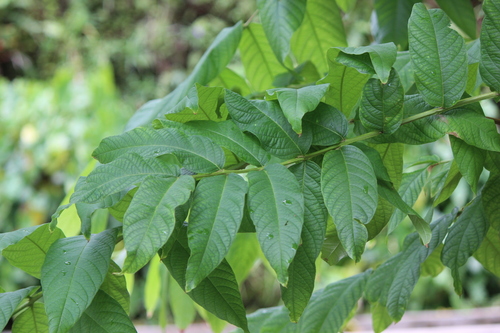
(c) Steven Kurniawidjaja, some rights reserved (CC BY-NC), uploaded by Steven Kurniawidjaja

(c) 106611639464075912591, some rights reserved (CC BY-NC-SA), uploaded by 106611639464075912591
What to Eat
Edible parts: Unsure - Leaves ?
Where to Find It
It is a tropical plant.
Asia, Cambodia, Indochina, Laos, SE Asia, Thailand, Vietnam,
How to Identify
A tree. It grows 20-35 m tall. The trunk is 40-80 cm across. The bark is pale grey and smooth. It flakes in thin rounded plates. The leaves are narrowly oval and 7-18 cm long by 2-5 cm wide. Young leaves are hairy. The flowers are in groups at the ends of branches. The fruit is an oval capsule. It is 6-12 mm long and brown and shiny. It splits into 3 pieces.
How to Grow
A rather slow-growing tree. Trees respond well to coppicing.
Other Uses
The greyish-yellow or brown heartwood is clearly demarcated from the white sapwood, The wood is hard and heavy. It is used for timber, interior furniture-making, wood-boards etc. We have no more specific information on the wood of this species, but the following is a general description of wood from this genus:- The heartwood is light red to reddish brown, darkening on exposure; the sapwood is light yellow brown to greyish white, rather wide. The grain is usually straight; texture moderately fine to rather coarse; rather lustrous; without distinctive odour or taste. It is generally classified as moderately durable and somewhat resistant to termites, although the sapwood is liable to powder-post beetle attack. It saws and works well; finishes to a smooth surface; and takes a good polish. It is used for making furniture, interior joinery, boatbuilding, general construction, parquet flooring and panelling.
Wikipedia
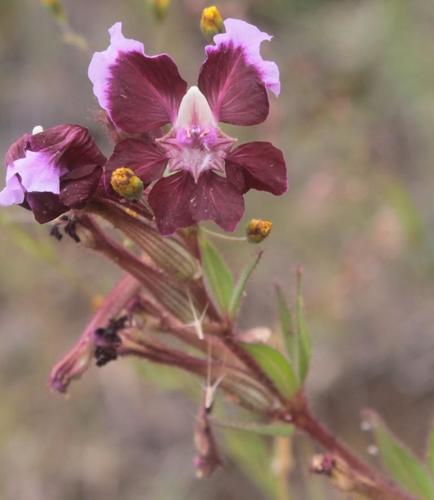
Source ↗Lagerstroemia calyculata is a species of flowering plant in the family Lythraceae. It is known as the "Guava Crape Myrtle" (Vietnamese: Bằng Lăng Ổi, Bằng Lăng Cườm; Thai: ตะแบก tabaek; Cambodian name: Khmer: ដើមស្រឡៅ, romanized: Srolao); the name is derived from its very characteristic mottled flaky bark. It is found in Southeast Asia and Oceania. It is a medium-sized tree growing up to a height between 10 and 20 m (35 and 65 ft). Like other species of the same genus, it is quite common as a decorative tree in the parks of Thailand owing to its beautiful bunches of pink flowers. Its wood has a low commercial value, which is why it thought to have maintained the forest structure in previously logged parts of Cat Tien National Park, where it may constitute >25% of tree counts.
Notes
An unresolved name in The Plant List.
Names & Synonyms
Bang lang, Peuay dok khao, Peuay peuak no, Sang le, Sralao'
References (2)
- Turreira Garcia, N., et al, 2017, Ethnobotanical knowledgeof the Kuy and Khmer people in Prey Lang, Cambodia. Cambodian Journal of Natural History 2017 (1): 76-101
- Van Sam, H. et al, 2004, Trees of Laos and Vietnam: A Field Guide to 100 Economically or Ecologically Important Species. Blumea 29 (2004) 201-349