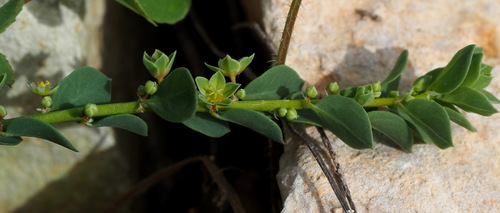
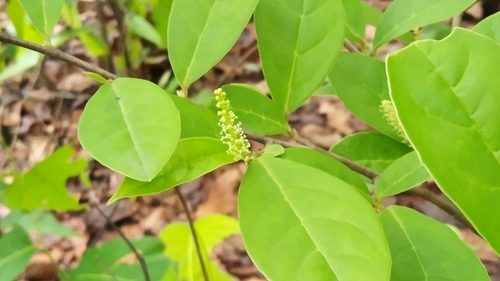
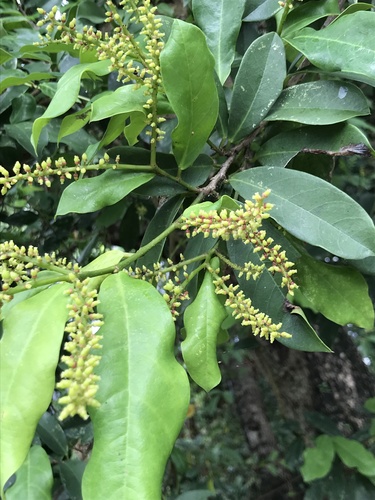
Sauropus bacciformis
(L.) Airy Shaw

iNaturalist · cc-by-nc-sa
(c) Kuan-Chieh (Chuck) Hung, some rights reserved (CC BY-NC-SA)
(c) Kuan-Chieh (Chuck) Hung, some rights reserved (CC BY-NC-SA)
iNaturalist · cc-by-nc-sa
(c) Kuan-Chieh (Chuck) Hung, some rights reserved (CC BY-NC-SA)
(c) Kuan-Chieh (Chuck) Hung, some rights reserved (CC BY-NC-SA)
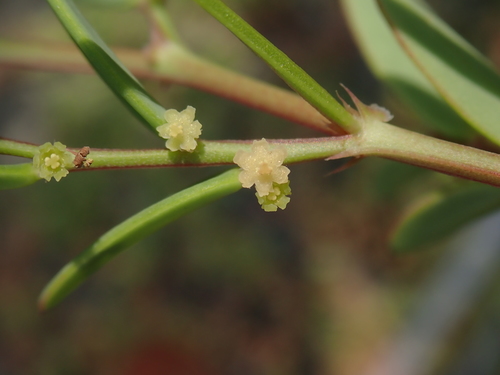
iNaturalist · cc-by-nc-sa
(c) Kuan-Chieh (Chuck) Hung, some rights reserved (CC BY-NC-SA)
(c) Kuan-Chieh (Chuck) Hung, some rights reserved (CC BY-NC-SA)
What to Eat
Edible parts: Medicine, Leaves - tea
The leaves are used to make medicinal tea.
Where to Find It
Asia, China,
Countries: United Arab Emirates, Afghanistan, Armenia, Azerbaijan, Bangladesh, Bahrain, Brunei, Bhutan, China, Georgia, Indonesia, Israel, India, Iraq, Iran, Jordan, Japan, Kyrgyzstan, Cambodia, North Korea, South Korea, Kuwait, Kazakhstan, Laos, Lebanon, Sri Lanka, Myanmar, Mongolia, Maldives, Malaysia, Nepal, Oman, Philippines, Pakistan, Qatar, Saudi Arabia, Singapore, Syria, Thailand, Tajikistan, Timor-Leste, Turkmenistan, Turkey, Taiwan, Uzbekistan, Vietnam, Yemen
How to Identify
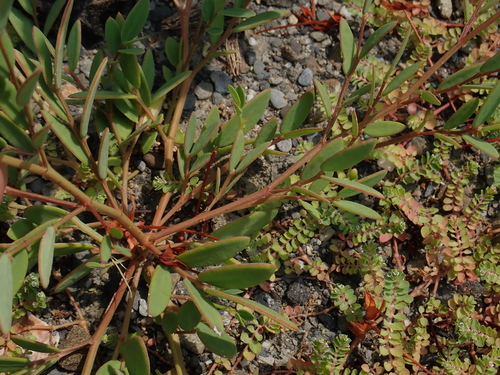
A herb or small shrub growing approximately 60 cm tall in the Phyllanthaceae family, sold in local markets in China.
Medicinal Uses
The leaves are used medicinally as a tea.
Other Information
It is sold in local markets in China.
Names & Synonyms
Xian shui bin lang
Phyllanthus bacciformis L.and others
References (1)
- Li, D. et al, 2017, Ethnobotanical survey of herbal tea plants from the traditional markets in Chaoshan, China. Journal of Ethnopharmacology. 205 (2017) 195-206