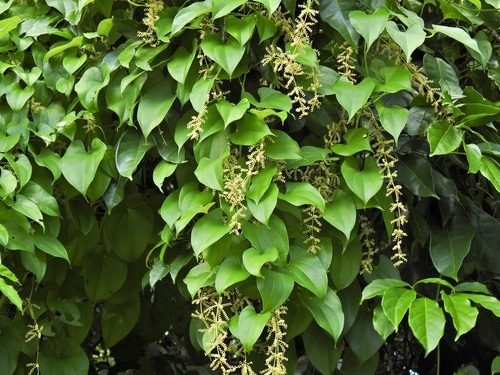
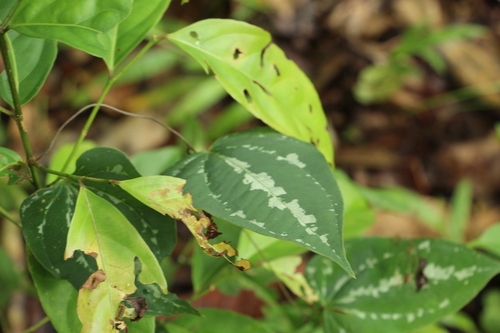
Dioscorea birmanica
Prain & Burkill

gbif · cc0
GBIF
GBIF

gbif · cc-by
Royal Botanic Gardens, Kew
Royal Botanic Gardens, Kew

gbif · cc0
GBIF
GBIF
What to Eat
Edible parts: Rhizomes, Caution
The rhizomes are eaten after processing.
Known Hazards
Where to Find It
It is a subtropical plant.
Asia, China, SE Asia, Thailand,
Countries: United Arab Emirates, Afghanistan, Armenia, Azerbaijan, Bangladesh, Bahrain, Brunei, Bhutan, China, Georgia, Indonesia, Israel, India, Iraq, Iran, Jordan, Japan, Kyrgyzstan, Cambodia, North Korea, South Korea, Kuwait, Kazakhstan, Laos, Lebanon, Sri Lanka, Myanmar, Mongolia, Maldives, Malaysia, Nepal, Oman, Philippines, Pakistan, Qatar, Saudi Arabia, Singapore, Syria, Thailand, Tajikistan, Timor-Leste, Turkmenistan, Turkey, Taiwan, Uzbekistan, Vietnam, Yemen
How to Identify
A yam. The vine has irregular branches. The stems twine to the left. The leaves are alternate and simple.
Names & Synonyms
Dioscorea rangunensis R. Knuth
References (1)
- Castillo, C., 2013, The Archaeobotany of Khao Sam Kaeo and Phu Khao Thong: The Agriculture of Late Prehistoric Southern Thailand. Ph. D. thesis University College, London p 380