Baccaurea purpurea
Haegens

Wikimedia Commons - KVDP

President and Fellows of Harvard College

President and Fellows of Harvard College
What to Eat
Edible parts: Fruit
Although we have no specific record of edibility for this species, the fruits of all members of this genus are said to be edible, with a flavour that can be acid to sweet. The globose fruits are up to 19mm in diameter.
Where to Find It
It is a tropical plant. It grows between 240-400 m above sea level.
Asia, India, Papua New Guinea, PNG,
How to Identify
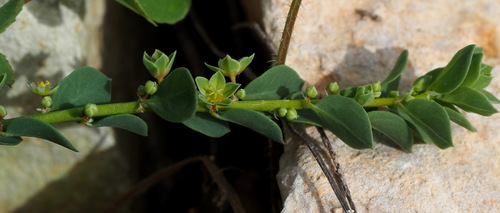
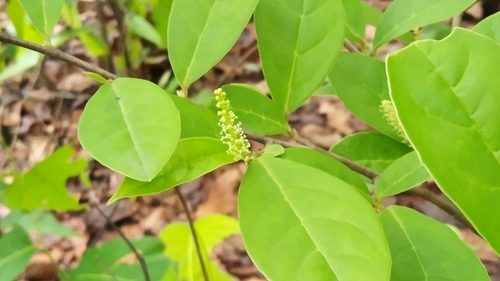
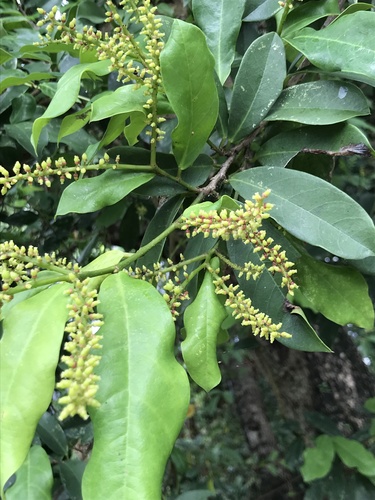
A shrub or small tree. It grows 6-8 m tall. The trunk is 6-10 cm across. Trees are separately male and female. The bark is brown. The leaves are dark green. The flowers are pink. The fruit are round and about 2 cm across.
How to Grow
Plants grow wild in thin soils over limestone. A dioecious species, both male and female forms need to be grown if fruit and seed are required.
Propagation: Seed - when sown fresh it usually germinates in a few days.
Medicinal Uses
We have no specific information on this species, but the bark of several members of this genus is used to relieve eye inflammation.
Other Uses
We have no specific information for this species, but the bark of several members of this genus is used, along with other ingredients, as a dyestuff to colour silk yellow, red or mauve, using the dyeing process known as 'pekan' in Malay. Although we have no specific information for this species, most members of this genus produce an excellent timber, which can be used to build houses and boats and to make furniture. In common with other trees that produce their flowers and fruits on the trunk of the tree, members of this genus are generally considered to be good support trees for the climbing rattan palms, which are grown to provide material for basket making, weaving into furniture, making ropes etc.
Notes
Collected by Ted Henty in Milne Bay.
References (3)
- Ferns, Useful Tropical Plants
- JSTOR Global Plants
- Prabha, B. Y., et al, 2010, Documentation of Wild Edible Plants of Melghat Forest, Dist. Amravati, Maharashtra State, India. Ethnobotanical Leaflets 14: 751-58, 2010.