Uapaca pyrnaertii
De Wild.
Sugar plum
PhyllanthaceaeFruit
What to Eat
Edible parts: Fruit
The fruit is edible.
Where to Find It
It is a tropical plant. It grows up to 800 m above sea level.
Africa, Cameroon, Central Africa, Central African Republic, CAR, Congo DR, Côte d'Ivoire, Gabon, Ghana, Ivory Coast, Nigeria, Sierra Leone, West Africa,
Countries: Angola, Burkina Faso, Burundi, Benin, Botswana, Congo (DRC), Central African Republic, Congo (Republic), Cote d'Ivoire, Cameroon, Cape Verde, Djibouti, Algeria, Egypt, Eritrea, Ethiopia, Gabon, Ghana, Gambia, Guinea, Equatorial Guinea, Guinea-Bissau, Kenya, Comoros, Liberia, Lesotho, Libya, Morocco, Madagascar, Mali, Mauritania, Mauritius, Malawi, Mozambique, Namibia, Niger, Nigeria, Rwanda, Seychelles, Sudan, Sierra Leone, Senegal, Somalia, South Sudan, Sao Tome & Principe, Eswatini, Chad, Togo, Tunisia, Tanzania, Uganda, South Africa, Zambia, Zimbabwe
How to Identify
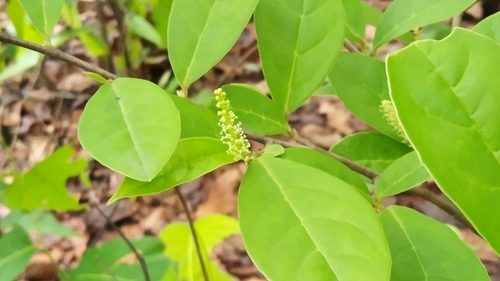
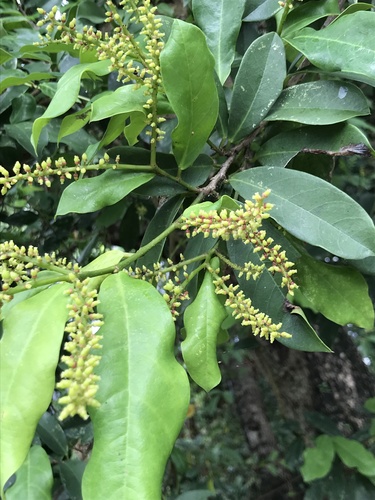
A tree. It can grow 30 m tall. The branches usually form above 20 m high. It can have stilt roots 5 m tall. The leaves are arranged in spirals and crowded towards the ends of branches. The leaves are oval and more broad in the top end. They are 15-25 cm long by 5-10 cm wide. The base is wedge shaped and the top can be rounded. The fruit is 5 cm long and has 5 stones each with one seed.
Names & Synonyms
Borikio, Rikio moir
Uapaca corbisieri De Wild.
Uapaca esculenta A. Chev. ex Aubrev. & Leandri
References (2)
- PROTA4U
- World Checklist of Useful Plant Species 2020. Royal Botanic Gardens, Kew