Aloidendron barberae
(Dyer) Klopper & Gideon F. Sm.
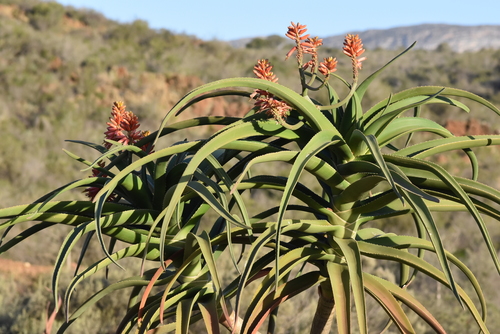
(c) Lauren James, some rights reserved (CC BY-NC), uploaded by Lauren James
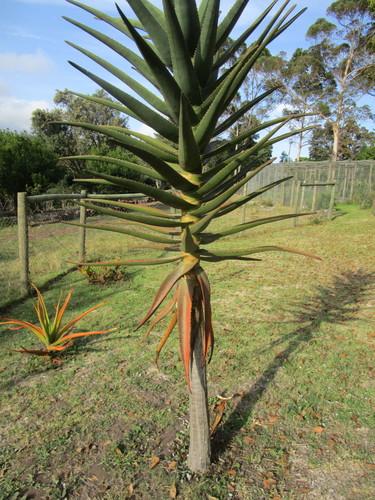
(c) Evie Bowen, some rights reserved (CC BY-NC), uploaded by Evie Bowen

(c) Scott Zona, some rights reserved (CC BY-NC)
What to Eat
Edible parts: Leaf - potash
Leaf potash is extracted from this species.
Where to Find It
It is a subtropical plant.
Africa, Mozambique, South Africa, Southern Africa,
How to Identify
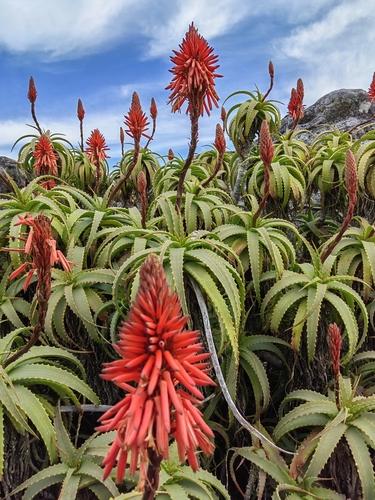
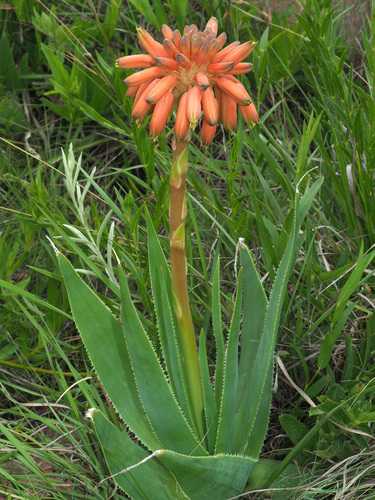
A tree aloe growing up to 18 m tall, found in subtropical regions and classified in the Xanthorrhoeaceae family (also placed in Asphodelaceae).
How to Grow
It can be grown by cuttings.
Wikipedia
Source ↗Aloidendron barberae, formerly Aloe bainesii and Aloe barberae, also known as the tree aloe, is a species of succulent plant in the genus Aloidendron. It is native to South Africa northwards to Mozambique. In its native climes this slow-growing tree can reach up to 18 metres (59 ft) high and 0.9 m (3 ft) stem in stem diameter. Aloidendron barberae is Africa's largest aloe-like plant. The tree aloe is often used as an ornamental plant. Its tubular flowers are rose pink (green-tipped); it flowers in winter and in its natural environment is pollinated by sunbirds.
Notes
Also put in the family Asphodelaceae.
Names & Synonyms
References (1)
- Ruiters-Welcome, A. K., 2019, Food plants of southern Africa. Ph.D. thesis. Univ. of Johannesburg p 32