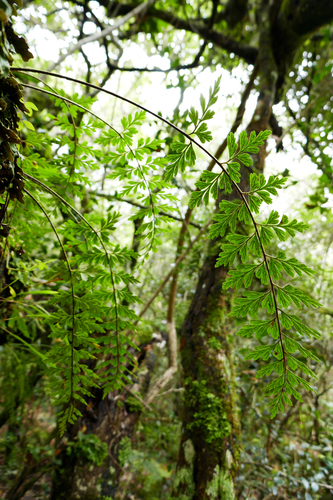
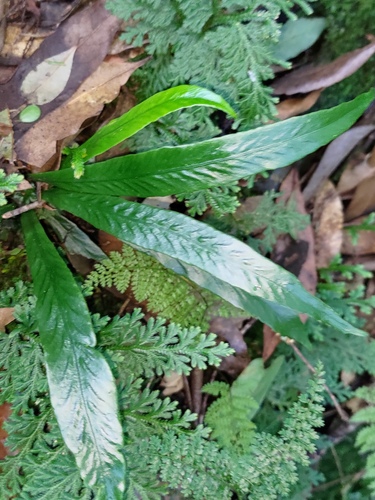
Ctenitis sp.
fern

Wikimedia Commons - Alex Popovkin, Bahia, Brazil from Brazil

Wikimedia Commons - Alex Popovkin, Bahia, Brazil from Brazil
What to Eat
Edible parts: Fronds, Leaves
Tree-ferns have been cultivated for their beauty alone; a few, however, were of some economic application, chiefly as sources of starch. These include the Sphaeropteris excelsa of Norfolk Island that was threatened with extinction for the sake of its sago-like pith, which was eaten by pigs. It is now widely cultivated as an ornamental tree, although there is only one small wild population on Norfolk Island.Sphaeropteris medullaris (mamaku, black tree fern) also furnished a kind of sago to people living in New Zealand, Queensland and the Pacific islands. A Javanese species of Dicksonia (D. chrysotricha) furnishes silky hairs, which were once imported as a styptic, and the long silky or wooly hairs, abundant on the stem and frond-leaves in the various species of Cibotium have not only been put to a similar use, but in the Hawaiian Islands furnished wool for stuffing mattresses and cushions, which was formerly an article of export.
Where to Find It
A tropical plant.
Pacific, Papua New Guinea, PNG,
How to Identify
A fern. It has a creeping rhizome. Ctenitis silvatica Holttum and Ctenitis subglandulosa (Hance) Ching both occur in Papua New Guinea.
References (1)
- Powell, J.M., Ethnobotany. In Paijmans, K., 1976, New Guinea Vegetation. Australian National University Press. p 109