Phyllanthus nummulariifolius
Poir.

iNaturalist · cc-by-nc
(c) Guy Eric Onjalalaina, some rights reserved (CC BY-NC), uploaded by Guy Eric Onjalalaina
(c) Guy Eric Onjalalaina, some rights reserved (CC BY-NC), uploaded by Guy Eric Onjalalaina

iNaturalist · cc-by
(c) Dr. Alexey Yakovlev, some rights reserved (CC BY), uploaded by Dr. Alexey Yakovlev
(c) Dr. Alexey Yakovlev, some rights reserved (CC BY), uploaded by Dr. Alexey Yakovlev
iNaturalist · cc-by-nc
(c) Franck Rakotonasolo, some rights reserved (CC BY-NC), uploaded by Franck Rakotonasolo
(c) Franck Rakotonasolo, some rights reserved (CC BY-NC), uploaded by Franck Rakotonasolo
What to Eat
Edible parts: Medicine
Where to Find It
It is a tropical plant.
Africa, Angola, Botswana, East Africa, Guinea, Guinée, Kenya, Madagascar, Mauritius, Rwanda, South Africa, Southern Africa, Sudan, Tanzania, Uganda, West Africa,
Countries: Angola, Burkina Faso, Burundi, Benin, Botswana, Congo (DRC), Central African Republic, Congo (Republic), Cote d'Ivoire, Cameroon, Cape Verde, Djibouti, Algeria, Egypt, Eritrea, Ethiopia, Gabon, Ghana, Gambia, Guinea, Equatorial Guinea, Guinea-Bissau, Kenya, Comoros, Liberia, Lesotho, Libya, Morocco, Madagascar, Mali, Mauritania, Mauritius, Malawi, Mozambique, Namibia, Niger, Nigeria, Rwanda, Seychelles, Sudan, Sierra Leone, Senegal, Somalia, South Sudan, Sao Tome & Principe, Eswatini, Chad, Togo, Tunisia, Tanzania, Uganda, South Africa, Zambia, Zimbabwe
How to Identify
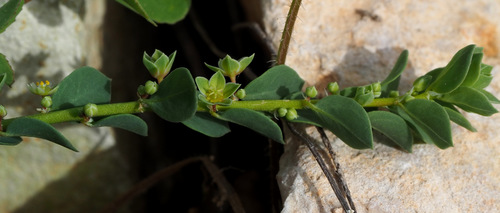
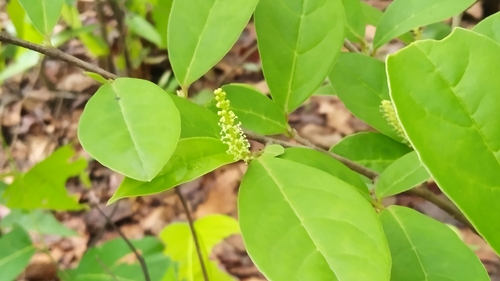
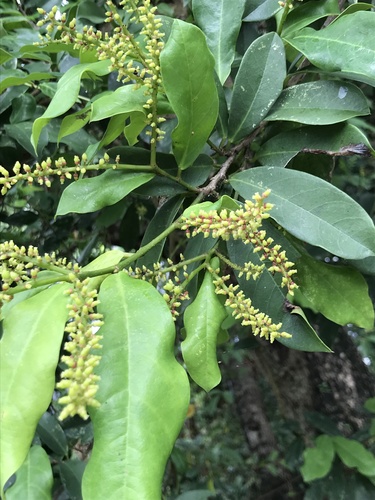
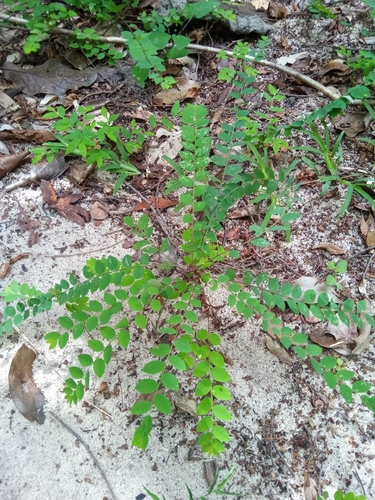
A herb or small shrub. It grows 50 cm tall. The side branches are modified to look like divided leaves. The flowers are white. The fruit are 1-2 mm across and have 3 lobes.
How to Grow
Plants are usually monoecious, but dioecious forms also exist, in which case both male and female forms would need to be grown if fruit and seed were required.
Medicinal Uses
Used medicinally.
Names & Synonyms
Diasperus nummulariifolius (Poir.) KuntzeMenarda capillaris Baill.and others
References (1)
- World Checklist of Useful Plant Species 2020. Royal Botanic Gardens, Kew